An ounce of weed is one of the most common quantities you’ll come across when buying cannabis. In 2026, the price of an ounce depends on where you buy, the quality of the flower, and whether you have access to a medical program.
This guide breaks down what an ounce costs, how it compares across states, what it looks like, and how far it can go based on how you use it.
What Is an Ounce of Weed?
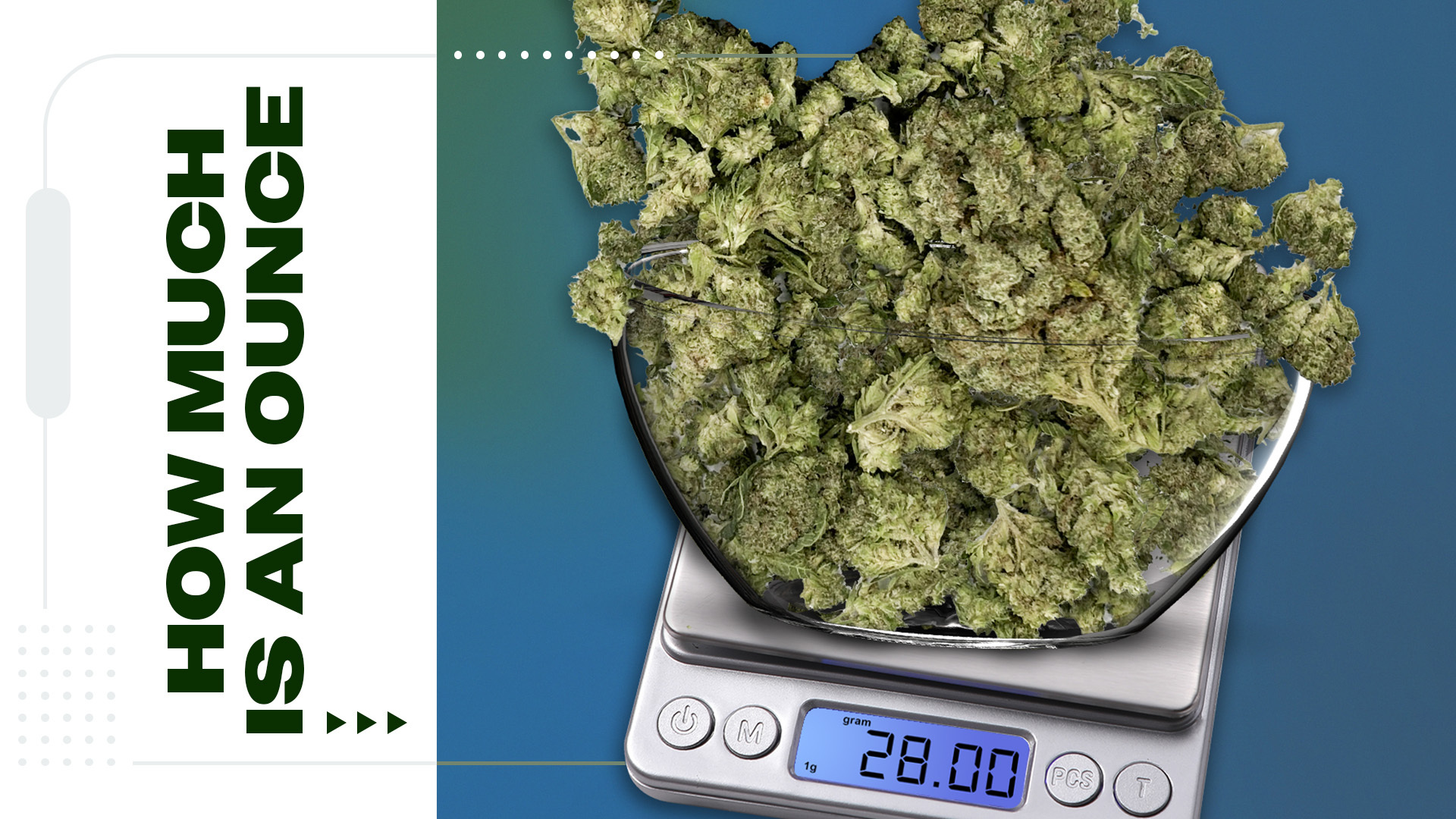
An ounce of weed is a standard cannabis measurement that equals 28 grams of flower. You will also hear it called a zip in many dispensaries and among regular buyers.
This amount sits at the higher end of personal purchases and is widely recognized across both medical and recreational markets. In most legal states, an ounce also aligns with the maximum amount you can carry at one time under recreational laws.
An ounce breaks down into smaller, familiar quantities. It equals eight eighths, four quarter ounces, or two half ounces.
You can also compare it to a zip of weed, an eighth of weed, or a quarter of weed for a full picture of common purchase sizes. For a complete reference, see the cannabis measurements and weights guide.
What Does an Ounce of Weed Look Like?
An ounce of weed fills about the space of a small coconut or a loosely packed sandwich bag. You can expect around 20 to 30 medium to large buds, though the count shifts based on how dense the cannabis flower is.
Dense indica buds pack tighter and look smaller at the same weight, while sativa buds appear larger and take up more space. An ounce weighs about the same as 10 pennies or a compact disc, which gives a simple reference point.
Visual size can be misleading because structure and moisture can change how the flower appears. A digital scale provides the only accurate way to confirm that you have a full 28 grams.
How Much Does an Ounce of Weed Cost in 2026?
An ounce of weed in 2026 usually costs between $150 and $350 across most legal markets. You may see prices move above $400 in states with limited supply or higher taxes.
Price depends on three main factors:
- Quality of the flower: Lower-grade cannabis sits at the bottom of the range, while premium strains with higher THC levels cost more
- State taxes and regulations: Some states add over 20% in cannabis taxes, which raises the final price you pay
- Market maturity: Established markets with strong supply tend to offer lower prices than newer or restricted markets
Most pricing falls into clear tiers:
| Tier |
Price Range |
What You Get |
| Budget |
$150 to $220 |
Lower potency flower, outdoor grows, basic trim |
| Mid range |
$220 to $300 |
Consistent quality, balanced potency, wider strain selection |
| Top shelf |
$300 to $400+ |
High THC levels, strong terpene profile, premium cultivation |
Buying an ounce of cannabis brings the price per gram down compared to smaller amounts. In many markets, the per-gram cost drops to about $5 to $10 at the ounce level, while smaller purchases often sit closer to $10 to $15 per gram.
Medical cannabis programs can lower your cost further. Medical patients typically pay 15–30% less due to lower excise tax rates. Getting your medical marijuana card can reduce the cost of an ounce by $30–$100 depending on your state.
How Much Is an Ounce of Weed by State?
Cannabis prices vary by state more than most consumer products. Taxes, supply levels, and licensing rules shape what you pay at the dispensary.
Here is a snapshot of average ounce prices across key markets in 2026:
| State |
Average Price per Ounce |
| Oregon |
$120 to $150 |
| Michigan |
$130 to $160 |
| Colorado |
$150 to $200 |
| California |
$180 to $250 |
| Nevada |
$250 to $300 |
| Illinois |
$280 to $350 |
| New York |
$300 to $350 |
| Hawaii |
$350 to $400 |
| Washington D.C. |
$400+ |
You will notice a wide gap between mature markets and newer or restricted ones. States with strong supply and lower tax rates tend to offer better value, while limited markets push costs higher.
How Much THC Is in an Ounce of Weed?
The amount of THC in an ounce of weed depends on the strain and its potency level. THC is measured as a percentage of the total weight, which determines how much active compound you get from 28 grams of flower.
Most cannabis strains fall between 10% and 25% THC. This means an ounce can contain about 2.8 grams to 7 grams of THC. Higher potency strains can reach close to 30% THC, which brings the total to around 8.4 grams in an ounce.
Here is a simple breakdown based on common potency levels:
| THC Percentage |
THC per Ounce |
| 10% |
2.8 grams |
| 15% |
4.2 grams |
| 20% |
5.6 grams |
| 25% |
7 grams |
| 30% |
8.4 grams |
The THC percentage on the label, combined with the 28-gram weight, gives you a reliable estimate of total potency before you buy.
How Many Joints Can You Roll with an Ounce?
The number of joints you can roll from an ounce depends on how much cannabis you use in each one. Since an ounce contains 28 grams, you can estimate the number of sessions by dividing 28 grams by the amount used per joint.
Most joints use between 0.5 grams and 1 gram of cannabis. At 0.5 grams per joint, an ounce can produce about 56 joints. At 1 gram per joint, that number drops to about 28 joints.
Here is a simple breakdown based on common weed measurements and use amounts:
| Joint Size |
Cannabis per Joint |
Joints per Ounce |
| Small |
0.5 grams |
~56 |
| Standard |
1 gram |
~28 |
| Large |
1.5 grams |
~18 |
Your rolling style and preference shape how far your ounce goes. Smaller joints stretch your supply, while larger ones reduce the total count.
How Many Edibles Can You Make from an Ounce?
An ounce of weed gives you a strong base for making edibles since it contains 28 grams of flower. The total number of servings depends on the THC content and how strong you want each portion.
Most edibles fall between 5 milligrams and 10 milligrams of THC per serving. If your cannabis tests at 20% THC, an ounce contains about 5,600 milligrams of THC before cooking losses. After infusion loss, which can range from 10% to 30%, you may have around 3,900 to 5,000 milligrams available.
This can translate into a wide range of servings:
- About 780 to 1,000 servings at 5 milligrams per piece
- About 390 to 500 servings at 10 milligrams per piece
- About 150 to 200 servings at 25 milligrams per piece
Your yield depends on how you portion your batch and the potency of your flower.
Is It Legal to Buy an Ounce of Weed?
The legality of buying an ounce of weed depends on the state you are in. Cannabis remains illegal at the federal level, but many states allow legal purchase and possession under state law.
Recreational cannabis is legal for adults aged 21 and older in states such as:
- California
- Colorado
- Nevada
- Oregon
- Washington
- Arizona
- Michigan
- Illinois
- New York
- New Jersey
- Massachusetts
- Maine
- Vermont
- Connecticut
- Maryland
- Missouri
- Montana
- Alaska
- Rhode Island
- Delaware
- Minnesota
- Ohio
In most of these states, you can legally buy and carry up to one ounce.
Some states still prohibit recreational cannabis, including Idaho, Wyoming, and Kansas, where possession of any amount remains illegal. Other states allow only medical use, where access depends on qualifying conditions and registration.
Medical cannabis programs often let patients possess more than recreational laws permit. State rules determine how much more you may qualify to hold.
How to Think About Buying an Ounce of Weed
Buying an ounce of weed comes down to how you plan to use it and what you want to spend. This amount often brings a lower cost per gram, which makes it a practical choice if you want more value from a single purchase.
Your final experience depends on quality, potency, and where you buy. State laws and tax rates also shape the cost of marijuana and how much you can carry legally.
Book a cannabis doctor appointment to find out what your state allows and whether a medical card can reduce your costs.
Author, Share & Comments