A gravity bong uses water and air pressure to fill a chamber with smoke, delivering a dense, concentrated hit from a small amount of flower. You can build one at home in under ten minutes using items you probably already have.
Gravity bongs go by a lot of names: geeb, GB, bucket bong, geebie, yoin, and ghetto bong, depending on where you grew up or who you learned from. All of them describe the same basic device. If you want to explore different ways to consume cannabis, a gravity bong sits at the more intense end of that spectrum.
What Is a Gravity Bong and How Does It Work?
A gravity bong works by submerging a bottle in water with a bowl piece on top. As you lift the bottle while the bowl is lit, the rising bottle creates negative pressure that draws smoke down into the chamber. By the time the bottle is fully lifted, the entire interior holds a dense column of smoke.
That density is why gravity bongs hit harder than a standard pipe or bong. Because the chamber fills completely before you inhale, you take in more smoke per breath than almost any other method. For context on how that intensity affects duration, see our breakdown of how long a cannabis high lasts compared to other consumption methods.
Do gravity bongs get you more stoned? Yes, typically. The water displacement mechanism concentrates a large volume of smoke into a single pull, which means your body absorbs more cannabinoids at once than it would from a standard hit.
Method 1: The Plastic Bottle Gravity Bong
This is the most common build and the easiest to put together with household items. A standard 16 or 20 oz plastic bottle works well. A 2-liter bottle produces a larger hit because the chamber volume is bigger, so adjust based on your tolerance.
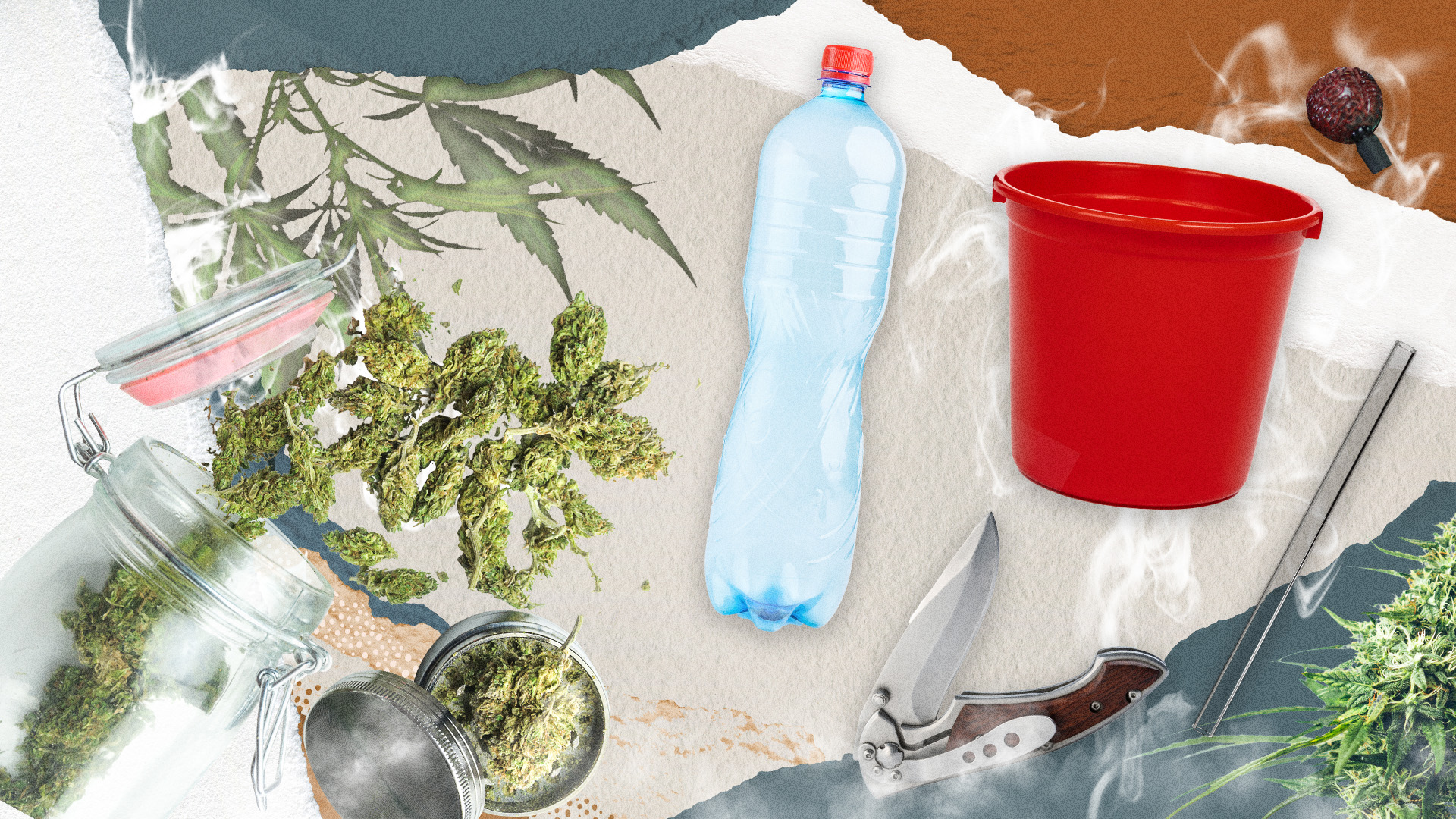
What You’ll Need
- A plastic bottle (16 oz to 2-liter)
- A bucket, large bowl, or container deep enough to submerge most of the bottle
- Water
- A bowl piece: a 10mm or 12mm deep socket wrench bit is ideal; aluminum foil works as a backup
- A knife or scissors
- Cannabis, ground or broken up
Step-by-Step Instructions
- Cut the bottom off the plastic bottle, roughly two inches from the base.
- Fill your bucket or container with enough water to submerge the bottle up to the neck.
- Press your bowl piece into the bottle cap. If using a socket bit, it should fit snugly into a hole cut or melted in the cap. If using foil, mold it into a small bowl shape over the cap opening and poke a few small holes in the base.
- Pack your bowl with ground cannabis, then screw the cap back onto the bottle.
- Submerge the bottle in the water, leaving just the cap and bowl above the surface.
- Light the bowl and slowly lift the bottle upward without pulling it fully out of the water. The chamber fills with smoke as the bottle rises.
- Unscrew the cap, place your mouth over the opening, and push the bottle downward into the water while you inhale. The descending bottle pushes the smoke out and into your lungs.
Can you use a plastic bottle for a gravity bong? Yes. Keep the flame focused on the bowl piece and away from the plastic neck, since repeated heat contact with the bottle itself raises concerns covered in the safety section below.
Method 2: The Glass Bottle Gravity Bong
The glass bottle method uses the same water-displacement mechanics as the plastic version, but replaces the plastic bottle with a glass one. This makes it the better long-term option because glass does not off-gas under heat the way plastic can.
What You’ll Need
- A glass bottle (a wine bottle or similar narrow-neck bottle works well)
- A large glass jar, deep bowl, or pot filled with water
- A push-pin or heated nail to make a hole in the base of the glass bottle
- A bowl piece (socket wrench bit preferred)
- Cannabis
Step-by-Step Instructions
- Carefully puncture the base of the glass bottle using a heated push-pin or nail. Work slowly. If you have a small drill with a glass bit, that gives you more control.
- Attach your bowl piece to the mouth of the bottle. A socket bit pressed firmly into the opening works well for most bottle sizes.
- Fill your container with enough water to submerge the glass bottle up to the neck.
- Submerge the bottle, keeping the neck and bowl above water.
- Light the bowl and slowly raise the bottle to draw smoke into the chamber.
- Remove the bowl piece, place your mouth over the opening, and push the bottle back down to inhale.
The glass build takes a few more minutes to set up, but it holds up better over repeated use and sidesteps the plastic heating concerns entirely. It bridges naturally into smoking out of plastic as something worth reading before committing to a plastic-only setup.
Method 3: The Bucket Bong (No Cutting Required)
The bucket bong skips the cutting step entirely and scales up the chamber size, which produces a more intense hit than either bottle method. It works best for group use or for experienced consumers who want maximum volume.
What You’ll Need
- A 2-liter plastic bottle (intact, no cutting)
- A large bucket or storage container filled with water
- A knife or heated nail to make a small hole in the bottle cap
- A bowl piece (socket bit or foil)
- Cannabis
Step-by-Step Instructions
- Make a small hole in the center of the bottle cap using a knife tip or heated nail. The hole should be just wide enough to hold your bowl piece securely.
- Press your bowl piece into the cap hole and pack it with cannabis.
- Fill the bucket with enough water to submerge the bottle nearly to the neck.
- Submerge the bottle cap-side down, keeping the base above water. Screw the cap on while the bottle is submerged, so you do not lose the water seal.
- Flip the bottle upright with the bowl piece at the top, still submerged. Light the bowl and slowly pull the bottle upward to fill the chamber.
- Remove the bowl piece and push the bottle back down while you inhale.
The larger bucket volume allows for deeper submersion and a bigger chamber fill, which is why the bucket bong delivers a noticeably stronger hit than the standard plastic bottle build. Knowing how to how to pack a bowl correctly before you start will help you get an even burn and a cleaner pull.
Safety Tips: Materials to Use and Avoid
Plastic and Heat
PET #1 plastic, the material used in standard soda bottles, is generally considered safe for water storage. The concern with gravity bongs is repeated heat exposure at the bottle neck, where the cap and bowl piece sit closest to the flame. At temperatures reached by ambient smoke contact, research on thermal degradation of PET plastic and volatile compound release suggests that off-gassing can occur at the point of direct heat contact.
Keeping the flame on the bowl piece rather than the bottle neck, and replacing the bottle regularly, reduces that risk. The glass bottle method eliminates it entirely.
Bowl Piece Materials
Aluminum foil is the most common improvised bowl material, but it burns inconsistently and tends to develop hot spots that can char the flower unevenly. A 10mm or 12mm deep socket wrench bit fits the opening of most standard bottles, does not burn, and is reusable across multiple sessions.
Do not use painted or chrome-coated sockets; bare stainless steel or brass is safer. The same caution applies to soda can bowls and soda can pipes, which are frequently improvised by bending a can into a bowl shape. They function, but a socket piece is a more durable and lower-risk substitute.
Managing Hit Intensity
A gravity bong delivers more smoke per pull than almost any other device, which makes it easy to overconsume, especially if you are new to it. A study on cannabis acute intoxication and dose-dependent respiratory effects notes that large, rapid doses of inhaled cannabis are associated with greater acute discomfort in less experienced users.
Start with a small amount of flower, draw slowly rather than pulling the bottle up all at once, and do not try to clear the full chamber on your first attempt. If you notice a sore throat from smoking, reduce the volume you’re pulling or switch to a smaller bottle size. Keeping an eye on dirty bong water risks matters here too. Change the water between sessions, since contaminated water affects both the flavor and the cleanliness of every hit.
Ready to explore your cannabis options legally and safely? Find a medical marijuana doctor near you and get started with a Veriheal consultation.
Note: The content on this page is for informational purposes only and is not intended to be professional medical advice. Do not attempt to self-diagnose or prescribe treatment based on the information provided. Always consult a physician before making any decision on the treatment of a medical condition.
Note: Veriheal does not support illegally consuming therapeutic substances such as cannabis but acknowledges that it transpires because of the current illicit status, which we strive to change by advocating for research, legal access, and responsible consumption. Always consult a physician before attempting alternative therapies.
Frequently Asked Questions
How do I make my own bong?
You can make a gravity bong at home using a plastic or glass bottle and a bucket or large container filled with water. The three main methods are the plastic bottle build, the glass bottle build, and the bucket bong, each requiring slightly different materials but following the same water-displacement principle. A socket wrench bit pressed into the bottle cap makes the most reliable bowl piece.
Do gravity bongs get you more stoned?
Gravity bongs typically produce a stronger effect than standard pipes or bongs because the water-displacement mechanism fills the entire chamber with dense smoke before you inhale. That means you take in more cannabinoids per pull than most other methods deliver. Start with less flower than you think you need until you know how the intensity hits you.
Can I use a plastic bottle for a gravity bong?
Yes, a standard plastic soda bottle works well for a gravity bong. Keep the flame on the bowl piece rather than the plastic neck to reduce heat exposure to the bottle material, and consider switching to the glass bottle method if you plan to use the device regularly.
Which is better for lungs, a bong or a joint?
Neither a bong nor a joint is without respiratory impact, but a gravity bong delivers a denser, larger volume of smoke per pull than either, which makes it harder on your lungs if you are using it frequently. Water filtration in a standard bong removes some particulates, but a 2012 NIDA-funded study on waterpipe filtration and harmful constituent reduction found that filtration does not eliminate the respiratory risks associated with smoke inhalation. If you are looking for lower-irritant options, exploring rolling paper alternatives or vaporizing are generally considered gentler on the airways for regular users.
Author, Share & Comments