Your medical cannabis journey simplified: find partnered dispensaries, explore pricing options, earn rewards, and get answers to FAQs, all in one spot.
March 14, 2024 08:00 am ETEstimated Read Time: 4 Minutes
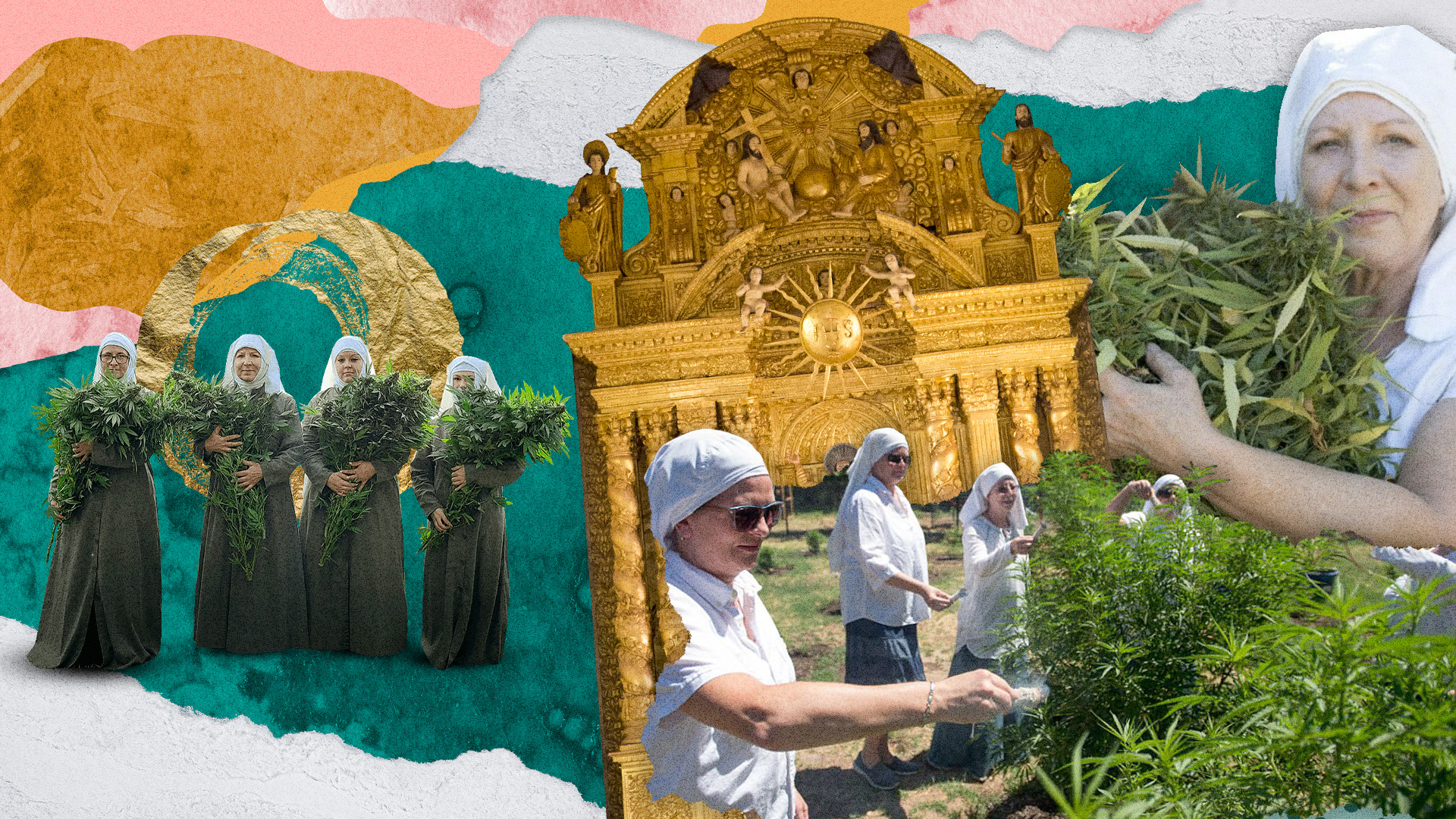
On a farm in California’s nutrient-rich Central Valley, a group of nuns meticulously care for rows of cannabis plants. Here, cultivation takes an entirely different meaning than the mechanical and monotonous routine of mass production. In the place of timesheets and algorithms, moon cycles instead dictate when cannabis is saged, set, and bottled into CBD tinctures.
The Sisters of the Valley (SOTV) were born under the glow of the 2014 Harvest Moon. Guided by the tenets of their Beguine ancestors, the SOTV are equal parts scholars and spiritualists. At the core of the group is the mission to share cannabis—one of the earth’s many gifts—with the world as a vehicle for holistic healing.
On social media, the “weed nuns” (as they’ve come to be known) document their cultivation process and host workshops demystifying the plant — breaking old stereotypes of what cannabis users look like. Their small CBD business has also found some success, bringing in over $500,000 in medical CBD sales last year.
Thanks to these small triumphs, the SOTV’s teachings have spread, picking up new disciples along the way like Sister Camilla and Sister Luna.
Born and raised in Puebla, Mexico, Camilla and Luna are brining the SOTV’s teachings to their home country.
From Students to Leaders: Sister Luna and Sister Camilla Carry The Torch
Photo courtesy of Sisters of the Valley
Prior to becoming SOTV, Sister Luna and Sister Camilla were active in cannabis reform clubs across Mexico. A testament to their dedication to the plant and what it stands for, the pair took vows to become SOTV in the summer of 2018. The two kept a steady presence at the Central Valley farm, learning the ins and outs of cannabis cultivation, studying the teachings of the convent, and learning how the business side of the operation works.
Though their dedication to the convent made them the perfect disciples, the pairs commitment to academic excellence is what set them apart and made them the perfect candidates to bring the SOTV’s teachings to Mexico.
See If You Qualify For Medical Marijuana -Select Your State!
Select Your State
Alabama
Alaska
Arizona
Arkansas
California
Colorado
Connecticut
Delaware
Florida
Georgia
Hawaii
Idaho
Illinois
Indiana
Iowa
Kansas
Kentucky
Louisiana
Maine
Maryland
Massachusetts
Michigan
Minnesota
Mississippi
Missouri
Montana
Nebraska
Nevada
New Hampshire
New Jersey
New Mexico
New York
North Carolina
North Dakota
Ohio
Oklahoma
Oregon
Pennsylvania
Rhode Island
South Carolina
South Dakota
Tennessee
Texas
Utah
Vermont
Virginia
Washington
West Virginia
Wisconsin
Wyoming
Never miss a post
Get updates on cannabis culture, new research, and expert insights
Sister Luna comes from a science background with a BA in Biology and Masters in Biomedicine. Sister Camilla comes from a business background with BA in International business and a Masters in Economics. Together, the pairs disciplines make them a powerful force — encapsulating the SOTV’s mission to educate the public on cannabis’ beneficial properties and to distribute high quality products that facilitate holistic healing.
With the support of the SOTV, Sister Luna and Sister Camilla founded the Hermanas Del Valle (Sisters of the Valley Mexico) in 2022. Though the two years since have been filled with challenges and obstacles, the Hermanas Del Valle have nonetheless managed to become a cultural force in their own right.
What It Means To Be A “Weed Nun” In Mexico
Photo courtesy of Sisters of the Valley
As subversive as the image of a nun with a joint in her mouth may be in the U.S., in Mexico, the image represents an outright act of rebellion.
Living in fear of violence and retribution from cartels and social ostracization from family and friends — the HDV operate in relative secrecy. The convent operates in a small village on the outskirts of central Mexico. There, five Sisters grow cannabis plants in paintbuckets lodged in the walled-off private gardens of trusted elders. They dry the plants in crevices and covered laundry lines hidden in the back of the house they use as a fake store-front. When interviewed and photographed by Reuters, many Sisters asked that their names, professions, and whereabouts be omitted.
Despite their limitations, the HDV have found different ways to make their presence felt. On social media, the HDV post about their cultivation journeys and host educational workshops like their American counterparts. They also make visits to Mexico City to stage community outreach and to advocate for the plant’s full legalization. The HDV even have an e-commerce store where they sell mushroom coffe, incense, sage and other handmade products.
Mexico-born and California-raised, Cesar is a Marketing Associate at Veriheal. When he’s not scouring social media for the latest internet drama, you can find him working on yet another collage project.
Oklahoma’s medical-only dispensary market gives licensed patients access to a wide range of cannabis products, but every purchase must follow OMMA rules. This guide explains how to find licensed dispensaries, what identification to bring, purchase and possession limits, product testing, pricing, and what to expect during a visit.
Ohio medical marijuana dispensaries offer registered patients benefits such as lower taxes, higher purchase allowances, and access to certain medical-only products. This guide explains how to find licensed dispensaries, verify their credentials, understand purchase limits, prepare for your first visit, and navigate medical versus recreational purchasing rules.
Oklahoma’s advertised $25 medical marijuana card renewal covers the physician evaluation, but patients must also pay a separate OMMA license fee. This guide explains the full renewal cost, reduced-fee eligibility, required documents, online renewal steps, processing times, and the new physician recommendation requirement.
Tulsa residents can apply for an Oklahoma medical marijuana card online through a telehealth physician evaluation followed by an OMMA application. This guide covers eligibility, application steps, costs, processing times, local dispensary access, out-of-state licenses, and card renewal or replacement.
Florida’s advertised $20 medical marijuana card offers usually cover only the physician evaluation, with separate state registration costs still required. This guide breaks down the actual costs, qualifying conditions, application process, seasonal-resident eligibility, renewals, and other fees patients should consider before applying.
The statements made regarding cannabis products on this website have not been evaluated by the Food and Drug Administration (FDA). Cannabis is not an FDA-approved substance and is still illegal under federal law. The information provided on this website is intended for educational purposes only and is not intended to diagnose, treat, cure, or prevent any disease. It is not intended as medical advice and should not be considered as a substitute for advice from a healthcare professional. We strongly recommend that you consult with a physician or other qualified healthcare provider before using any cannabis products. The use of any information provided on this website is solely at your own risk.