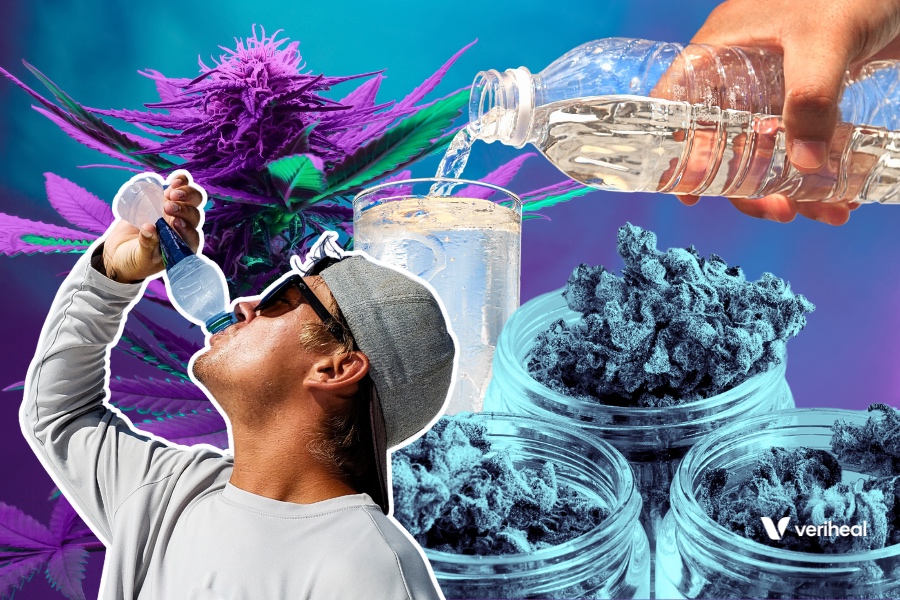
Ever taken a hit of cannabis and immediately felt your mouth turn into the Sahara Desert? That intense dry mouth sensation, known as cottonmouth, happens because tetrahydrocannabinol (THC) directly interferes with your body’s natural saliva production.
Your salivary glands contain cannabinoid receptors that THC binds to, temporarily reducing saliva flow and creating that parched feeling. Understanding why this happens is the first step to managing it more effectively.
This isn’t just uncomfortable; it’s your body responding to a specific biological process. Understanding why cannabis makes you thirsty can help you prepare for the experience and manage it more effectively.
How THC Affects Saliva Production and Makes You Thirsty
THC works by mimicking anandamide, a natural compound your body produces that binds to cannabinoid receptors throughout your system. Your salivary glands contain CB1 and CB2 receptors that normally help regulate saliva production. When THC enters your bloodstream, it latches onto these same receptors and disrupts the normal signaling process.
The result is a dramatic reduction in saliva flow. Your submandibular glands, which produce about 70% of your saliva during rest, slow their output significantly. This creates the immediate dry mouth sensation that most cannabis users recognize within minutes of consumption.
THC also affects the parasympathetic nervous system, which controls automatic functions like salivation. When this system is disrupted, your mouth produces less of the watery saliva that keeps your mouth comfortable and helps with swallowing. The thicker, more viscous saliva that remains can’t adequately coat your mouth and throat, intensifying the dry feeling.
Cottonmouth vs. Dehydration: Understanding the Difference
Cottonmouth and dehydration are two completely different physiological responses, though they’re often confused. Cottonmouth is a localized reduction in saliva production that affects only your mouth and throat. Dehydration is a systemic condition where your entire body lacks adequate fluid levels.
Cannabis doesn’t actually dehydrate your body in the traditional sense. Your kidneys, blood volume, and cellular hydration remain largely unaffected by THC consumption. The dry mouth feeling comes specifically from reduced saliva production, not from overall fluid loss.
Different consumption methods affect saliva production to varying degrees. Smoking and vaping tend to create more immediate and intense cottonmouth because the THC enters your bloodstream quickly and the smoke itself can dry out your mouth tissues. Edibles typically produce milder dry mouth effects, though they can last longer as THC is processed through your digestive system.
Is Cottonmouth Dangerous To Your Health?
Cottonmouth itself is generally harmless and temporary, lasting anywhere from one to four hours depending on your consumption method and dosage. However, prolonged dry mouth can create some secondary issues worth monitoring.
Saliva plays a crucial role in oral health by neutralizing acids, washing away food particles, and controlling bacterial growth. When saliva production drops significantly, you face a higher risk of tooth decay, gum irritation, and bad breath. Research shows that chronic dry mouth conditions can lead to increased dental problems if left unaddressed.
The discomfort itself can also interfere with eating and speaking. Many cannabis users find it difficult to enjoy food or carry on conversations when their mouth feels extremely dry. This can be particularly problematic for medical patients who need to maintain proper nutrition and social connections.
How To Deal With Cottonmouth
The most effective approach to managing cottonmouth involves both immediate relief and prevention strategies. Staying hydrated before, during, and after cannabis use helps maintain your body’s overall fluid balance, even though the dry mouth sensation comes from reduced saliva rather than dehydration.
Drinking water slowly and frequently works better than gulping large amounts at once. Small sips help keep your mouth tissues moist and give your salivary glands time to respond. Room temperature water often feels more soothing than ice-cold drinks, which can sometimes intensify the dry sensation.
Chewing sugar-free gum or sucking on sugar-free candies can stimulate saliva production naturally. The mechanical action of chewing signals your salivary glands to increase output, while sugar-free options avoid feeding harmful bacteria in your mouth. Citrus-flavored options tend to be particularly effective at triggering saliva flow.
Factors That Increase Cannabis-Related Thirst
Several factors can intensify cottonmouth and make the dry mouth sensation more uncomfortable. Understanding these variables helps you prepare for and minimize the effects.
- Higher THC concentrations – Products with 20% THC or higher typically produce more pronounced cottonmouth than lower-potency options
- Smoking method – Joint and pipe smoking create more mouth dryness than vaping due to hot smoke exposure
- Alcohol consumption – Drinking alcohol before or during cannabis use compounds dehydration and intensifies dry mouth
- Salty or sugary snacks – Foods that naturally dry your mouth make cottonmouth worse and harder to relieve
- Environmental factors – Hot, dry air or windy conditions increase moisture loss from your mouth and airways
- Medications – Antihistamines, antidepressants, and blood pressure medications can reduce baseline saliva production
- Individual tolerance – New users typically experience more intense cottonmouth than regular consumers
The timing of your consumption also matters. Using cannabis on an empty stomach or when you’re already mildly dehydrated amplifies the dry mouth effect.
Best Drinks and Foods to Combat Cannabis Cottonmouth
Choosing the right beverages and foods can significantly reduce cottonmouth discomfort and help restore normal saliva flow. Not all liquids provide equal relief, and some can actually make the problem worse.
Most effective drinks for cottonmouth relief:
- Room temperature water – provides immediate moisture without shocking your system
- Coconut water – offers natural electrolytes that support overall hydration
- Herbal teas – chamomile and ginger teas are particularly soothing and caffeine-free
- Fresh fruit juices – citrus juices stimulate saliva production, though dilute them to reduce acidity
Foods that stimulate natural saliva production:
- Fresh fruits with high water content (watermelon, oranges, grapes)
- Vegetables like cucumber and celery that require more chewing
- Sugar-free mints or gum containing xylitol
- Frozen fruit pieces that slowly release moisture as they melt
Avoid alcohol, excessive caffeine, and very salty snacks, as these can worsen dehydration and interfere with saliva production. The way food influences cannabis effects extends beyond just absorption – your food choices during consumption directly impact your comfort level.
Ready to explore medical cannabis with professional guidance? Find a qualified doctor who can help you understand how different strains and consumption methods affect your body and minimize unwanted effects like cottonmouth.
Note: The content on this page is for informational purposes only and is not intended to be professional medical advice. Do not attempt to self-diagnose or prescribe treatment based on the information provided. Always consult a physician before making any decision on the treatment of a medical condition.
Note: Veriheal does not support illegally consuming therapeutic substances such as cannabis but acknowledges that it transpires because of the current illicit status, which we strive to change by advocating for research, legal access, and responsible consumption. Always consult a physician before attempting alternative therapies.
FAQ
Why does smoking weed make my mouth so dry?
THC binds to cannabinoid receptors in your salivary glands and temporarily reduces saliva production, creating that characteristic dry mouth feeling.
How long does cottonmouth last after using cannabis?
Cottonmouth typically lasts 1-4 hours, depending on your consumption method, dosage, and individual metabolism. How long cannabis effects last directly correlate with how long dry mouth persists.
Does cottonmouth mean I’m dehydrated?
No, cottonmouth is localized dry mouth from reduced saliva production, while dehydration affects your entire body’s fluid levels. Cannabis doesn’t actually dehydrate your body systemically.
What’s the best drink for cottonmouth?
Room temperature water works best for immediate relief. Coconut water and diluted citrus juices can also help by providing electrolytes and stimulating natural saliva production.
Can I prevent cottonmouth when using cannabis?
While you can’t completely prevent cottonmouth, staying well-hydrated beforehand, choosing lower-THC products, and avoiding alcohol or salty foods can minimize the effects.
Is cottonmouth worse with edibles or smoking?
Smoking typically creates more immediate and intense cottonmouth due to hot smoke exposure and faster THC absorption. Edibles produce milder but longer-lasting dry mouth effects.
Author, Share & Comments