Your medical cannabis journey simplified: find partnered dispensaries, explore pricing options, earn rewards, and get answers to FAQs, all in one spot.
Cannabis extracts–especially smokable and vaporizable concentrates–are some of the most popular products in the cannabis marketplace for a reason. The highly potent effects reportedly provide a substantially therapeutic dose for medical patients, while recreational consumers love the stronger high.
You can safely make some solvent-free concentrates at home, but others require professional extraction to prevent life-threatening explosions from flammable solvents or contamination from impure products. Safety is always paramount, so let’s explore how the pros create their concentrates and how you, the non-pro, can stay safe making solventless concentrates at home.
Professional Extractors Make Concentrates In A Laboratory
It’s not that at-home extractors can’t be trusted to make certain concentrates, but the fact is that they lack the experience and gear to do it safely, plus it’s against the law. Additionally, the amount of equipment required for solvent-based extract, ranging from crumblers to diamonds, is extensive, expensive, and just not a reality for non-professionals.
Extraction technicians undergo rigorous training and often earn certifications. Although certification isn’t mandatory, having a solid foundation in chemistry and plant science greatly enhances their effectiveness in lab-based roles. Professional extractors also operate in explosion-proof labs that meet strict building codes, including advanced ventilation and fire suppression systems. Lab-grade equipment is essential to ensure purity, consistency, and safety throughout the extraction process.
The most important factors affecting extraction processes, according to some researchers, are the reactions of the solvent to “target compounds, temperature, pressure, mixing rate, solvent-to-plant matter ratio, and particle size of freshly harvested cannabis flower”. Professional extraction technicians know how to navigate and utilize these dynamics to make the most optimal concentrates each time.
Photo Credit: iStock
BHO Extractions & Concentrates
Butane hash oil (BHO) is made by hydrocarbon extraction, one of the most common solvent-based extraction processes used to transform cannabis flower and biomass into concentrates rich with potent terpene and cannabinoid concentrations.
BHO extraction uses solvents to separate resins containing both compounds from the trichome heads of harvested cannabis. It also dissolves chlorophyll and other undesirable plant matter. The non-polar solubility of both butane and cannabinoid molecules is what makes this possible. Post-processing agitation of extracted material creates different varieties of BHO concentrates. BHO extractions also include other hydrocarbon solvents, like propane, mixed in for higher extraction efficiency. BHO is a favorite method among many professional extractors for its efficiency, while consumers delight in the high levels of terpene and cannabinoid preservation that dabs from these concentrates deliver.
Live Resin vs. Cured Concentrates
Freshly harvested and frozen cannabis buds and biomass called live resin optimize the separation and extraction of cannabinoid and terpene-rich trichomes, providing a better throughput during extraction as well as an optimal terpene content. Processors typically use dry ice or liquid nitrogen to flash freeze cannabis for live resin.
Processors must fully dry cured extracts to prevent mold contamination. This is a big reason why extractors often prefer freshly frozen flower—there’s no drying required. Commercial growers and extractors utilize dehumidifiers and other types of oven and vacuum drying to speed up the drying process, all while avoiding excessive heat that damages cannabinoids and terpenes.
Making Concentrates Using Hydrocarbon Extraction
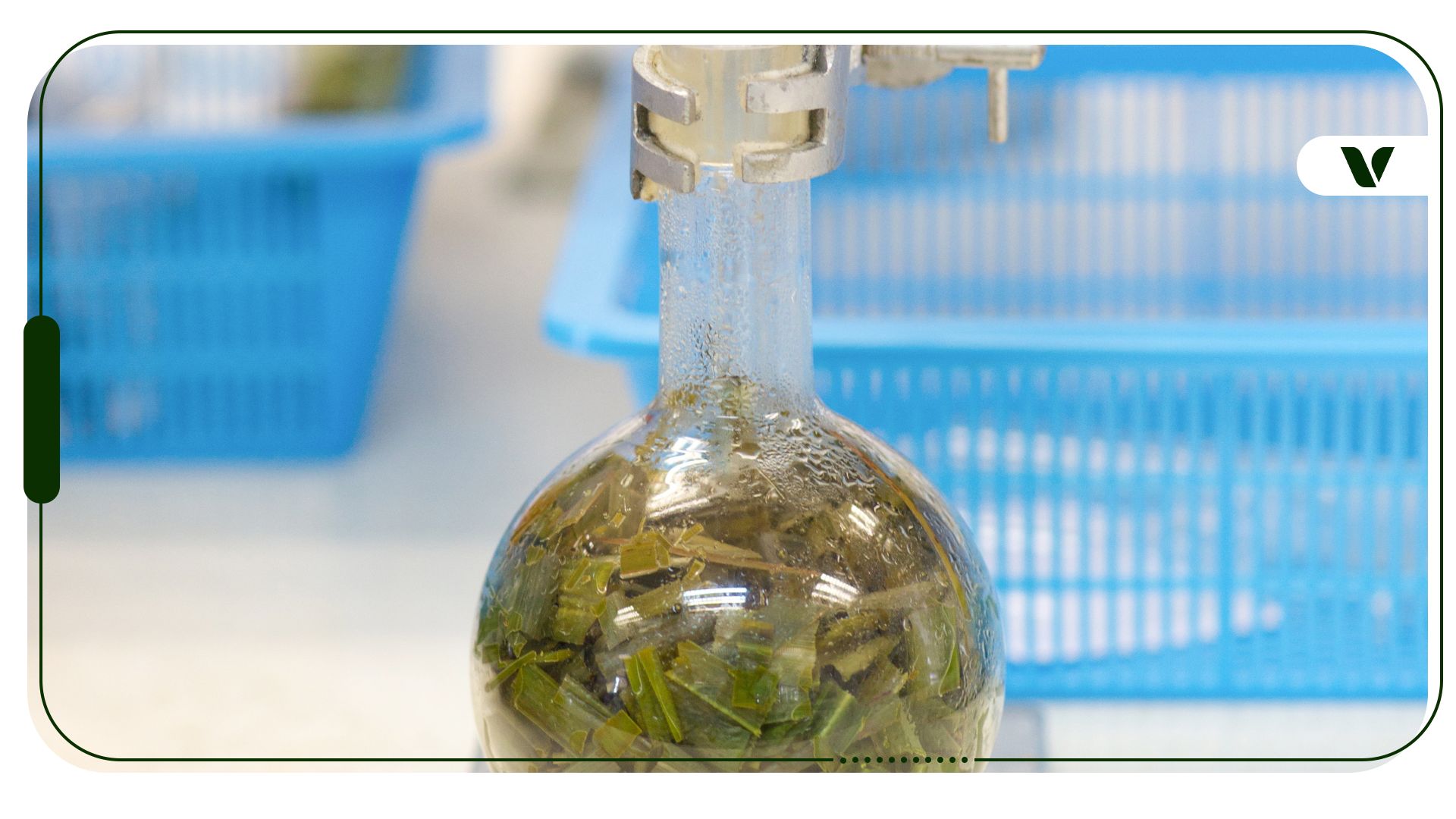
Whether using live or cured cannabis, extractors soak and stir it in liquid butane. Pre-chill this chemical solvent to room temperature or below using an apparatus called a material column. Butane passes through the material column from end to end for several hours, even sometimes days. Laboratories use the material column as part of a self-regulating, sealed, closed-loop system to ensure safety and efficiency.
Closed-loop systems extract cannabinoids, terpenes, and flavonoids from trichome heads, collecting the butane-cannabinoid mixture separately from plant matter. A vacuum pump, oven chamber, wipe film distillation machine, or rotary evaporator (rotovap) removes residual butane and toxic compounds, often over an entire day or more. Temperatures around 90–100°F cause the butane in the extract to evaporate as a gas, while the remaining crude oil undergoes decarboxylation to activate its cannabinoids.
Closed Loop Solvent Recycling
Closed-loop systems for concentrate extraction have dual chambers that separate extracted material from solvent into separate chambers. Solvent extraction within a closed-loop system is very popular among professional extractors for its ability to recover most of the solvent after the extraction process for use in future extractions. This factor not only makes the process easier each time, but it also eliminates environmental waste and cost-efficiency concerns.
Winterization & Purging Residual Fats, Lipids, and Solvents
After extraction, processors winterize the material by mixing it with food-grade ethanol. Remaining fats, lipids, and waxes within the mixture endure extremely cold conditions within a cryo-freezer or dry-ice bath. This process solidifies this remaining plant matter, making it easy to filter the extract and resulting in a purer, better-tasting end product.
Evaporation, courtesy of vacuum pump chambers or a rotovap, maintains ethanol’s boiling point at low temperatures that won’t degrade the concentrate or leave any remaining traces of the winterization solvent. A benefit of winterization is also how much it maximizes terpene profiles.
Laboratories test for trace amounts of residual chemical solvents in BHO concentrates, ensuring they meet allowable levels set by the International Council for Harmonization (ICH), despite the already extensive removal process.
Agitation Equals Different Consistencies & End Products
After extractors remove cannabinoids, terpenes, and solvents, they use agitation–whipping or stirring–and controlled evaporation to create different forms of BHO concentrates. Cooling and stirring can take several days, depending on the product.
Shatter
Shatter is a form of BHO, which is unique in that it doesn’t require agitation to form its windowpane-like appearance. Non-agitation during purging and winterization maintains the desired glassy appearance and consistency, along with consistent temperatures in the 90°F -100°F zone. Cooling the shatter to room temperature before placing it in a refrigerator gives it a firmer consistency.
Wax & Crumble
Wax or crumble depends on either a waxy or crumbly consistency. Lightly agitating the concentrate during purging creates the smooth, consistent texture of wax. Stirring it further disrupts this balance, resulting in a more crumbly texture that’s better suited for products marketed as crumble. Vacuum ovens heat these concentrates to about 110°F-130°F, also contributing to their drier texture.
Budder
Extractors create budder’s creamy, buttery consistency by repeatedly stirring and whipping the extract during and after the purge cycle. Maintaining temperatures between 100–115°F helps achieve a soft texture that’s easy to mix while consistent in quality.
Sauce & Diamonds
Pressure and time are the two keys to making precious gemstones like diamonds–they also make THCA diamond crystals and terpene sauce! Live resin BHO goes into sealed mason jars without stirring or agitation, building natural pressure in a closed-loop environment. The sealed jars then sit undisturbed in a dark and warm area for a week or longer, allowing THCA molecules to concentrate and form their crystal-like diamonds.
Diamonds typically rise to the surface in the jar, while sauce falls to the bottom. THCA diamonds and sauce feature acidic cannabinoids that require a low heat source like a vaporizer or dab rig for activation.
CO₂ Extractions & Concentrates
Professional extractors can also produce many of the concentrates above using supercritical carbon dioxide (CO₂) extraction. This extraction process often doesn’t retain the same levels of terpenes, flavor, and potency as BHO; however, it also doesn’t leave any traces of harmful byproducts. The most common form of CO₂ concentrates is hash oil distillate for vaporizer cartridges.
See If You Qualify For Medical Marijuana -Select Your State!
Select Your State
Alabama
Alaska
Arizona
Arkansas
California
Colorado
Connecticut
Delaware
Florida
Georgia
Hawaii
Idaho
Illinois
Indiana
Iowa
Kansas
Kentucky
Louisiana
Maine
Maryland
Massachusetts
Michigan
Minnesota
Mississippi
Missouri
Montana
Nebraska
Nevada
New Hampshire
New Jersey
New Mexico
New York
North Carolina
North Dakota
Ohio
Oklahoma
Oregon
Pennsylvania
Rhode Island
South Carolina
South Dakota
Tennessee
Texas
Utah
Vermont
Virginia
Washington
West Virginia
Wisconsin
Wyoming
Never miss a post
Get updates on cannabis culture, new research, and expert insights
The CO₂ extraction process is quite different than hydrocarbon extraction. It relies solely on pressurized carbon dioxide in an interchangeable liquid and gas form known as supercritical CO₂. This extraction method is more pure, precise, and environmentally sound, while also free of any chemical solvents. The higher cost of instruments and equipment (sometimes hundreds of thousands of dollars), limited variety of end products, and lower extraction yields counter those benefits in comparison to hydrocarbon extraction.
Supercritical Extraction: Separating the Cannabinoids and Terpenes from CO₂
CO₂ supercritical extraction and hydrocarbon extraction both use mechanically or hand-separated fresh frozen or cured cannabis, loaded into an aluminum material column.
Technicians compress food-grade CO₂ inside a supercritical CO₂ extractor to between 1,100 and 2,000 PSI, maintaining a temperature of around 113°F to 131°F, depending on the desired level of extraction.
Pressure and temperature levels hold for about 2-4 hours at a time while the supercritical CO₂ acts as a pure solvent, dissolving cannabinoid resins and terpenes from the trichome heads as both a liquid and a gas. This makes CO₂ extraction one of the purest and most complete methods of extraction. Decarboxylation occurs after this step to activate the cannabinoids in the extract.
Winterization & Processing the Final Product
The system collects the extracted biomass in one separator tank, while it directs waxes, chlorophyll, and other residual fats into a separate tank. Winterization removes these undesirable plant compounds, improving consistency, color, taste, and aroma. The freshly extracted CO₂ hash oil mixes with a small percentage of ethanol–this separates the undesirables after enduring freezing temperatures around -4°F or lower for about a day or two.
Vacuum and funnel filtration eventually remove the plant fats and waxes, while the remaining ethanol evaporates using a vacuum oven or rotovap in the range of 104°F-122°F. The final product is a very pure distillate form of hash oil, where post-processing terpenes are often added back in for optimal flavor. CO₂ extraction also creates distillate oils for commercial cannabis edible products and capsules
The condenser mechanism recycles and reuses the CO₂ as the system gradually reduces the pressure. It then collects the concentrated oil from the separation tank.
Solventless Concentrates Can Be Made Safely At Home
Solventless (chemical-free) concentrates have quietly become the most popular extracts among cannabis consumers, thanks in part to their clean, chemical-free extraction process. The combo of ice-water hash and rosin pressing provides consumers with the best of both worlds–purity and full-spectrum cannabinoid and terpene content all in one.
Scientific and costly endeavors of BHO and CO₂ extractions make them a non-starter for the average consumer looking to save some money by making their own concentrates. Solventless extraction is safe to do at home, with no risk of explosions or toxic residual chemical compounds. The process just requires a little bit of inexpensive equipment to get the job done.
Kief
Mature, dried cannabis flower contains a wealth of trichomes–that’s why making concentrated hash from them is so popular. Trichomes fall off and shake loose pretty easily when the flower is handled or ground up, creating a powdery concentrate known as kief.
Four-chamber cannabis grinders often have a bottom compartment known as a kief collector that accumulates kief as the consumer grinds up flower. This simple collection method of kief is perfect to add to joints, bowls, or edible recipes, providing a potent, concentrated kick to the experience. Some consumers also use an inexpensive piece of equipment known as a pollen press. This device compresses kief into solid, coin-like discs that you can easily break apart.
Dry sifting kief from larger amounts of flower buds is very similar, but on a larger scale. Low-cost pieces of equipment, like fine micron mesh dry sift screens and a kief box, separate kief from the rest of the plant matter. This process doesn’t require much effort, just simply adding the flower and shaking it back and forth until the trichomes shake loose and collect in another compartment.
Ice Water Hash
Cannabis concentrates affectionately known as ‘bubble hash’ are also called ice water hash, named for the method used to make them. Ice water hash is one of the oldest and most reliable ways for the average consumer to make their own quality hash concentrates. It contains no excess plant fats or lipids, making it a more desirable end product than kief.
Ice water hash involves a relatively inexpensive “washing machine”, typically paired with a set of vinyl bags containing micron screens. Home growers often use ice water washing machines to process large harvests with plenty of extra bud, plant material, and trim. At-home extractors can also manually agitate trichomes in a 5-gallon bucket using a rod, stick, or spatula inside vinyl micron screen bags fitted to another 5-gallon bucket instead of buying a washing machine.
DIY extractors use frozen or fresh plant matter and add it to the washing machine or bucket, along with about 10 pounds of ice. Vinyl micron bags with different-sized perforations line another bucket. Ice agitates the cannabis manually or automatically, depending on the type of device chosen. This agitation makes the trichomes present in the cannabis more brittle, detachable, and separable from the rest of the plant material.
Processors separate the trichome heads, which then fall into the water. They hand-filter and strain the mixture through a series of increasingly finer micron screen bags in the second bucket. They repeat this process until only the trapped concentrate remains. Finally, they press out the remaining water content from the bubble hash using a cheesecloth, cotton muslin bag, or another vinyl screen bag.
Pressing Rosin
Bubble hash goes next level when made into hash rosin–one of the most popular forms of concentrates in today’s cannabis marketplace. Rosin bags containing the finished bubble hash get loaded in between heated plates, which apply pressure. The trichome heads within the bubble hash quickly liquify and turn into an oil that’s filtered through the rosin bag. A piece of non-stick parchment paper collects the final pressed hash rosin.
Average consumers can use a common hair straightener at about 220°F to press small amounts of bubble hash in a rosin bag or two and onto parchment paper, taking care to avoid burns. Applying pressure for about a minute or so creates a bubbling of the rosin onto the parchment paper wrapped around the device’s top and bottom heat plates. Once the bubbling ceases, unplug the device and remove the parchment to cool. A dab tool easily removes the rosin for collection.
Hash Rosin Pressing Process
Home growers with excess plant material after harvest usually opt for an automatic rosin press, or know a guy who has one. These superior devices are precise and automatically programmed to allow for specific temperatures and PSIs. They also range in price from several hundred to several thousand dollars, depending on quality and technology. Here’s how at-home extractors typically make their own hash rosin using a press.
Extractors hand-press the bubble hash, compacting it and removing air bubbles before placing it in the rosin bag–this also preheats it for pressing.
After achieving an even surface for the bubble hash and placing it in the rosin bag, extractors then set the automatic press levels–usually about 145°F and 100 PSI–gradually increasing temperature to 175°F and pressure to 450 PSI to complete the pressing.
The bubble-hash-containing rosin bag is then slipped between two pieces of parchment paper, flowing downwards during pressing.
After establishing the proper settings, hit the start button to let the pressing begin!
The pressing process takes a few minutes, slowly squeezing the bubble hash into viscous amber-colored rosin on parchment paper, which can then be collected with a dab tool and placed into a jar or parchment once cooled.
Pressing bubble hash typically yields about half its weight or more in rosin, depending on quality. Some at-home extractors use dried or frozen flower instead, but this results in lower yield, potency, and flavor compared to bubble hash rosin.
Moon Rocks and Caviar
Moon rocks and caviar are two types of concentrated cannabis that require no specialized equipment to make. Each concentrate has a cannabis bud base dipped and covered with hash oil. The difference is that moon rocks get rolled and completely covered in kief as the final cherry on top; however, sometimes caviar also includes a kiefy outer layer.
Making your own moon rocks and caviar is simple, provided you have the three elements necessary to do so–cannabis buds, hash oil, and kief. The process can get messy, so it’s best to use a dedicated space and non-stick or glass bowls for mixing. Use a dab tool to coat the bud in hash oil, then roll it in a generous layer of kief, pressing lightly until fully covered. The result is a highly potent moon rock, with THC levels ranging from 50% to 90%.
Solventless or Solvent-Based: The Choice Is Yours
Personal preferences usually dictate what variety of hash consumers choose. Some concentrates have different, easier-to-handle consistencies and viscosities. Other concentrates, on the other hand, have higher potency and ease of availability as their main draws.
The big differences between all forms of concentrates, however, are how they are made. Professional extractors should only handle the potentially explosive and toxic chemical solvents used in hydrocarbon and BHO extraction, reducing bodily harm and purging as much residual solvent as possible.
Solventless concentrates, such as hash rosin, eliminate the need for costly professional production or chemical solvents. Those two reasons, along with increased availability, are what make hash rosin king among both the DIY crowd and concentrate consumers everywhere. Whichever concentrate you choose to consume or extract, know the benefits and limitations of each.
Anthony DiMeo is a Southern New Jersey-based journalist and cannabis advocate whose work and advocacy have been featured in Leafly, DOPE Magazine, and the Philadelphia Inquirer. Hobbies include navigating interdimensional psychedelic energy vortexes and tennis.
According to the New York Times, 64 million gabapentin prescriptions were dispensed in 2016, with numbers continuing to rise each year. Many patients now explore medical cannabis as an alternative after experiencing gabapentin’s concerning side effects, including FDA warnings about serious respiratory problems. Both treatments target similar conditions like nerve pain and seizures, but they…
An Oklahoma medical marijuana card provides legal protection under state law, but it can still affect employment, commercial driving, firearms, privacy, and federally regulated situations. This guide explains the main consequences to consider before applying, including workplace drug testing, CDL rules, insurance, housing, and registry privacy.
Getting a medical marijuana card in Oklahoma can be completed online, with no specific qualifying condition required for adult applicants. This guide covers eligibility, telehealth evaluations, required documents, OMMA application steps, fees, processing times, and what patients can do once approved.
A same-day telehealth appointment in Oklahoma can get you a physician recommendation quickly, but OMMA still needs to process your medical marijuana license application. This guide explains the timeline, required documents, costs, and when you can legally visit a dispensary while waiting for the physical card.
Medical marijuana has been legal in Oklahoma since 2018, with eligibility determined by physician judgment rather than a fixed list of qualifying conditions. This guide explains how the OMMA program works, patient rights and possession limits, recreational cannabis laws, federal restrictions, and how Oklahoma compares with neighboring states.
The statements made regarding cannabis products on this website have not been evaluated by the Food and Drug Administration (FDA). Cannabis is not an FDA-approved substance and is still illegal under federal law. The information provided on this website is intended for educational purposes only and is not intended to diagnose, treat, cure, or prevent any disease. It is not intended as medical advice and should not be considered as a substitute for advice from a healthcare professional. We strongly recommend that you consult with a physician or other qualified healthcare provider before using any cannabis products. The use of any information provided on this website is solely at your own risk.