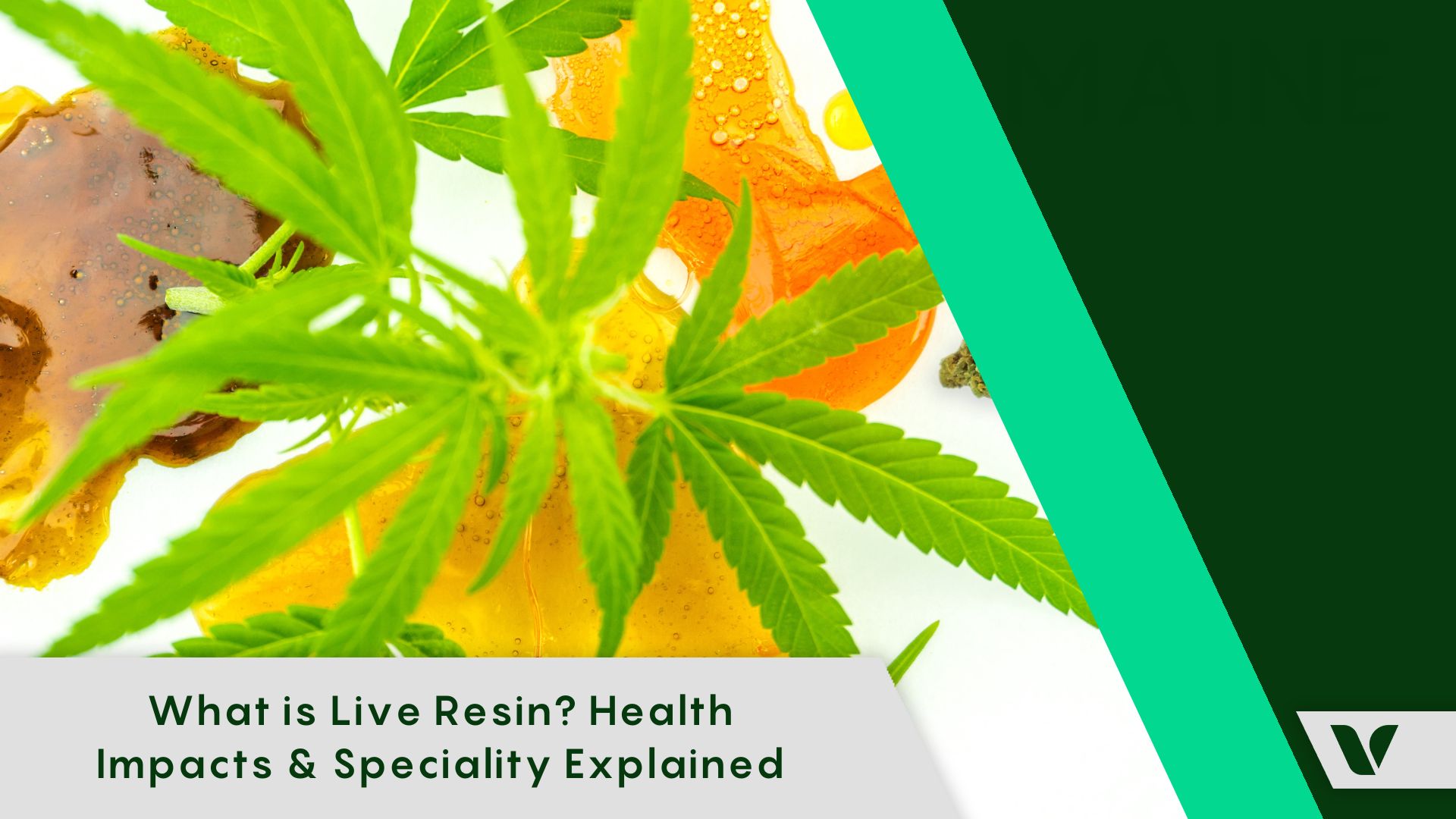
Live resin is a cannabis concentrate made by flash-freezing fresh plants immediately after harvest, then extracting cannabinoids and terpenes using solvents like butane. This process preserves more of the plant’s original terpene profile compared to traditional concentrates made from dried and cured cannabis.
The key difference lies in timing and temperature. Most concentrates start with cannabis that has been dried and cured for weeks, which breaks down many delicate terpenes. Live resin skips this step entirely, working with frozen plant material to capture compounds that would otherwise degrade.
This approach produces a cannabis concentrate with enhanced flavor and aroma, typically containing 70-90% THC along with a fuller spectrum of terpenes than you’ll find in most other extracts.
What is Live Resin?
Live resin is made through a specialized extraction process that begins within hours of harvest. Cannabis plants are flash-frozen to temperatures below -10°F, which stops the enzymatic processes that normally break down terpenes during traditional drying and curing.
The frozen plant material then undergoes butane hash oil (BHO) extraction. Here’s how the process works:
- Flash-freezing: Fresh cannabis plants are frozen immediately after harvest using dry ice or specialized freezing equipment
- Solvent extraction: Butane is passed through the frozen material to extract cannabinoids and terpenes
- Purging: The concentrate is heated under vacuum to remove residual solvents, leaving behind a terpene-rich extract
- Final processing: The product is refined to achieve the desired consistency, from sauce-like textures to more solid forms
The resulting concentrate typically has a sticky, sauce-like consistency, though it can range from liquid to more solid depending on processing techniques. The texture comes from the high terpene content, which creates a more viscous product than many traditional concentrates.
This method preserves compounds that are normally lost during the weeks-long curing process. Research on cannabis terpene preservation shows that traditional drying can reduce terpene content by 55-85%, while live resin retains significantly more of these volatile compounds.
Why Live Resin is Different: Terpene Preservation
The science behind live resin centers on protecting volatile terpenes from degradation. During traditional cannabis processing, heat, light, and oxygen break down these delicate compounds over the 2-4 week curing period that most flower undergoes.
Terpenes are responsible for cannabis aroma and play a role in the plant’s effects through the entourage effect. When these compounds degrade, the final product loses both flavor complexity and potentially therapeutic benefits. Live resin’s flash-freezing process essentially pauses this degradation from the moment of harvest.
The preservation difference is substantial. Traditional concentrates made from cured cannabis typically retain 15-30% of the plant’s original terpene content. Live resin can preserve 60-95% of these compounds, depending on the extraction method and specific terpenes involved.
Key preserved terpenes and their effects include:
- Limonene: Research suggests links to mood elevation and stress response
- Myrcene: Linked to sedating effects and muscle relaxation, highly volatile and heat-sensitive
- Pinene: Some research connects it to alertness and memory retention, degrades rapidly when exposed to oxygen
- Linalool: Associated with calming effects in some studies, extremely sensitive to light and heat degradation
This enhanced terpene profile doesn’t just affect flavor. The entourage effect suggests that terpenes work synergistically with cannabinoids to influence the overall experience. Many users report that live resin produces more nuanced effects compared to distillates or traditional concentrates with similar THC percentages.
Live Resin vs Live Rosin vs Distillate
Understanding the differences between these three popular concentrates helps you choose the right product for your needs. Each uses distinct production methods that affect potency, flavor, and price.
| Concentrate Type |
Production Method |
Typical THC |
Flavor Profile |
Price Range |
| Live Resin |
Solvent extraction (butane/propane) from flash-frozen plants |
70-90% |
High terpene content, full flavor |
$40-80/gram |
| Live Rosin |
Solventless extraction using heat and pressure on flash-frozen plants |
60-80% |
Highest terpene preservation, premium flavor |
$60-120/gram |
| THC Distillate |
Multi-step refinement process removing most compounds except THC |
85-99% |
Minimal flavor, often requires added terpenes |
$20-50/gram |
Live resin uses solvents like butane to extract compounds from frozen plant material. This method efficiently pulls both cannabinoids and terpenes, creating a product that balances potency with flavor preservation.
Live rosin follows a solventless approach, using only heat and pressure to extract compounds. This process typically preserves even more terpenes than live resin, but yields are lower and production costs higher. Many consider live rosin the premium option for flavor-focused users.
THC distillate represents the opposite approach, prioritizing purity over complexity. Multiple refinement steps strip away most terpenes and other cannabinoids, leaving nearly pure THC. While highly potent, distillate often lacks the nuanced effects that come from a full-spectrum extract.
The choice depends on your priorities. Live resin offers the best balance of potency, flavor, and price for most users. Live rosin appeals to those willing to pay premium prices for maximum terpene preservation. Distillate works well when you want predictable, high-THC effects without concern for flavor complexity.
Live Resin Potency and Effects
Live resin typically contains 70-90% THC, making it significantly more potent than traditional cannabis flower, which usually ranges from 15-25% THC. This concentration means that a small amount produces strong effects, and dosing requires more precision than with flower consumption.
The high terpene content affects how these effects manifest. While the THC percentage tells part of the story, the preserved terpenes contribute to what many users describe as a more complete or rounded experience compared to products with similar cannabinoid profiles but fewer terpenes.
Effects typically include:
- Faster onset: Vaporized live resin usually takes effect within 1-3 minutes, compared to 5-10 minutes for flower
- Intensified experience: The combination of high THC and full terpene profiles often produces stronger effects than THC percentage alone would suggest
- Enhanced flavor: The preserved terpenes create more complex taste profiles that many users find more enjoyable
- Strain-specific effects: Live resin better preserves the characteristics that distinguish different cannabis varieties
The entourage effect plays a significant role here. Research on cannabinoid and terpene interactions suggests that terpenes can modulate how THC affects the body, potentially enhancing certain therapeutic benefits while reducing others.
Duration varies by consumption method, but vaporized live resin typically produces effects lasting 2-4 hours. The high potency means that tolerance can build more quickly than with flower, so many users find they need less frequent dosing to maintain desired effects.
For new users, starting with extremely small amounts is essential. A piece the size of a grain of rice often provides significant effects, and it’s always easier to take more than to reduce an overly intense experience.
Live Resin Safety and Health Considerations
Live resin offers certain safety advantages over smoking flower, primarily because vaporization produces fewer harmful combustion byproducts. When heated to the proper temperature range (315-430°F), live resin vaporizes without burning, reducing exposure to tar and other compounds created through combustion.
The extraction process does raise some considerations. Butane hash oil extraction requires proper purging to remove residual solvents. Reputable producers test their products to ensure solvent levels meet safety standards, typically below 500 parts per million for butane. Always purchase live resin from licensed dispensaries that provide lab testing results.
Quality indicators include:
- Lab testing results: Look for certificates showing cannabinoid profiles, terpene content, and residual solvent levels
- Proper consistency: Live resin should have a sauce-like or slightly solid texture, not be overly liquid or completely hard
- Clean flavor: High-quality live resin tastes like the original strain without harsh chemical notes
- Clear extraction details: Reputable producers provide information about their extraction and purging processes
The high potency requires careful dosing. New users should start with amounts smaller than they might use with flower, as the concentrated THC can produce intense effects. Decarboxylation process occurs during vaporization, activating the cannabinoids for maximum effect.
Some users report that the full terpene profile in live resin produces fewer adverse effects like anxiety or paranoia compared to high-THC products with limited terpene content. However, individual responses vary significantly, and the high potency still requires respectful use.
How to Use Live Resin
Live resin works best with consumption methods that preserve its delicate terpene profile. Heat management is crucial, as excessive temperatures can destroy the very compounds that make live resin special.
Vaporization represents the most popular consumption method. Desktop vaporizers and concentrate pens designed for extracts work well, with temperature settings between 315-385°F preserving terpenes while effectively vaporizing cannabinoids. Higher temperatures produce more vapor but may sacrifice flavor complexity.
Dabbing offers another effective approach, though technique matters significantly. Low-temperature dabbing (500-600°F surface temperature) preserves terpenes better than traditional high-heat methods. Many users prefer electronic nails or temperature-controlled devices to maintain consistent heat levels.
Live resin can also enhance flower consumption when added to joints or bowls. A small amount mixed with ground cannabis increases potency while adding flavor complexity. This method works well for users who want stronger effects without switching entirely to concentrates.
Storage affects usability significantly. Live resin should be kept in airtight containers in cool, dark locations. Exposure to heat, light, or air degrades the terpenes that make live resin distinctive. Proper storage maintains quality for several months, while poor storage can noticeably reduce flavor and aroma within weeks.
When handling live resin, use clean dabbing tools to avoid contamination. The sticky consistency makes it challenging to work with bare hands, and skin contact can introduce oils and bacteria that affect product quality.
How to Smoke Live Resin
While “smoking” technically refers to combustion, most live resin consumption involves vaporization rather than burning. True combustion destroys many of the terpenes that make live resin valuable, so heat-controlled methods work better for this concentrate type.
Dab rigs remain the most common consumption device. The process involves heating a nail (titanium, quartz, or ceramic) to the appropriate temperature, then applying live resin to the hot surface where it vaporizes immediately. Temperature control is essential – overheated dabs taste harsh and waste terpenes.
Electronic devices offer more precise control. Concentrate vaporizers, e-nails, and portable dab pens let you set specific temperatures rather than guessing based on visual cues. Many users find these devices produce more consistent results, especially when learning proper technique.
Some users add live resin to traditional flower smoking methods. Mixing small amounts into joints or bowls increases potency, though combustion temperatures still destroy some terpenes. This approach works better for users prioritizing convenience over preserving the full terpene profile.
Water filtration helps cool vapor and remove any harsh elements. Most dab rigs include water chambers, and many vaporizers offer water pipe adapters. The cooling effect makes larger doses more comfortable while preserving flavor better than dry heat methods.
Cleaning equipment regularly improves both flavor and safety. Residue buildup affects taste and can harbor bacteria. Simple maintenance like wiping dabbing surfaces and changing water keeps equipment functioning properly and preserves the clean flavors that make live resin appealing.
Looking to Try Live Resin?
Finding quality live resin requires shopping at licensed dispensaries that provide lab testing and proper storage. The concentrate’s delicate terpene profile makes handling and storage crucial factors that affect final product quality.
When selecting live resin, examine both lab results and physical characteristics. Testing should show cannabinoid percentages, terpene profiles, and confirm that residual solvents fall within safety limits. The product itself should have a sauce-like consistency with visible terpene separation in many cases.
Price often reflects quality with live resin. While premium products cost more, they typically offer better flavor preservation and cleaner extraction methods. However, the most expensive option isn’t always the best – focus on lab results and producer reputation rather than price alone.
For medical cannabis patients, live resin may offer advantages in pain relief and other therapeutic applications. The preserved terpene profiles can provide more targeted effects compared to products with limited terpene content.
Starting with small quantities makes sense when trying live resin for the first time. The high potency and intense flavor profiles can be overwhelming for users accustomed to flower or less potent concentrates. Many dispensaries offer sample sizes that let you explore different strains and producers without significant investment.
Consider your consumption preferences when choosing live resin products. Some are formulated specifically for dabbing, while others work better in vaporizers or as flower additions. Discussing your intended use with budtenders can help you select products that match your consumption methods and experience level.
Ready to explore medical cannabis options including live resin? Find a qualified doctor who can help you understand how different cannabis products might fit your wellness goals and guide you through your state’s medical cannabis program.
Note: The content on this page is for informational purposes only and is not intended to be professional medical advice. Do not attempt to self-diagnose or prescribe treatment based on the information provided. Always consult a physician before making any decision on the treatment of a medical condition.
Note: Veriheal does not support illegally consuming therapeutic substances such as cannabis but acknowledges that it transpires because of the current illicit status, which we strive to change by advocating for research, legal access, and responsible consumption. Always consult a physician before attempting alternative therapies.
Frequently Asked Questions
Is live resin stronger than dabs?
Live resin is a type of dab, not a separate category from dabbing. Most dabbable concentrates, including live resin, contain 60-90% THC compared to 15-25% in flower, making them significantly stronger than traditional smoking methods.
Is live resin good quality?
Quality varies by producer and extraction methods, but properly made live resin from reputable sources offers excellent quality. Look for lab testing results, proper consistency, and clean flavor profiles to identify high-quality products.
Why is live resin cheap?
Live resin isn’t typically cheap – it usually costs $40-80 per gram due to specialized extraction processes and lower yields. If you find unusually inexpensive live resin, verify the producer’s reputation and check for proper lab testing to ensure quality and safety.
Author, Share & Comments