1-855-452-6224 (Customer Support Available 24/7)



In the last decade or so, we’ve seen awareness around cannabis and its potential uses and benefits skyrocket. Increased legalization across the country and globe has been a big contributor to this rise in awareness. Despite nearly half of the United States having legal recreational cannabis markets and even more with medical markets, there is still a gap in knowledge about the plant.
This knowledge gap spans across all walks of life. Consumers of all ages, industry workers, healthcare professionals, lawmakers, and many other groups can all benefit from more fact-based information about the potential risks, benefits, and uses of the plant.
So how do we get there?
For those actively seeking knowledge, there is plenty of information about the plant available online, in books, and in person at dispensaries and other cannabis establishments. But for the general public, access to this information is much scarcer.
While those in cannabis spaces have a lot of knowledge about the plant, a lot of it comes from anecdotal evidence and preliminary research. Because the plant is still considered a Schedule 1 controlled substance, it’s difficult for researchers to conduct thorough studies. The approval process for researchers to use cannabis in their studies is long and extensive, making it a significant barrier for experts to carry out extensive research.
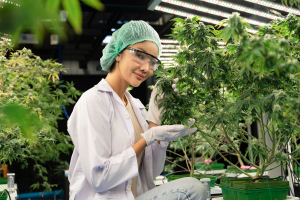
This lack of research comes with a lot of baggage and implications.
One concerning example of the state of cannabis education is in healthcare. A report from 2023 found that nearly 85% of US medical residents said they received no education on medical cannabis in their medical school or residency. Given that more than 3.8 million Americans have medical marijuana cards and even more unregistered people use the plant for medical reasons, this indicates a significant gap in knowledge.
It’s difficult to fully grasp how well the general public understands cannabis. A big part of this difficulty stems from the aforementioned lack of studies and research on the plant and its role in society.
However, we are clearly in a state of transition when it comes to public knowledge. Most Americans know that the United States allows for medical and recreational cannabis laws, as determined by each state.
We know that about 88% of US adults believe cannabis should be legal for medical or recreational use. Additionally, about half of Americans believe that legalizing recreational cannabis is good for local economies.
But beyond that, public knowledge is still in the beginning stages. While more people now understand the difference between THC and CBD, thanks to the rise in CBD products on the market, knowledge about the plant’s components still remains lacking.
For example, Harvard Health Reporting suggests that many people have heard of neurotransmitter systems within the body, but many have heard about the endocannabinoid system (ECS). The ECS is significant, not only for cannabis education but for understanding the body as a whole. Although the ECS was only discovered somewhat recently, we now understand that it’s critical for almost all of our biological processes. Since most people aren’t aware of the ECS, they’re also not aware of how cannabis plays a role in modulating different bodily processes.
Despite a gap in knowledge around the ECS and other aspects of cannabis, millions of Americans are still using the plant with regularity. Recent data shows that about 15% of Americans are currently active cannabis users.

Despite so many people using cannabis, there’s still a lot of chatter around customers not really knowing a lot about the products they purchase. This lack of understanding can lead to negative outcomes or at least limit customers from having better experiences tailored to their needs.
Education around product types, dosages, and other considerations when consuming cannabis is still much needed. This is especially important given rising rates in senior cannabis use. As more and more seniors decide to use the plant, emergency departments are seeing a rise in cannabis-related emergency visits among seniors.
It’s crucial that consumers learn about the ways to mitigate risk with cannabis usage through proper education on dosage, product types, and biological factors. This education can also help mitigate risk in other life aspects, given that cannabis may help some people reduce or cease their opioid use, among other benefits.
READ: Getting a Job in the Cannabis Industry: What You Need to Know
With more available education and research on the risks and benefits of cannabis, we might see better policy changes. After all, many politicians are still citing fears that legal cannabis will lead to more teen drug use, when we have evidence showing that cannabis use among teens has stayed steady over recent years.
Other misconceptions, like dispensaries being linked to increases in crime and marijuana legalization leading to more traffic fatalities, are also rooted in fears, not research suggesting otherwise.
These misconceptions often cause leaders to take strict anti-cannabis stances, despite any real evidence.
If we had even more research on the risks and benefits, along with more comprehensive cannabis education for healthcare providers, politicians, and the general public, we might see better outcomes overall.
Integrating cannabis education into the medical school curriculum could help to close the education gap and allow providers to accurately assist their patients. Likewise, standardized cannabis education for policymakers and government employees could help to build a clearer picture of the risks and benefits of the plant, allowing leaders and their constituents to make more informed decisions.
Of course, all of these actions need to stem from a better understanding of the plant through more clinical research. To get there, we need fewer barriers to conducting research, a barrier in itself as we wait for cannabis to be reclassified from a Schedule 1 controlled substance.
Standardized education among cannabis industry employees could make a big impact, too. The more informed and knowledgeable cannabis industry players are, the better they can speak to and inform the general public about the plant.
Sign up for our newsletter

Learn the process in your state
All Rights Reserved Veriheal Inc. ©
Terms Privacy Policy Advertising Agreement Content Disclamer

Get your medical marijuana card today
Sign up in under 5 minutes
Start By Selecting Your State
 Alabama
Alaska
Arizona
Arkansas
California
Colorado
Connecticut
Delaware
Florida
Georgia
Hawaii
Idaho
Illinois
Indiana
Iowa
Kansas
Kentucky
Louisiana
Maine
Maryland
Massachusetts
Michigan
Minnesota
Mississippi
Missouri
Montana
Nebraska
Nevada
New Hampshire
New Jersey
New Mexico
New York
North Carolina
North Dakota
Ohio
Oklahoma
Oregon
Pennsylvania
Rhode Island
South Carolina
South Dakota
Tennessee
Texas
Utah
Vermont
Virginia
Washington
West Virginia
Wisconsin
Wyoming
Puerto Rico
Alabama
Alaska
Arizona
Arkansas
California
Colorado
Connecticut
Delaware
Florida
Georgia
Hawaii
Idaho
Illinois
Indiana
Iowa
Kansas
Kentucky
Louisiana
Maine
Maryland
Massachusetts
Michigan
Minnesota
Mississippi
Missouri
Montana
Nebraska
Nevada
New Hampshire
New Jersey
New Mexico
New York
North Carolina
North Dakota
Ohio
Oklahoma
Oregon
Pennsylvania
Rhode Island
South Carolina
South Dakota
Tennessee
Texas
Utah
Vermont
Virginia
Washington
West Virginia
Wisconsin
Wyoming
Puerto Rico