Your medical cannabis journey simplified: find partnered dispensaries, explore pricing options, earn rewards, and get answers to FAQs, all in one spot.
Educational only—this isn’t medical or legal advice. Everyone’s body responds differently; start low and go slow.
Curious why some cannabis products make you feel “high” while others don’t? CBD (cannabidiol) and THC (tetrahydrocannabinol) are the two headline cannabinoids—and they behave very differently.
THC is intoxicating and drives the classic cannabis buzz; CBD is non-intoxicating and is often chosen for a calmer baseline or to balance THC. In 2025, you’ll see them in many formats (e.g., flower, oils, edibles, beverages, vapes, topicals, etc.) and extracts (e.g., isolate, broad-spectrum, full-spectrum, concentrate, solvent vs solventless, etc.), each with different effects, onset, and duration.
Laws also differ: hemp-derived CBD is currently federally legal (≤0.3% Δ9-THC; state rules vary), although its definition is currently scheduled to change next November. Meanwhile, THC remains listed as federally illegal; only available on a state-by-state basis. One more practical note: workplace drug tests target THC metabolites, not CBD—though full-spectrum products can contain trace THC that may show up.
What Are CBD and THC?
CBD (cannabidiol) and THC (tetrahydrocannabinol) are the two headline compounds in cannabis. Both distinctly interact with your body’s endocannabinoid system (ECS)—a built-in network of receptors and signaling chemicals that help keep everyday functions in balance (think: mood, stress response, appetite, sleep-wake rhythm, and how your body processes discomfort).
A simple way to picture the ECS is as a home thermostat for your body: when things drift too high or too low, the system tries to nudge them back toward the middle. CBD and THC both “talk” to this system, but they speak very different dialects.
CBD is non-intoxicating—it won’t create a classic cannabis “high.” Instead of flipping the main “on” switch, CBD mostly modulates the system in the background. It has low direct affinity for the ECS’s core CB1 and CB2 receptors, and instead, CBD slows down ECS enzymes to increase endocannabinoids that then act on CB1 and CB2. It also seems to influence over 65 other pathways in the endocannabinoidome (eCBome) that shape how you feel, including serotonin (5-HT1A) for mood and calm, TRPV1 for heat and discomfort signaling, and GPR18, 55, and 119 for cellular messaging.
In day-to-day terms, many people describe CBD as leveling or steadying—helpful in smoothing the edges of a busy brain or rounding off a THC-forward product so it feels gentler. If you’re browsing products, you should see CBD sold as:
Isolate: pure CBD with no other cannabinoids
Broad-spectrum: CBD plus additional plant compounds (terpenes, minor cannabinoids) with no detectable THC
Full-spectrum: CBD with the plant’s full suite of compounds, including trace THC (hemp by current law ≤0.3% Δ9-THC by dry weight). Some consumers prefer this because of the “entourage effect,” the idea that multiple compounds together can feel more complete than any single ingredient alone.
THC is intoxicating—it produces the familiar cannabis “buzz.” It’s a partial agonist at CB1 receptors in the brain and CB2 receptors in the immune and peripheral systems. That direct CB1 activity explains the shift in perception, the short-term memory fuzziness, changes in reaction time, and the classic appetite nudge many people notice.
At low to moderate amounts, THC can feel light, social, or creative; as the sum climbs, it often becomes heavier or sleepier. For some, especially THC-sensitive folks or anyone combining THC with strong caffeine, too much can feel racy or uneasy. Because THC can impair coordination, it’s essential to avoid driving, working, or operating machinery until the effects fully wear off.
Both CBD and THC come in many formats, and the format you pick strongly affects how fast you feel something and how long it lasts:
Inhalables (e.g., flower, vape): Onset in minutes; effects often last 2–4 hours. Great for “dose-finding” because you can take a small puff, wait, and adjust.
Edibles (e.g., gummies, chocolates, etc.) & Capsules: Onset in 30–120 minutes; effects can run 4–8 hours (or more). Because they’re slower and longer, the golden rule is to start low and wait before taking more. A full stomach can increase absorption.
Tinctures (sublingual oils): Often felt in 15–45 minutes, sitting between inhalation and edibles in speed and duration. Eating a snack or meal first, and then holding it under the tongue for 30–60 seconds, can increase absorption.
Topicals (creams, balms): Applied to the skin for localized use, they generally don’t create a whole-body effect and are unlikely to cause intoxication.
A few practical notes to keep this simple and safe:
If you’re new or sensitive, start with lower THC or CBD-forward ratios (for example, 1:1 THC:CBD or 1:2). Many people find balanced formulas deliver the benefits they want with fewer edgy moments.
If your job or program drug-tests, remember that standard panels target cannabis metabolites (i.e., THC-COOH)—not CBD. However, full-spectrum hemp products contain trace THC that can accumulate with repeated use. In that case, prefer CBD isolate or verified THC-free broad-spectrum, and always check the COA (certificate of analysis) for “non-detect” THC on your exact batch.
Quality matters. Look for third-party lab reports confirming cannabinoid content, terpene profile, and screening for impurities (e.g., residual solvents, heavy metals, pesticides, microbes).
In short: CBD is the steady hand—non-intoxicating and often used to smooth and balance—while THC is the volume knob that changes perception more noticeably. Your best fit depends on your goals, format preference, and personal response—so go slow, take notes, and adjust until it consistently feels right. We suggest consulting with a knowledgeable cannabis doctor first for safety, and then consider booking a personalized consultation right here at Veriheal.
How Do CBD and THC Differ in Effects?
Effects aren’t one-size-fits-all—your experience depends on the compound, the amount, your body, any other meds or drugs, and the setting. CBD tends to act like a stabilizer, nudging things toward calm without a buzz, while THC is the volume knob that can lift mood and sensation—or feel like too much if you overshoot.
Think chemistry + dose + context, not just the label. Use the notes below to match each compound’s typical feel to your goals.
See If You Qualify For Medical Marijuana -Select Your State!
Select Your State
Alabama
Alaska
Arizona
Arkansas
California
Colorado
Connecticut
Delaware
Florida
Georgia
Hawaii
Idaho
Illinois
Indiana
Iowa
Kansas
Kentucky
Louisiana
Maine
Maryland
Massachusetts
Michigan
Minnesota
Mississippi
Missouri
Montana
Nebraska
Nevada
New Hampshire
New Jersey
New Mexico
New York
North Carolina
North Dakota
Ohio
Oklahoma
Oregon
Pennsylvania
Rhode Island
South Carolina
South Dakota
Tennessee
Texas
Utah
Vermont
Virginia
Washington
West Virginia
Wisconsin
Wyoming
Never miss a post
Get updates on cannabis culture, new research, and expert insights
CBD (non-intoxicating):
Commonly described as calming or centering without the “high.”
May smooth out jittery or edgy sensations when paired with THC.
At higher amounts, some people feel sleepy or flat.
THC (intoxicating):
Often produces euphoria, sensory enhancement, and changes in appetite.
Can support wind-down or creative flow at modest amounts; at higher doses, may feel racy, disorienting, or increase unease in THC-sensitive folks.
Euphoric, stimulating, or sedating (dose-dependent)
Day vs. Night
Flexible; many use daytime
Low–moderate for the day; higher amounts often in the evening
Synergy
Can temper THC’s edges
Paired with CBD for balance and increase medical efficacy for sleep, pain, spasms, and more (e.g., 1:1)
What Are the Medical Uses of CBD vs THC?
Think of CBD and THC as tools in the same kit—what you choose depends on your goal and how your body responds. In everyday conversations (not medical claims), people and clinicians often position CBD for a steadier baseline or evening settle, THC for appetite cues or wind-down, and a balanced ratio when they want a lift without the edginess of high-THC alone. Also note: a few FDA-approved cannabinoid medicines exist by prescription and are not the same as dispensary products.
Without making medical claims, here’s how people and clinicians commonly position each compound in conversations:
CBD: Often explored for a calmer baseline, nighttime settling, or to support recovery from daily wear-and-tear. An FDA-approved CBD product (Epidiolex) exists for specific seizure syndromes, but dispensary CBD is not the same as a prescription medicine.
THC: Frequently chosen for appetite cues, wind-down, queasiness support, or body-heavy relaxation at night. Synthetic THC medicines (dronabinol/Marinol, nabilone/Cesamet) exist by prescription and differ from dispensary products.
Combination: Many people prefer balanced ratios (e.g., 1:1 THC:CBD) to blend lift and calm while reducing edginess from high-THC options.
Always consult a licensed professional—especially if you take other medications.
What Are the Side Effects of CBD and THC?
Side effects depend on the compound, the amount, and you. Even small changes in dose, product type, or setting can shift how CBD or THC feels—what’s smooth for one person may feel uncomfortable for another. Below is a plain-English snapshot of the most common issues to watch for, plus a quick note on who should be extra cautious and why safety (no driving while impaired) always comes first.
THC:Self-limited and temporary side effects include short-term memory issues, slower reaction time, dry and red eyes, dry mouth, increased heart rate, and—at higher doses—unease or paranoia in sensitive users. Rarely, cannabinoid hyperemesis syndrome may occur with frequent, high THC binging.
Who should be cautious? People who are pregnant, breastfeeding, have certain heart or psychiatric conditions, are older or frail, or take interacting medications should speak with a clinician before using cannabinoids. Special populations like children, pets, and unsuspecting house guests should not take THC products, but CBD may be appropriate under specialist care. Never drive, work, or operate machinery while impaired.
Is CBD or THC Legal in 2025?
CBD from hemp (≤0.3% Δ9-THC by dry weight) is federally legal in the U.S. (2018 Farm Bill), but state rules vary on how products are made, sold, and labeled. Unfortunately, hemp’s current federally legal status is currently in limbo and slated to change next November unless it is successfully lobbied and renegotiated.
THC from marijuana remains illegal federally, but many states run medical and adult-use programs that allow possession and purchase within state rules.
Drug-testing note: Standard workplace tests usually screen for cannabis metabolites (THC-COOH), not CBD. Full-spectrum hemp products can contain trace THC; with repeated use, those traces can accumulate and flag a test. If testing matters, choose CBD isolate or verified THC-free broad-spectrum, and always check the product’s COA (certificate of analysis).
Want help dialing in ratios, formats, or documentation? Veriheal’s licensed clinicians can review goals, discuss safer starting points, and provide state-compliant documentation via secure telehealth if you qualify.
Frequently Asked Questions
CBD vs THC
CBD is non-intoxicating and often described as calming; THC is intoxicating and produces a “high.” Many people combine them (e.g., 1:1) to balance effects.
What is the difference between CBD and THC?
The core difference is intoxication (THC causes a high; CBD does not) and receptor activity (THC acts strongly at CB1; CBD modulates the system more indirectly, with greater effects in the endocannabinoidome).
CBD vs THC for pain
Some users prefer THC (especially in the evening) for heavier body sensations, while others start with CBD or CBD-forward ratios for a gentler profile. Many land on balanced THC:CBD products to blend lift and calm.
CBD vs THC for anxiety
THC can feel great in small amounts for some, but can increase unease at higher doses or in sensitive people. CBD (or CBD-forward ratios) is often chosen first for a steadier, non-intoxicating profile. Your response may differ—start low.
THC vs CBD effects
THC: euphoria, sensory changes, appetite cues, potential unease at high doses.
CBD: calmer baseline, potential drowsiness at higher amounts, can soften THC’s edges.
Does CBD get you high?
No—CBD is non-intoxicating. It doesn’t produce the classic cannabis “high.”
THC vs CBD chart
Aspect
CBD
THC
Intoxication
None
Yes
Common use-cases (non-medical)
Daytime calm, balancing blends
Wind-down, appetite cues; creative lift at low–moderate amounts
Side effects
Dry mouth, drowsiness, GI upset; drug interactions
Red eyes/dry mouth, increased heart rate, slower reaction time, unease at high doses
Testing risk
Low with isolate or verified THC-free broad-spectrum
High—standard tests target THC metabolites
Legal status (U.S.)
Federally legal if hemp-derived ≤0.3% Δ9-THC; state rules vary. Currently set for federal recriminalization next November.
Kenneth Bancale is an avid traveler, always seeking to immerse himself in new cultures and experiences that embody the essence of life and freedom. His passion for writing extends beyond mere expression; it serves as a vehicle for education and truth. Kenneth finds solace in the simple pleasures of coffee and the joy of singing. An innovator at heart, he constantly seeks new ways to push boundaries and challenge the status quo. When he’s not on the road or at his desk, you can find Kenneth exploring the great outdoors, indulging his love for hiking and connecting with nature.
Oklahoma’s advertised $25 medical marijuana card renewal covers the physician evaluation, but patients must also pay a separate OMMA license fee. This guide explains the full renewal cost, reduced-fee eligibility, required documents, online renewal steps, processing times, and the new physician recommendation requirement.
An Oklahoma medical marijuana card provides legal protection under state law, but it can still affect employment, commercial driving, firearms, privacy, and federally regulated situations. This guide explains the main consequences to consider before applying, including workplace drug testing, CDL rules, insurance, housing, and registry privacy.
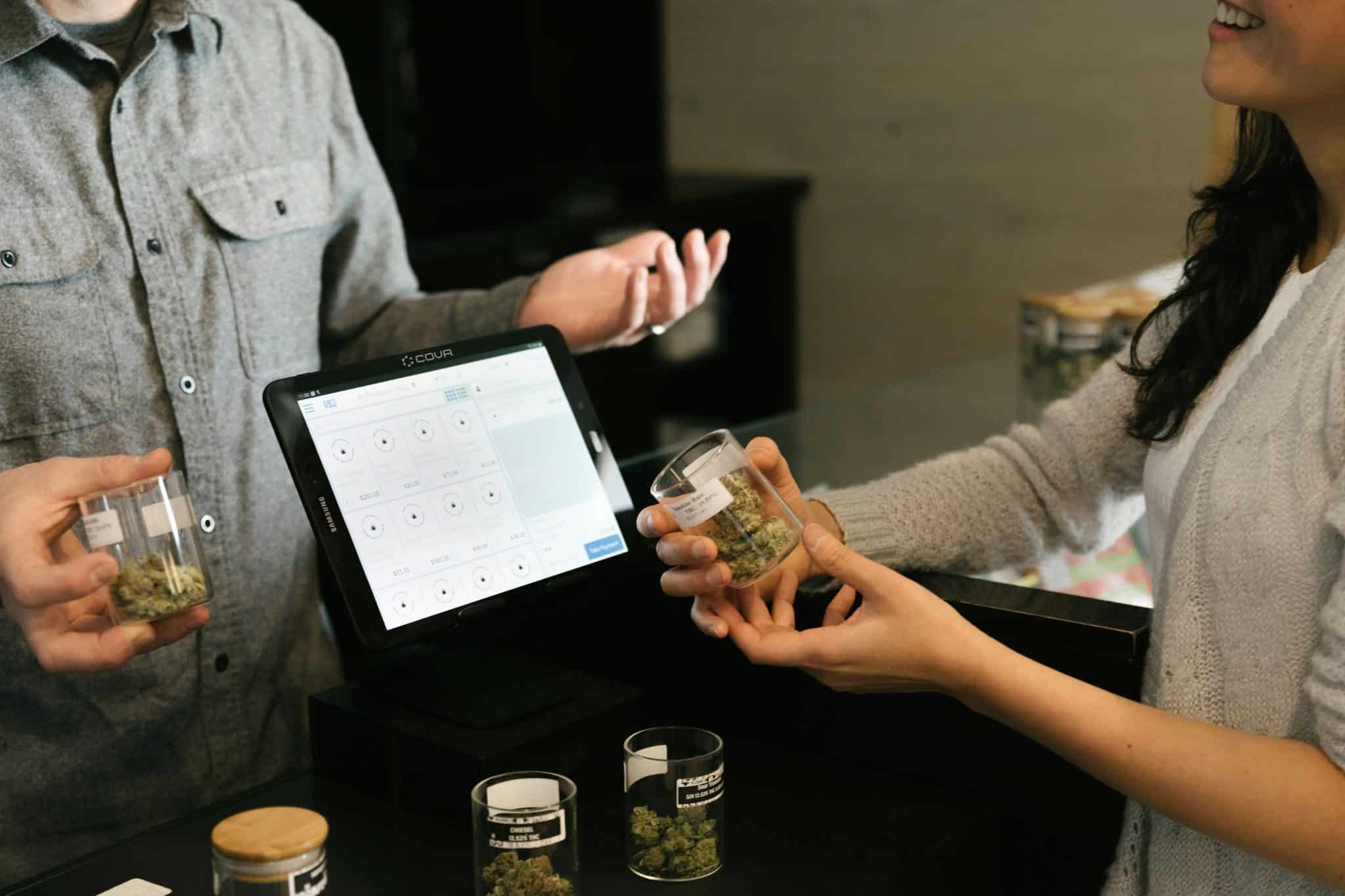
Oklahoma’s medical-only dispensary market gives licensed patients access to a wide range of cannabis products, but every purchase must follow OMMA rules. This guide explains how to find licensed dispensaries, what identification to bring, purchase and possession limits, product testing, pricing, and what to expect during a visit.
Getting a medical marijuana card in Oklahoma can be completed online, with no specific qualifying condition required for adult applicants. This guide covers eligibility, telehealth evaluations, required documents, OMMA application steps, fees, processing times, and what patients can do once approved.
A same-day telehealth appointment in Oklahoma can get you a physician recommendation quickly, but OMMA still needs to process your medical marijuana license application. This guide explains the timeline, required documents, costs, and when you can legally visit a dispensary while waiting for the physical card.
The statements made regarding cannabis products on this website have not been evaluated by the Food and Drug Administration (FDA). Cannabis is not an FDA-approved substance and is still illegal under federal law. The information provided on this website is intended for educational purposes only and is not intended to diagnose, treat, cure, or prevent any disease. It is not intended as medical advice and should not be considered as a substitute for advice from a healthcare professional. We strongly recommend that you consult with a physician or other qualified healthcare provider before using any cannabis products. The use of any information provided on this website is solely at your own risk.