Your medical cannabis journey simplified: find partnered dispensaries, explore pricing options, earn rewards, and get answers to FAQs, all in one spot.
December 8, 2021 08:00 am ETEstimated Read Time: 5 Minutes
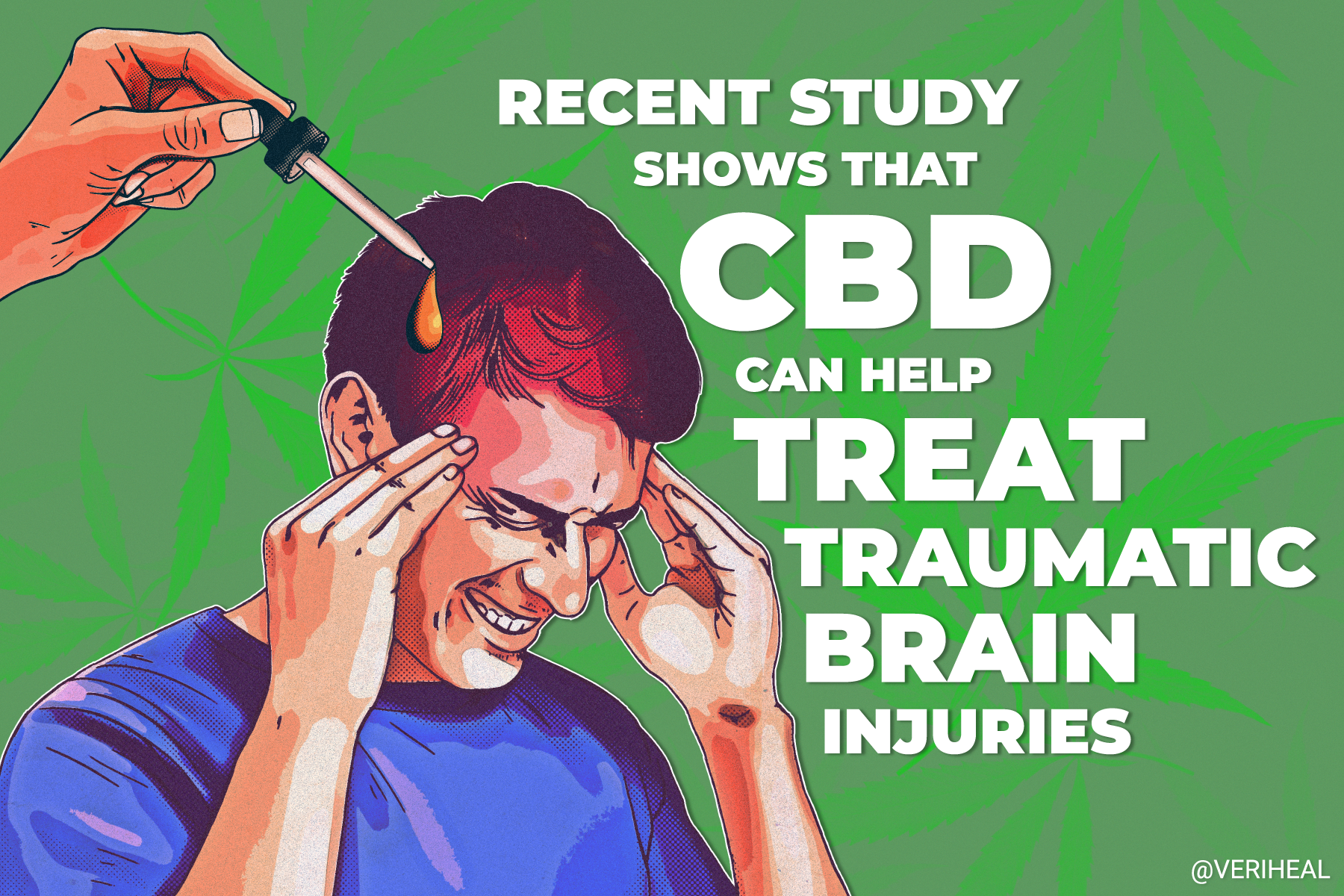
Traumatic brain injury (TBI) often results in serious short-term or long-term complications. According to the Mayo Clinic, these complications can be physical or involve altered consciousness, intellectual problems, communication problems, behavioral changes, emotional changes, or sensory problems. Fortunately, a new study found that cannabidiol (CBD) can be useful in the treatment of traumatic brain injury.
TBIs are common among those involved in vehicle-related collisions, sports injuries, violence/combat, or any other kind of circumstance that can cause significant head trauma. Regardless of whether the injury is ranked as mild or severe, the associated effects are debilitating and detrimental. Adding to the seriousness of a TBI is the fact that there are currently no universally effective treatments—which is what makes the findings of this new study especially significant.
A Beneficial Dive Into CBD and TBIs
According to the authors of the study, published in December 2021 in the journal Experimental Neurology, TBI has high incidence rates with no way “to safely treat patients.” The researchers go on to state that TBI can cause destruction to primary neural tissue which results in “impaired perfusion, excessive release of glutamate, inflammation, excitotoxicity, and progressive secondary neuronal cell death.” Based on the study’s results, administering CBD directly to the site of a brain contusion will improve neurological outcomes following TBI.
The team turned CBD into a gelfoam matrix (CBDi), which was administered to the injuries of a group of participants in combination with a CBD injection (CBD.IP). When both the CBDi and CBD.IP were administered post-injury, the test subjects displayed significantly reduced “defecation scores, lesion volume, the loss of neurons in the ipsilateral hippocampus, the number of injured neurons of the contralateral hippocampus and reversed TBI-induced glial fibrillary acidic protein upregulation which was superior to either CBD.IP or CBDi treatment alone.”
Test subjects performed a vestibular motor test on a beam balance, which displayed that their vestibular motor performance (relating to balance, stabilization, and posture) was restored by 12 days after the injury and was sustained through 28 days. Additionally, when the CBDi and CBD.IP were administered to rats, they displayed greater mobility and exploration of novel objects as well as reduced anxiety and restored cognitive function (improved learning and memory performance).
The delivery of the CBD treatment also resulted in a reduction of TBI-induced lesions, in addition to the reduced impacts on the hippocampus (the complex brain structure in the temporal lobe which plays an important role in learning and memory). The results of this study suggest that dual therapy “by targeting the site of injury internally with a CBD-infused medical carrier followed by systemic supplementation may offer a more effective countermeasure than systemic or implant treatment alone for the deleterious effects of penetrating head wounds.”
The Concussion Alliance stated that “current research is pointing towards CBD serving as a neuroprotectant, possibly helping the brain heal from concussions” and that “finding also indicate that CBD and/or medical cannabis can be effective for pain management, anxiety, and insomnia, all of which are common symptoms of concussions and post-concussion syndrome.” This is critical considering TBI can result in concussions.
See If You Qualify For Medical Marijuana -Select Your State!
Select Your State
Alabama
Alaska
Arizona
Arkansas
California
Colorado
Connecticut
Delaware
Florida
Georgia
Hawaii
Idaho
Illinois
Indiana
Iowa
Kansas
Kentucky
Louisiana
Maine
Maryland
Massachusetts
Michigan
Minnesota
Mississippi
Missouri
Montana
Nebraska
Nevada
New Hampshire
New Jersey
New Mexico
New York
North Carolina
North Dakota
Ohio
Oklahoma
Oregon
Pennsylvania
Rhode Island
South Carolina
South Dakota
Tennessee
Texas
Utah
Vermont
Virginia
Washington
West Virginia
Wisconsin
Wyoming
Never miss a post
Get updates on cannabis culture, new research, and expert insights
More Studies on CBD Treatment for TBI
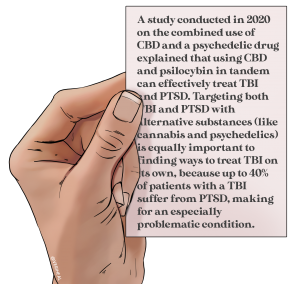
A study conducted in 2020 on the combined use of CBD and a psychedelic drug explained that using CBD and psilocybin in tandem can effectively treat TBI and PTSD. Targeting both TBI and PTSD with alternative substances (like cannabis and psychedelics) is equally important to finding ways to treat TBI on its own, because up to 40% of patients with a TBI suffer from PTSD, making for an especially problematic condition.
Another study was conducted in Canada on CBD for post-concussion brain disorder in former NHL players since “we see a lot of athletes who have chronic pain and have other problems related to repetitive brain trauma.” While the results of the study have not been published yet, Dr. Charles Tator told CTV’s Your Morning Monday, “We are reasonably optimistic that cannabis and especially the CBD part of cannabis can relieve a lot of that suffering.”
Meanwhile, an Australian study that began in the middle of 2020 is assessing cannabis as a neuroprotective agent due to “its ability to protect the brain against the main injury mechanisms which cause cell death and other negative consequences in the days and weeks following head trauma.” Just like the Canadian study, the results of this one have not been released, yet role-players are hopeful.
Another published study found that cannabis does not impact concussion recovery time but was associated with “lower symptom burden in the third and fourth weeks post-brain injury.” This reduction in concussion symptom severity can lead to improved quality of life, particularly concerning pain, mood, and sleep.
Lastly, a literature review published in July 2020 explained, “The use of cannabinoids in TBI increases neurobehavioral function.” The authors of the literature review concluded that targeting the CB2 receptor is a promising therapeutic approach in the treatment of TBI due to the fact that the receptor is “localized primarily in the microglia and less in neurons.”
Considering the serious adverse effects that can arise from a TBI, the fact that cannabis shows promise as a treatment is giving hope to plenty. If you wish to include cannabis in your TBI treatment plan, consult your physician to ensure that the cannabinoid therapy is done safely and effectively.
Chane Leigh, aka The Bud Fairy, is a South African cannabis advocate and enthusiast with a firey personality and a thirst for travel. She loves to educate people and to question the norms.
In the confusing landscape of state-by-state medical marijuana legalization and federal prohibition lies a patient’s pursuit of a better quality of life, balanced with an unrestricted financial livelihood. In workplaces across many different medical marijuana legal states, no law guarantees that a valid, card-carrying MMJ patient status exempts an employee from termination or discrimination stemming…
It feels like every other day, a fresh slang term pops up in the cannabis lexicon, and today, we’re looking at an entry that’s all over TikTok and Reddit – Yart! Spoiler alert: it has everything to do with the humble vape cart (and how challenging it is to talk about cannabis on social media). …
The final stage of life often brings profound challenges for both patients and their families. For patients in hospice and palliative care, common symptoms not only affect the physical body but also their mental well-being. While traditional medications may dull pain, they often come with heavy sedation, confusion, and loss of clarity. Fortunately, medical cannabis…
If you’re planning to get a medical marijuana card in 2026, you might be wondering whether you need to meet with a certified cannabis doctor—either online or in person. Still, finding a qualified medical marijuana doctor near you can feel overwhelming and confusing if you’re not sure where to start. This guide shows you exactly…
Cannabis consumers in the legal market rely on proper analysis and testing as a matter of knowledge and safety regarding the composition of the weed they’re purchasing. One of the main differences between the state-run legal market and the black and gray cannabis markets is how they handle testing. Those of us in medical and…
The statements made regarding cannabis products on this website have not been evaluated by the Food and Drug Administration (FDA). Cannabis is not an FDA-approved substance and is still illegal under federal law. The information provided on this website is intended for educational purposes only and is not intended to diagnose, treat, cure, or prevent any disease. It is not intended as medical advice and should not be considered as a substitute for advice from a healthcare professional. We strongly recommend that you consult with a physician or other qualified healthcare provider before using any cannabis products. The use of any information provided on this website is solely at your own risk.