Your medical cannabis journey simplified: find partnered dispensaries, explore pricing options, earn rewards, and get answers to FAQs, all in one spot.
We all know honey comes from bees, and bees need flowers to make honey, so does this mean bees can make infused honey from the flowers of the cannabis plant? The details are more complicated than you’d think. Cannabis flowers don’t produce nectar, so bees can’t make honey from them. Since cannabis plants pollinate via wind movement, they do not need to attract pollinators like bees by producing the energy-intensive substance. Therefore, not only is there nothing for bees to make honey from in cannabis flowers, but bees seem to have no reason to even visit cannabis flowers.
However, bees do visit cannabis flowers, and scientists are conducting further studies into how these flowers may provide a source of nutrients for bees during periods of floral scarcity. Moreover, some trending bee experts on the internet claim to have successfully produced cannabis honey with their bees. How is this possible? This article is here to sort out all your questions about cannabis, bees, and honey, separating the hype from the facts. Before you start telling your friends that bees naturally produce cannabis honey, take a moment to review what we actually know about their relationship with the cannabis plant.
The Buzz on Bees and Cannabis
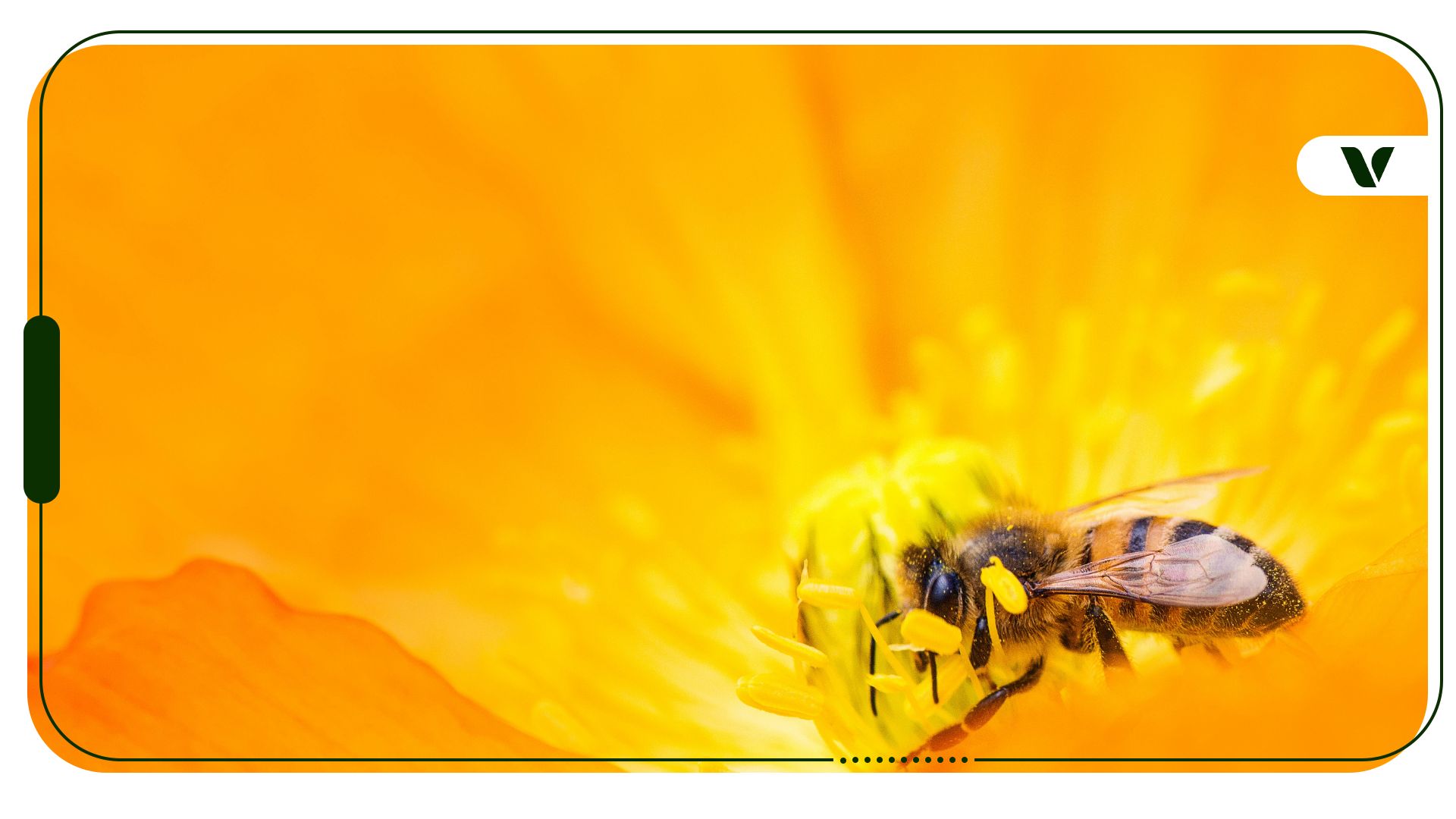
Since cannabis is a wind-pollinated plant, it does not produce the nectar that usually draws bees to a flower, but male plants release large amounts of pollen, which can serve as a valuable resource for bees. Bees suck up nectar, not pollen, although bees can collect cannabis pollen. However, because cannabis is not a nectar-producing plant, bees would only feed off of the plant if it was their last resort, or if they receive a reward afterward, such as sugar water.
Studies have observed bees, including honey bees, visiting male hemp plants to collect pollen, especially during periods when other floral resources are scarce. This suggests that male cannabis plants may play an important role in supporting pollinator populations in agricultural landscapes. A 2019 study in Biomass and Bioenergy reported on the species of bees found visiting various hemp plants in Colorado. Of these species, the European honeybee represented 38% of the floral visitors. Scientists claim that the abundant pollen found in male hemp plants may provide bees with a critical nutritional resource during times when other flowering crops have finished blooming.
While the endocannabinoid system is present in virtually all animal species, insects like bees are the exception. The endocannabinoid system is what receives the cannabinoids, such as the high-producing compound tetrahydrocannabinol (THC), and produces their effects. Therefore, bees cannot get high on cannabis despite feeding off its flower, which contains cannabinoids.
Understanding why bees are attracted to hemp is particularly significant because bee populations face numerous environmental stressors, and access to diverse and dependable nutritional resources is essential for their health and survival. Thus, hemp could play an important role for pollinators in future decisions for agricultural and ecological planning.
Because lawmakers legalized hemp for commercial farming only in 2018, researchers are now actively exploring how it supports pollinators—an effort that could impact sustainable agriculture in meaningful ways.. Recognizing hemp’s ecological role as a supplementary source of food for bees can help farmers, land managers, and policymakers integrate it into broader efforts to sustain bee populations and ensure continued effective pollination cycles for a variety of agricultural products.
There is already psychoactive honey named “mad honey,” which is honey contaminated with grayanotoxin found in plants of the Rhododendron genus. Honey bees extract nectar and pollen from certain plants and infuse grayanotoxins into the honey, which can cause intoxication. People sometimes use mad honey as an alternative medicine to treat hypertension, diabetes, flu, gastrointestinal issues, arthritis, sexual dysfunction, viral infections, skin conditions, and pain. In high doses, mad honey can be toxic and cause adverse effects such as dizziness, blurred vision, nausea, vomiting, and headache—but deaths from mad honey poisoning are uncommon.
The Bees That Make Cannabis Honey
See If You Qualify For Medical Marijuana -Select Your State!
Select Your State
Alabama
Alaska
Arizona
Arkansas
California
Colorado
Connecticut
Delaware
Florida
Georgia
Hawaii
Idaho
Illinois
Indiana
Iowa
Kansas
Kentucky
Louisiana
Maine
Maryland
Massachusetts
Michigan
Minnesota
Mississippi
Missouri
Montana
Nebraska
Nevada
New Hampshire
New Jersey
New Mexico
New York
North Carolina
North Dakota
Ohio
Oklahoma
Oregon
Pennsylvania
Rhode Island
South Carolina
South Dakota
Tennessee
Texas
Utah
Vermont
Virginia
Washington
West Virginia
Wisconsin
Wyoming
Never miss a post
Get updates on cannabis culture, new research, and expert insights
One beekeeper, known as Nicolas Trainerbees, became viral after posting a video of his trained bees feeding off of his cannabis flowers. He has trained his bees in a variety of ways, and he has also trained them to collect the fruit instead of the usual flowers they would tend to.
In this process, bees can make cannabinoid honey by incorporating the trichomes from cannabis resin into their honey. This resin would have to come from female cannabis plants for its psychoactive cannabinoids, including THC and cannabidiol (CBD). The bees harvest the resin from the cannabis plant, take it back to their hive, and process it as propolis. Propolis acts like a poly-filler to help repair, structure, and clean their hives.
When THC becomes infused in propolis via cannabis resin, it becomes infused into the honey. Lab tests found 30 milligrams of THC in every 10 grams of Trainerbees honey.
Trained bees feeding off female plants could provide a win-win for the bees and those in the psychoactive cannabis industry. Yes, CBD is psychoactive too, which means that those industries will benefit, too.
More research needs to be done into this, despite that cannabis honey is already hitting the markets. It seems that trained bees are the only natural way to produce honey with cannabinoids. How they’re trained and how they’re able to take in the cannabis trichomes, as though it were nectar, still needs to be looked into, as well as the content, effects, and quantity of cannabinoids in the honey.
In the meantime, if you want to make your own cannabis-infused honey, check out this recipe. Enjoy!
Frequently Asked Questions
Does cannabis honey exist?
Yes, cannabis honey exists, but it’s typically made by infusing regular honey with cannabis extracts. However, some claim bees can infuse honey with cannabinoids via propolis.
How do bees make honey naturally?
Bees collect nectar from flowers, store it in their honey stomachs, and break it down with enzymes. The bees then deposit the processed nectar into honeycomb cells and fan it with their wings to evaporate moisture, creating honey.
Can you clone cannabis with honey?
Honey’s antiseptic properties are conducive to root growth, which means it can be used as a natural rooting agent for cloning cannabis plants.
What plant do honey bees like the most?
Bees prefer nectar-rich plants like lavender, daisies, and clover, along with native species that vary by region and season.
Is cannabis honey strong?
Carefully measure the dosage of cannabis honey, as its potency depends on the infusion method and THC content. If you are making your own cannabis honey, this dosage calculator can help you make it as strong or mild as you please.
Why is smoke used when harvesting honey?
Smoke masks alarm pheromones and makes the bees less aggressive. It also prompts them to retreat into the hive, making it safer and easier for beekeepers to collect honey.
Do normal bees make honey?
The common honey bee (Apis mellifera) is well-known for making honey. Other bee species may produce honey, but they do so in much smaller amounts. Some bee species do not produce honey at all.
Sheldon Sommer is a Southern Californian philosopher with a lifelong interest in the biological world. She is enthusiastic to contribute her fascination with philosophy, natural history, psychology, botany, biochemistry and other related topics to providing cannabis education for the similarly curious. Outside of writing, she enjoys painting, singing opera and Taylor Swift songs, as well as spending quality time with a certain beloved orange kitty cat.
How many cannabis plants would I have to grow for bees to receive enough nectar?
Someone told me I’d need a Huge field of plants.
Please let me know. I appreciate your response in advance.
Educational only—this isn’t medical or legal advice. Everyone’s body responds differently; start low and go slow. Curious why some cannabis products make you feel “high” while others don’t? CBD (cannabidiol) and THC (tetrahydrocannabinol) are the two headline cannabinoids—and they behave very differently. THC is intoxicating and drives the classic cannabis buzz; CBD is non-intoxicating…
If you’ve never heard of cocaine bear, it’s a wild story! In 1985, Andrew Carter Thornton II, a drug smuggler who also happened to be a former Kentucky narcotics officer, threw three duffel bags of cocaine out of a plane. Why? He’d overloaded the plane, and safety became an issue mid-flight. So, with the intention…
We here in the U.S. are often only blissfully aware of our own cannabis culture, products, and laws. Despite our country’s current excellence in breeding and advancing cannabis cultivars and culture, the world of weed isn’t just centered around what we do here. Different countries, even different continents, have their own traditions, norms, and styles…
Professionals administer nitrous oxide (N₂O) as an anesthetic, but people also inhale it recreationally for a brief, disorienting high. The short durations of this dissociative experience spur repeated uses, easily leading to abuse. Nitrous may be fun in the moment, but some pretty bad health issues present themselves not long after. Why Do People…
Cannabis flower is potent, but it’s far from the herb’s final or most powerful form. That honor goes to cannabis concentrates, which you can find in various forms and flavors. One such product that’s currently making waves is liquid marijuana. What Is Liquid Marijuana? Liquid marijuana is a general term for any cannabis concentrate…
The statements made regarding cannabis products on this website have not been evaluated by the Food and Drug Administration (FDA). Cannabis is not an FDA-approved substance and is still illegal under federal law. The information provided on this website is intended for educational purposes only and is not intended to diagnose, treat, cure, or prevent any disease. It is not intended as medical advice and should not be considered as a substitute for advice from a healthcare professional. We strongly recommend that you consult with a physician or other qualified healthcare provider before using any cannabis products. The use of any information provided on this website is solely at your own risk.