Your medical cannabis journey simplified: find partnered dispensaries, explore pricing options, earn rewards, and get answers to FAQs, all in one spot.
Recent analysis has shown that for many people, cannabis feels less potent when they are on their period. Why might this be?
For many menstruating people, we often find that our “flow” has been shrouded in mystery throughout our lives. From conversations with other menstruating people, as well as my own personal experience, I know that many of us feel like we have lost connection with this critical function of our bodies and crave a deeper understanding of it.
The way cannabis works in our bodies is also something that has been shrouded in mystery for many consumers. Even now, with a continually growing body of cannabis research, there are still some open questions about how cannabis affects us—particularly when it comes to women and menstruating people.
In this article, I will explore how menstruation and cannabis consumption intersect with one another, touching on some key concepts to keep in mind as you manage your cycle and engage with cannabis throughout the month!
Hormone Changes & Cannabis Tolerance
Many people report that when they are on their period, their tolerance to cannabis goes up. For example, they will smoke the same 1-gram joint that they normally do, but they won’t get as high. This odd occurrence has to do with how our hormones change throughout the month.
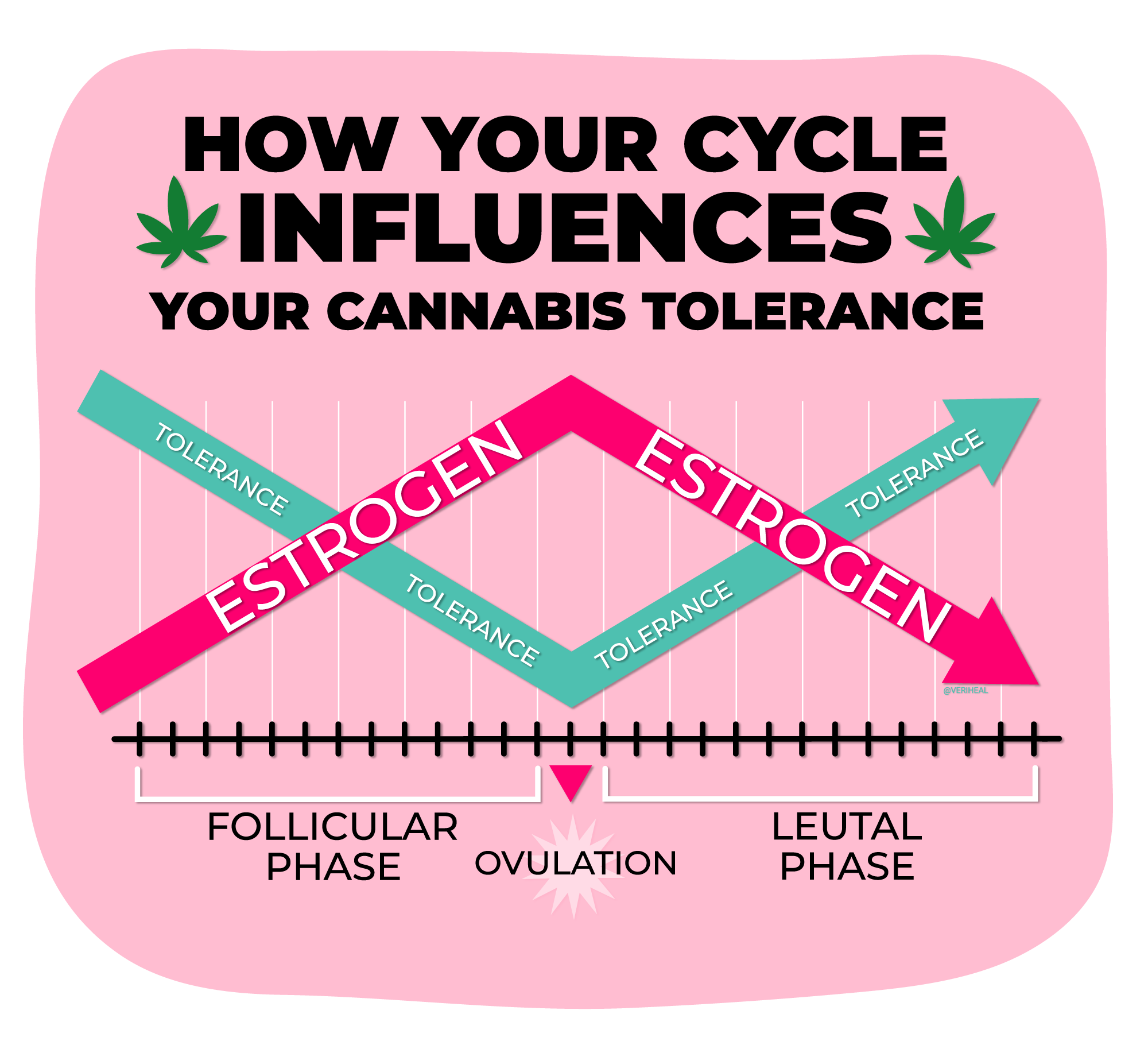
Like many other internal systems and bodily processes, our periods are dictated by a cycle of hormones. Every 28 days, we begin a new hormone cycle. When we are menstruating, our estrogen levels are reduced; approximately 14 days later, our estrogen levels increase during the ovulation phase.
These monthly hormonal changes can make cannabis more or less potent depending on our time of the month. In an interview with Refinery 29, Dr. Rachel Knox, a cannabis educator and practitioner, explains how estrogen changes throughout the month can impact our cannabis experience due to estrogen’s role in the breakdown of THC within the body. When estrogen is low (during the time that we are bleeding), our tolerance to cannabis increases, and we might feel less high than usual after imbibing.
Similarly, during moments in the cycle when estrogen is increased (during ovulation, when the egg is released into the uterus), we might find ourselves getting even higher from our regular dose. When estrogen levels are higher, the number of CB1 receptors, where THC docks, actually fluctuates in the brain. This reduces the amount of cannabis you need to achieve intoxication.
Keep this estrogen cycle in mind as you consume, because you may decide to adjust your regimen based on your body’s needs and momentary reactions. This might look like ingesting more cannabis during your period to both address symptoms and overcome the higher tolerance. This also might look like taking in less cannabis during the ovulation phase, knowing that you are likely to get more impaired from cannabis during that time. Cycle accordingly!
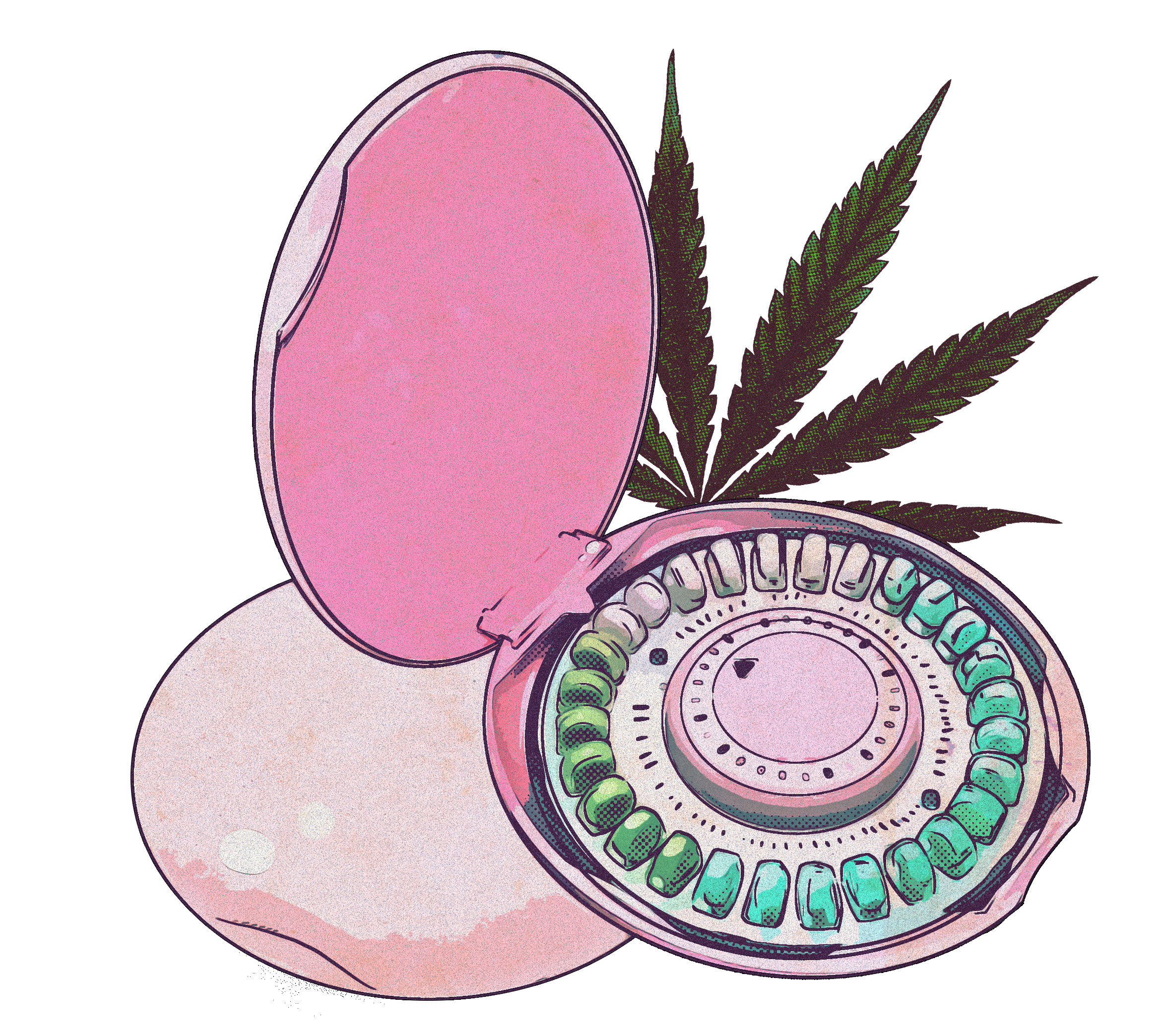
Note about hormonal birth control: Estrogen and other hormone changes throughout the month may be less significant if a person is using hormonal birth control, such as the pill or an IUD. Hormonal birth controls are designed to interrupt the natural hormonal cycle of menstruation in order to prevent pregnancy. If you are on one of these medications, your estrogen cycles may not fluctuate as significantly throughout the month, meaning your tolerance to cannabis is less likely to be impacted.
Impacts on Anandamide During Menstruation
Another layer to this conversation is the impact on anandamide levels throughout the menstrual cycle. Anandamide, also known as “the bliss molecule,” is an endocannabinoid that is naturally created in the human body and has been correlated with happiness and reduced stress levels.
Anandamide levels, it turns out, fluctuate during a person’s menstrual cycle. Just like with cannabis tolerance, estrogen levels have a significant impact on anandamide. Estrogen makes it harder for an enzyme known as fatty acid amide hydrolase (FAAH) to complete its function—which is to break down anandamide. When we have more estrogen flowing, it blocks this breakdown process and lets anandamide do its thing, which includes reducing symptoms of anxiety and depression.
But what do we do in instances when estrogen is low, such as during menstruation, and FAAH action is more likely to impact our anandamide levels? During these times, you can take in CBD to help balance anandamide levels. Research studies have recently highlighted that CBD inhibits FAAH, which results in increased anandamide levels.
If you’re feeling a little less gleeful during your period, know that one of the factors may be reduced anandamide within your body. Consider incorporating some CBD into your routine to slow that FAAH activity down and preserve your body’s natural bliss!
Balancing Your Own Experience
Because both menstruation and cannabis consumption are highly individualized, there are many factors when it comes to the discussion of how cannabis use affects menstruation and vice versa. What one menstruating cannabis user experiences during their period will likely differ from the next person’s experience. That said, I hope this article gave you some fundamental information about menstruation, hormones, and the endocannabinoid system to consider during your own cycle.
If you do use cannabis to ease your period symptoms, seek strains or cannabinoid ratios that can be used to treat your specific symptoms. To learn more about how cannabis can be used to treat menstrual symptoms, including mood swings and pain, check out our article on cannabis and PMS.
Heather Dagley is a cannabis blogger and cannabis coach from Tacoma, WA. After using cannabis to transform her own life, Heather now writes about how cannabis can help others live happily and healthily. As a cannabis coach, she also supports clients navigating pain, anxiety/depression, chronic stress, burnout, or challenging life transitions. Her goal is to provide people with an honest and informed perspective on cannabis so they are well equipped to embark on their own cannabis healing journey.
In the confusing landscape of state-by-state medical marijuana legalization and federal prohibition lies a patient’s pursuit of a better quality of life, balanced with an unrestricted financial livelihood. In workplaces across many different medical marijuana legal states, no law guarantees that a valid, card-carrying MMJ patient status exempts an employee from termination or discrimination stemming…
It feels like every other day, a fresh slang term pops up in the cannabis lexicon, and today, we’re looking at an entry that’s all over TikTok and Reddit – Yart! Spoiler alert: it has everything to do with the humble vape cart (and how challenging it is to talk about cannabis on social media). …
The final stage of life often brings profound challenges for both patients and their families. For patients in hospice and palliative care, common symptoms not only affect the physical body but also their mental well-being. While traditional medications may dull pain, they often come with heavy sedation, confusion, and loss of clarity. Fortunately, medical cannabis…
If you’re planning to get a medical marijuana card in 2026, you might be wondering whether you need to meet with a certified cannabis doctor—either online or in person. Still, finding a qualified medical marijuana doctor near you can feel overwhelming and confusing if you’re not sure where to start. This guide shows you exactly…
Cannabis consumers in the legal market rely on proper analysis and testing as a matter of knowledge and safety regarding the composition of the weed they’re purchasing. One of the main differences between the state-run legal market and the black and gray cannabis markets is how they handle testing. Those of us in medical and…
The statements made regarding cannabis products on this website have not been evaluated by the Food and Drug Administration (FDA). Cannabis is not an FDA-approved substance and is still illegal under federal law. The information provided on this website is intended for educational purposes only and is not intended to diagnose, treat, cure, or prevent any disease. It is not intended as medical advice and should not be considered as a substitute for advice from a healthcare professional. We strongly recommend that you consult with a physician or other qualified healthcare provider before using any cannabis products. The use of any information provided on this website is solely at your own risk.