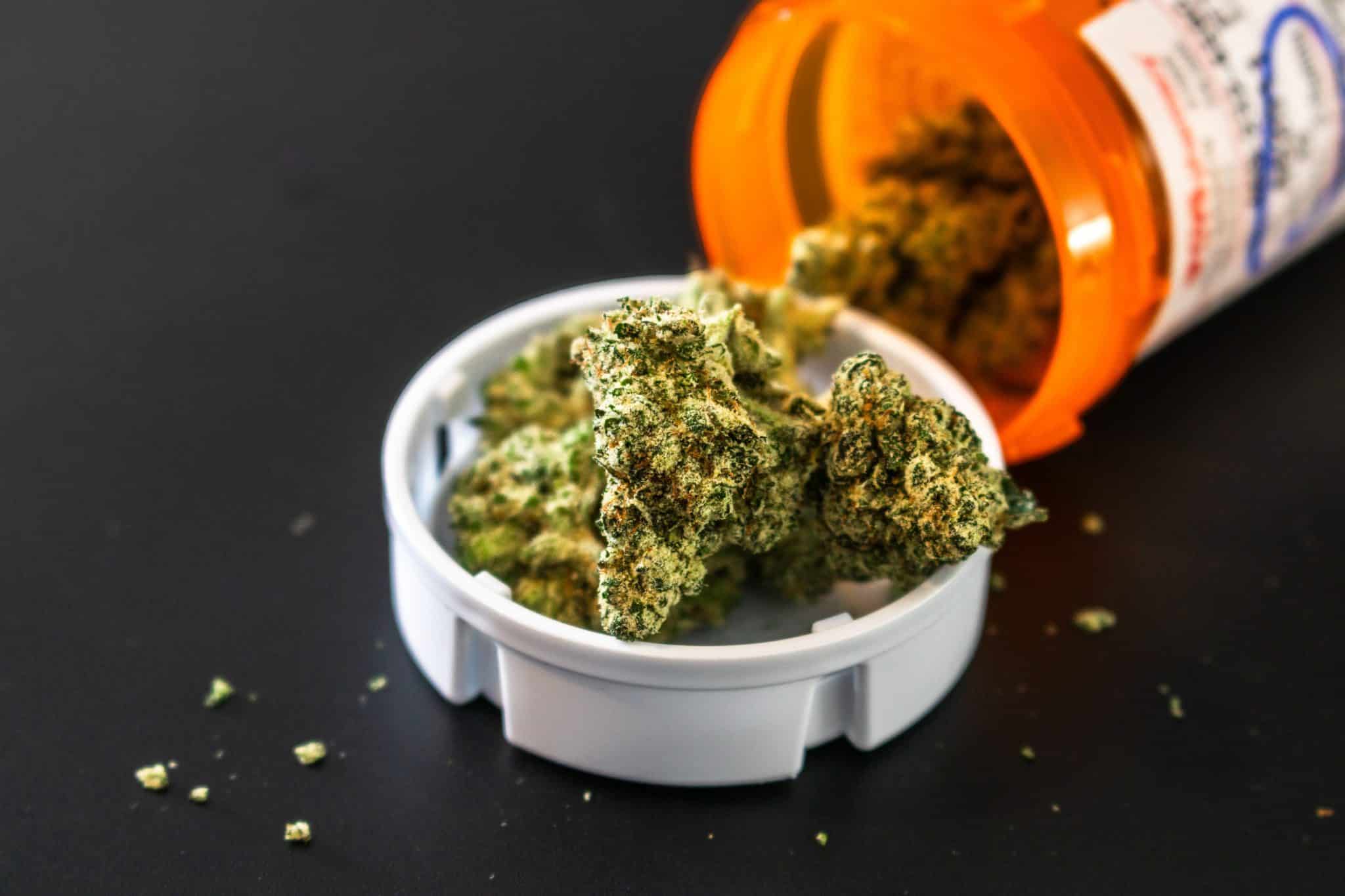
PTSD qualifies for a medical marijuana card in Oklahoma, and the path to getting certified is more accessible than most people expect. This guide covers how the qualification works under Oklahoma law, what physicians evaluate, the specific pathways available to veterans and first responders, and how to complete the application.
How PTSD Qualifies Under Oklahoma Law
Oklahoma does not publish a fixed list of qualifying conditions for medical cannabis. When voters passed State Question 788 in 2018, they established a physician-discretion model: a licensed allopathic or osteopathic physician in good standing with the Oklahoma Medical Board can recommend medical marijuana to any patient whose condition, in that physician’s clinical judgment, warrants it. The governing authority is Oklahoma Statute Title 63, Section 420 et seq., which defines the scope of that physician authority.
For PTSD patients specifically, this matters in a few concrete ways:
- You do not need a formal psychiatric diagnosis from a mental health specialist before seeking an evaluation
- A licensed physician, including the telehealth physicians Veriheal connects patients with, can assess your symptoms and issue a recommendation based on their own clinical judgment
- That recommendation is what drives the Oklahoma Medical Marijuana Authority (OMMA) application, not a diagnosis on file elsewhere
OMMA does not audit or second-guess the physician’s determination:
- Once a valid physician recommendation is submitted with the online application, OMMA processes it without adjudicating the diagnosis
- The recommending physician carries that clinical responsibility, not the patient and not OMMA
- The state program is designed to respect that judgment call, not re-litigate it
What Oklahoma Physicians Evaluate for a PTSD Recommendation
Physicians evaluating a PTSD presentation typically reference the DSM-5 framework, which organizes PTSD symptoms into four clusters. You do not need a prior formal diagnosis, you need to be able to describe your symptom experience clearly and bring whatever documentation you have.
The four DSM-5 symptom clusters physicians look for are:
- Intrusion symptoms: Recurring flashbacks, nightmares, or involuntary distressing memories of the traumatic event
- Avoidance: Deliberate efforts to avoid trauma-related thoughts, feelings, people, or places
- Negative alterations in cognition and mood: Persistent negative beliefs, emotional numbing, diminished interest in activities, or feelings of detachment
- Alterations in arousal and reactivity: Hypervigilance, exaggerated startle response, sleep disturbance, or irritability
Documentation strengthens your evaluation, but the absence of formal records is not disqualifying. Therapy notes, a prior diagnosis letter, VA records, or primary care physician notes all support the consultation.
Physicians in this context are not gatekeepers looking for reasons to deny; they are licensed clinicians using their judgment to assess whether your symptoms are consistent with a PTSD presentation. Honesty about your experience is the most useful thing you can bring to that appointment.
Veterans and First Responders: Oklahoma MMJ Pathways and Fee Reductions
Veterans and first responders make up a significant share of Oklahoma MMJ applicants seeking certification for PTSD. Both groups qualify through the same physician-discretion pathway, but their documentation considerations and practical circumstances differ enough to address separately.
Veterans
Veterans with a 100% disability rating from the U.S. Department of Veterans Affairs qualify for a reduced application fee of $22.50, compared to the standard $104.30. A VA letter confirming the disability rating is the required documentation for the reduced fee. Partial ratings do not qualify for the discount, but veterans at any rating level can apply at the standard fee.
One more thing worth knowing if you’re applying after January 1, 2026: SB 1066, a 2025 law, now requires every physician who recommends medical marijuana in Oklahoma to be registered with OMMA and complete required medical marijuana education.
- It doesn’t specifically address veterans, it applies to all Oklahoma MMJ applicants
- What it means for you: your recommending physician, whether through Veriheal or another provider, needs to be OMMA-registered, or your application won’t be accepted
- VA benefits are not affected by holding an Oklahoma MMJ card
- OMMA does not share patient data with the VA
Telemedicine is a practical advantage for many veterans. Mobility limitations, geographic distance from urban areas, or concerns about seeking PTSD treatment in a clinical setting are all valid reasons to complete the physician evaluation entirely by telehealth. The medical marijuana card application process in Oklahoma works the same whether your evaluation is in-person or remote.
First Responders
First responders with occupational trauma qualify through the same physician-discretion pathway as any other patient. Useful documentation may include incident reports, employee assistance program records, or occupational health records that support a PTSD presentation. Privacy is a legitimate concern for this group given potential employment implications.
Understanding what HIPAA and medical cannabis privacy protections apply, and whether a medical cannabis card shows up on a background check in your state, are reasonable questions to resolve before applying. You may also want to consider whether you should tell your employer about your medical card before proceeding.
Cannabis and PTSD: What the Research Shows
Research into cannabis and PTSD has grown substantially over the past decade, and findings on cannabinoids and distinct symptom clusters suggest that specific cannabinoids may address distinct symptom clusters rather than acting as a general-purpose treatment. Tetrahydrocannabinol (THC), cannabidiol (CBD), and balanced ratios of the two have each been studied in relation to the core PTSD symptom clusters:
- THC has been associated in research with reduced nightmare frequency and improved sleep onset, which is why some physicians and patients find higher-THC products useful for evening use. A 2020 Journal of Affective Disorders study on cannabis use and PTSD symptom reduction found that cannabis use was associated with significant short-term reductions in PTSD symptom severity, including re-experiencing and hyperarousal.
- CBD may help with daytime hyperarousal and anxiety without the psychoactive intensity that some patients find disorienting.
- Balanced THC:CBD ratios are often considered for daytime use, with the goal of managing re-experiencing symptoms at a lower intoxication threshold.
The endocannabinoid system is believed to play a role in how the brain processes stress and fear memory. This is part of the biological rationale researchers have proposed for cannabis-based PTSD relief, though this remains an area of active study rather than settled science.
Oklahoma licensed dispensaries carry flower, tinctures, and capsules, giving patients options that suit different symptom profiles and consumption preferences. All health outcome claims in this area reflect emerging research, and individual responses vary. A physician can help you assess which cannabis products and ratios align with your specific symptom picture.
How to Apply for an Oklahoma MMJ Card for PTSD
The Oklahoma medical marijuana program uses the OMMA MedPortal online application for processing submissions. The steps below reflect the standard adult in-state patient pathway, with veteran fee notes where applicable.
- Complete a telehealth evaluation with a licensed Oklahoma physician who issues a signed physician recommendation for medical cannabis.
- Create an account in the OMMA MedPortal at oklahoma.gov and begin the online application.
- Submit the application with your physician’s recommendation, a government-issued ID proving Oklahoma residency, a passport-style photo, and the application fee. Standard adult fee: $100 plus $4.30 processing. Qualifying 100% disabled veterans: $20 plus $2.50 processing.
- OMMA reviews and processes the application within 14 business days.
- Upon approval, OMMA sends an official approval email that functions as valid identification at licensed dispensaries while the physical card is in transit.
Knowing how long it takes to get a medical card from evaluation to dispensary access helps you plan ahead.
An Important Note on Firearms and Your MMJ Card
This is information that directly affects veterans and first responders, and no competitor addresses it plainly: federal law creates a conflict between holding a state MMJ card and purchasing or possessing firearms.
- Under 18 U.S.C. § 922(g)(3), which prohibits unlawful controlled substance users from possessing firearms, persons who are unlawful users of or addicted to any controlled substance are prohibited from purchasing or possessing firearms
- Cannabis’s federal classification changed in April 2026: marijuana used under a state medical license, including Oklahoma’s, moved from Schedule I to Schedule III of the Controlled Substances Act
The picture shifted further in 2026: on June 18, the Supreme Court ruled unanimously in United States v. Hemani that prosecuting someone under § 922(g)(3) for marijuana use alone, without evidence of impairment or dangerousness, violates the Second Amendment.
The ATF has since rescinded its 2011 open letter that had instructed dealers to treat a state-issued MMJ card as a presumption of unlawful use. Section 922(g)(3) itself remains on the books, and Form 4473’s wording hasn’t changed, so answering it dishonestly is still a federal felony. The ATF hasn’t issued clear replacement guidance yet, so practices may vary by dealer while this settles.
If you have questions about your specific situation, reviewing the MMJ card and gun rights question in depth is a good starting point, and consulting a licensed firearms attorney before applying is advisable given how unsettled this area is right now. The broader context of why federal law prohibits medical marijuana users from gun ownership matters here too.
Ready to talk to a physician about your PTSD symptoms? Book your evaluation with a licensed Oklahoma physician, and pay nothing if you’re not approved.
Note: The content on this page is for informational purposes only and is not intended to be professional medical advice. Do not attempt to self-diagnose or prescribe treatment based on the information provided. Always consult a physician before making any decision on the treatment of a medical condition.
Note: Veriheal does not support illegally consuming therapeutic substances such as cannabis but acknowledges that it transpires because of the current illicit status, which we strive to change by advocating for research, legal access, and responsible consumption. Always consult a physician before attempting alternative therapies.
Frequently Asked Questions
Does PTSD qualify for a medical marijuana card in Oklahoma?
Yes, PTSD qualifies for an Oklahoma medical marijuana card. Oklahoma uses a physician-discretion model under State Question 788, meaning there is no fixed qualifying conditions list. A licensed physician assesses your symptoms and issues a recommendation based on their clinical judgment.
Do I need a formal PTSD diagnosis to apply?
No formal diagnosis is required. A licensed Oklahoma physician can evaluate your symptoms directly and issue a physician recommendation based on that clinical assessment, even if you have never received an official PTSD diagnosis from a mental health specialist.
How much does an Oklahoma MMJ card cost?
The standard adult in-state fee is $104.30, which includes $100 for the card and $4.30 in processing. Veterans with a 100% VA disability rating pay a reduced fee of $22.50.
Can marijuana help with PTSD?
Research suggests cannabis may reduce PTSD symptom severity, including nightmare frequency, hyperarousal, and sleep disruption, though individual responses vary. A physician can help you evaluate which cannabinoid profiles and cannabis products are appropriate for your specific symptoms.
Will holding an MMJ card affect my VA benefits?
No. OMMA does not share patient data with the U.S. Department of Veterans Affairs, and state MMJ card status does not affect VA benefits. Understanding the full benefits of a medical marijuana card can help you weigh the decision.
What are the rules for medical marijuana in Oklahoma?
Oklahoma’s medical marijuana program is governed by State Question 788 and overseen by the Oklahoma Medical Marijuana Authority. Patients must obtain a physician recommendation from a licensed Oklahoma physician, apply through the OMMA MedPortal, and purchase cannabis only from licensed dispensaries. Possession limits for registered patients are 3 ounces of cannabis on their person, 8 ounces at their residence, 1 ounce of concentrate, and 72 ounces of edibles. State law requires patients to carry their OMMA card when purchasing or transporting cannabis.
Author, Share & Comments