THC-JD is a cannabinoid that occurs naturally in trace amounts in cannabis but is produced primarily through laboratory synthesis. A commonly cited figure describes it as roughly 19 times more potent than delta-9 THC. That number comes from receptor-binding research and consumer reports rather than controlled human studies, so it isn’t an established potency ratio in people.
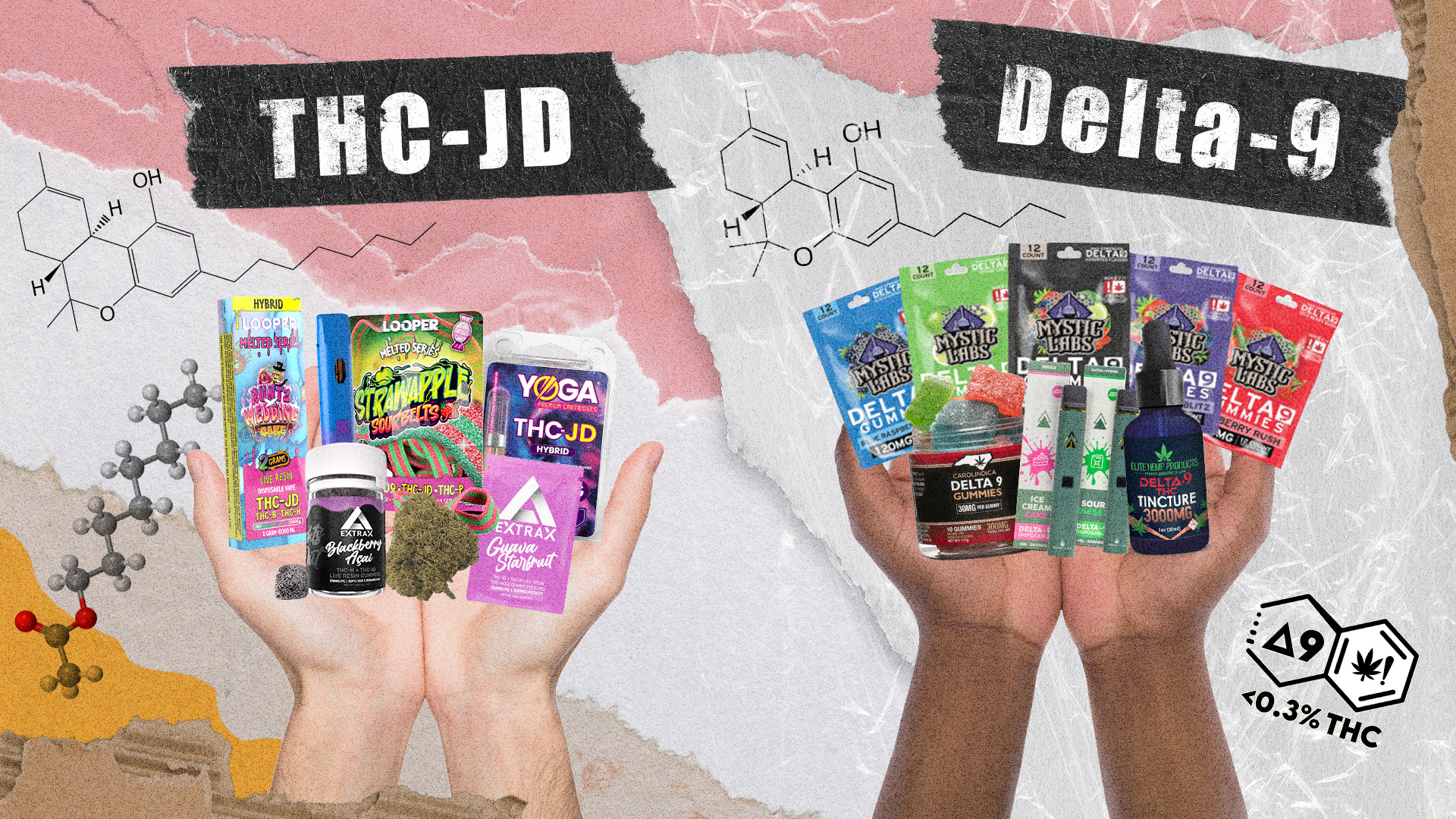
The compounds differ in chemical structure. THC-JD has an 8-carbon side chain, compared to delta-9’s 5-carbon chain, and this affects how each one interacts with CB1 receptors.
That structural difference gives THC-JD a plausible reason to bind more strongly to CB1 and CB2 receptors, and researchers have used it to explain reports of more intense effects at smaller doses. Binding affinity in a lab doesn’t reliably predict potency or safety in humans, though, and that link hasn’t been confirmed through clinical research.
What Is THC-JD?
THC-JD (tetrahydrocannabioctyl) is a synthetic cannabinoid derived from hemp that was first identified in 2020. It has an extended 8-carbon side chain, a structural feature linked to stronger receptor binding in preclinical research.
Researchers identified the compound through advanced analytical techniques while exploring minor cannabinoids in cannabis plants. Unlike delta-9 THC, which occurs naturally in significant concentrations, THC-JD appears only in trace amounts and requires laboratory synthesis to produce meaningful quantities.
THC-JD’s molecular structure is thought to interact more strongly with cannabinoid receptors than delta-9 THC does. Some users report intense effects at smaller doses than they’d typically use with delta-9 THC. That comes from consumer reports rather than controlled studies, though, so it isn’t yet a confirmed clinical effect.
Is Delta-9 Regular THC?
Yes, delta-9 THC is what most people mean when they say “regular THC” or simply “THC.” This cannabinoid is the primary psychoactive compound responsible for the high you experience from cannabis.
Delta-9 THC in Cannabis Plants
Delta-9 THC naturally occurs in cannabis plants at concentrations ranging from 15% to 30% in high-potency strains. The cannabis chemical structure produces this compound through a process where THCA (tetrahydrocannabinolic acid) converts to delta-9 THC when exposed to heat.
Most cannabis products, including flower, concentrates, and edibles, contain delta-9 THC as their active ingredient. When someone refers to THC content on a product label, they are almost always referring to delta-9 THC levels.
Why Delta-9 is Called ‘Regular THC’
Delta-9 THC earned the “regular THC” designation because it was the first THC variant discovered and remains the most abundant psychoactive compound in cannabis. Other THC variants like delta-8, delta-10, and THC-O are often marketed as alternatives to delta-9, which reinforces delta-9’s position as the standard reference point.
The term “delta-9” refers to the location of a specific chemical bond in the THC molecule. This structural detail distinguishes it from other THC variants, but in everyday conversation, “THC” and “delta-9 THC” mean the same thing.
Chemical Structure and Potency Comparison
The fundamental difference between THC-JD and delta-9 THC lies in their molecular side chains, which directly impacts how each compound interacts with your cannabinoid receptors.
Molecular Structure Differences
THC-JD contains an 8-carbon alkyl side chain, while delta-9 THC has a 5-carbon side chain. This three-carbon extension may seem minor, but it significantly alters the compound’s three-dimensional shape and receptor binding properties.
The longer side chain is associated with stronger hydrogen bonds and hydrophobic interactions with CB1 receptors in preclinical research. Whether that translates directly into a predictable increase in human potency is a separate question. It hasn’t been answered through clinical study, so “THC-JD needs a much smaller dose” remains a reasonable hypothesis, not a confirmed outcome.
| Property |
THC-JD |
Delta-9 THC |
| Chemical Formula |
C25H38O2 |
C21H30O2 |
| Side Chain Length |
8 carbons |
5 carbons |
| Molecular Weight |
370.58 g/mol |
314.46 g/mol |
| Reported Potency |
~19x more potent (unverified in humans) |
Standard reference |
| Receptor Binding |
Enhanced CB1/CB2 affinity |
Moderate CB1 affinity |
Receptor Binding Affinity
Both compounds primarily target CB1 receptors. Preclinical research suggests THC-JD’s structural modifications allow it to bind more effectively, with the extended side chain fitting more snugly into the receptor binding pocket.
That stronger binding is a plausible mechanism for more pronounced effects. It hasn’t been confirmed as translating into a specific real-world potency difference in humans, though. Claims about needing much less THC-JD than delta-9 THC are worth treating as an early hypothesis rather than an established fact.
How Is THC-JD Made?
THC-JD is synthesized in laboratories using hemp-derived CBD as the starting material. The process involves extending the natural cannabinoid’s side chain through chemical modification techniques.
Manufacturers use specialized organic chemistry methods to attach the additional carbon atoms to the molecular structure. This synthesis requires controlled laboratory conditions and precise chemical reactions to ensure the final product maintains the desired potency and purity levels.
The production process differs significantly from extracting natural cannabinoids like delta-9 THC. While delta-9 can be extracted directly from cannabis plants, THC-JD must be created through synthetic chemistry because it occurs only in trace amounts naturally.
THC-JD Effects vs Delta-9 Effects
THC-JD and delta-9 THC produce similar categories of effects. Some users describe THC-JD as delivering more intense experiences at lower doses, though this comes from consumer reports rather than controlled comparisons, so it’s best treated as anecdotal for now.
Physical Effects
THC-JD, based on consumer reports:
- More pronounced body relaxation and sedation
- Stronger appetite stimulation
- Enhanced sensory perception
- Potentially longer-lasting physical effects
Delta-9 THC, based on decades of research and use:
- Moderate body relaxation
- Increased appetite
- Mild sensory changes
- Typically a 2-4 hour duration for most consumption methods
Mental and Cognitive Effects
Both compounds affect cognitive function. Some users report more pronounced mental effects from THC-JD, including stronger euphoria and altered perception at doses where delta-9 THC would feel milder, though this comes from consumer reports rather than controlled research.
Some users also describe more noticeable cognitive impairment with THC-JD, including effects on short-term memory, reaction time, and decision-making. Controlled research comparing this directly to delta-9 THC doesn’t exist yet, so these comparisons stay informal rather than clinically confirmed.
Therapeutic Effects
Research on THC-JD’s therapeutic potential is essentially nonexistent, given how recently it was identified. Its enhanced receptor activity in preclinical research gives researchers a reason for further study, but it doesn’t establish any specific therapeutic benefit at any dose.
Delta-9 THC has extensive research supporting its use for pain management, appetite stimulation, and nausea reduction. Whether THC-JD offers similar effects, at a lower dose or otherwise, remains unproven and would need dedicated clinical research to confirm.
THC-JD vs Delta-9 Products and Consumption
Both THC-JD and delta-9 THC are available in similar product formats, but dosing considerations differ significantly due to THC-JD’s enhanced potency.
Product Types Available
THC-JD products include gummies, vape cartridges, tinctures, and concentrates. These mirror the delta-9 THC product categories you find in dispensaries, but THC-JD products typically contain much lower cannabinoid concentrations.
Delta-9 THC products span the full spectrum of cannabis offerings like flower, edibles, concentrates, topicals, and beverages. The mature delta-9 market provides more variety in potency levels, consumption methods, and product formulations.
Consumption Method Considerations
Vaping delivers the fastest onset for both compounds, but THC-JD’s potency means even small inhalations can produce strong effects. Edible forms of THC-JD require particularly careful dosing because the delayed onset can lead to accidental overconsumption.
Delta-9 THC products offer more predictable dosing experiences due to decades of consumer use and product standardization. THC-JD products may have less consistent effects between different manufacturers due to varying synthesis methods and quality control standards.
Dosing and Safety Guidelines
THC-JD is poorly studied in humans, so there isn’t reliable clinical evidence behind any specific milligram dose, and none is recommended here. If you’re considering a THC-JD product, the safest approach is to start with the smallest amount your product offers, wait several hours to see the full effect before considering more, and treat your usual delta-9 tolerance as an unreliable guide, since receptor research suggests THC-JD may behave quite differently in the body.
Talk to a Healthcare Provider First
Given how little is known about THC-JD, a conversation with a cannabis-knowledgeable provider before use is worth having, especially if you take other medications or manage an underlying health condition. There’s no established dosing framework here the way there is for delta-9 THC, which matters more, not less, given how potent this compound may turn out to be.
Safety Considerations and Warnings
- Mixing with alcohol or other substances: Combining THC-JD with alcohol or anything else before you know your own response adds risk, especially given how little is known about this compound.
- Delayed onset with edibles: Edible forms can take 30-120 minutes to show effects. Redosing during this window risks overconsumption, just as it does with delta-9 edibles.
- Extended duration: Some users report effects lasting 6-8 hours or longer. This hasn’t been confirmed through controlled research, and individual duration likely varies.
- Driving impairment: Avoid driving or operating machinery after using THC-JD. Some users describe the impairment as more intense or longer-lasting than delta-9’s, though this is based on consumer reports rather than controlled studies.
Because commercially available THC-JD is produced through chemical conversion rather than extracted straight from the plant, product quality varies more than it does with established delta-9 products. The uncertainty here goes beyond the cannabinoid itself.
Purity, accurate labeling, residual synthesis byproducts, and other contaminants are all part of the picture, particularly for products sold outside well-regulated markets. Choosing lab-tested products from a licensed source is one of the more meaningful ways to reduce that risk with a compound this new.
The THC degradation process affects both compounds, but THC-JD’s synthetic nature may make it more sensitive to heat and light exposure. Store products in cool, dark locations to maintain potency.
Is THC-JD Legal?
THC-JD exists in a complex legal gray area because it can be derived from hemp but produces effects similar to delta-9 THC. The compound’s legal status depends on how it’s manufactured and which state you’re in.
Under federal hemp law, THC-JD derived from hemp containing less than 0.3% delta-9 THC may fall under the 2018 Farm Bill’s hemp provisions. However, the DEA has indicated that synthetic cannabinoids with THC-like effects could be considered controlled substances regardless of their starting material.
State laws vary significantly regarding synthetic cannabinoids. Some states explicitly ban all synthetic THC variants, while others focus their restrictions on specific compounds. Before purchasing or using THC-JD products, verify your local and state regulations regarding synthetic cannabinoids.
The evolving regulatory landscape means THC-JD’s legal status could change as lawmakers and regulators develop more comprehensive approaches to synthetic cannabinoids derived from hemp.
Final Takeaways
THC-JD is a newer, lab-synthesized cannabinoid with a longer side chain than delta-9 THC, a structural feature linked to stronger receptor binding in preclinical research. Consumer reports and receptor studies suggest it may be considerably more potent, with a commonly cited estimate around 19 times, though that figure hasn’t been confirmed in controlled human research.
The clearest difference right now isn’t dosing or effects, it’s the evidence base itself. Delta-9 THC has decades of research and consumer experience behind it. THC-JD doesn’t, and its long-term safety and appropriate use remain largely unstudied.
For anyone considering THC-JD, the most important step is talking with a cannabis-knowledgeable healthcare provider first, since there’s no established dosing framework the way there is for delta-9 THC. Even experienced cannabis users should approach it with real caution and treat their usual tolerance as an unreliable guide.
Understanding THC variants becomes increasingly important as synthetic cannabinoids like THC-JD enter the market. Whether you choose delta-9 THC or explore newer compounds like THC-JD, consulting with a qualified cannabis physician can help you make informed decisions about dosing, consumption methods, and potential interactions with other medications.
Ready to explore cannabis options with professional guidance? Find a qualified cannabis doctor who can help you navigate the expanding world of cannabinoids safely and effectively.
Note: The content on this page is for informational purposes only and is not intended to be professional medical advice. Do not attempt to self-diagnose or prescribe treatment based on the information provided. Always consult a physician before making any decision on the treatment of a medical condition.
Note: Veriheal does not support illegally consuming therapeutic substances such as cannabis but acknowledges that it transpires because of the current illicit status, which we strive to change by advocating for research, legal access, and responsible consumption. Always consult a physician before attempting alternative therapies.
Frequently Asked Questions
Is THC-JD stronger than delta-9 THC?
THC-JD is commonly reported to be around 19 times more potent than delta-9 THC, a figure linked to its 8-carbon side chain and stronger receptor binding in preclinical research. That comparison hasn’t been confirmed in controlled human studies, so it’s best treated as an estimate rather than an established fact.
How much THC-JD equals delta-9 THC?
There isn’t a reliable, clinically established conversion between THC-JD and delta-9 THC doses. The often-cited 19x potency figure comes from preclinical and consumer-report data, not controlled human dosing studies, so it shouldn’t be used to calculate an equivalent delta-9 dose.
Is THC-JD natural or synthetic?
THC-JD occurs naturally in trace amounts but is primarily produced through synthetic chemistry using hemp-derived CBD as the starting material.
How long do THC-JD effects last?
Some users report effects lasting 6-8 hours or longer, potentially longer than typical delta-9 THC experiences. This hasn’t been established through controlled research, though, and individual duration is likely to vary.
Can you fail a drug test from THC-JD?
Yes, THC-JD may trigger positive results on standard drug tests that screen for THC metabolites, similar to delta-9 THC products.
Author, Share & Comments