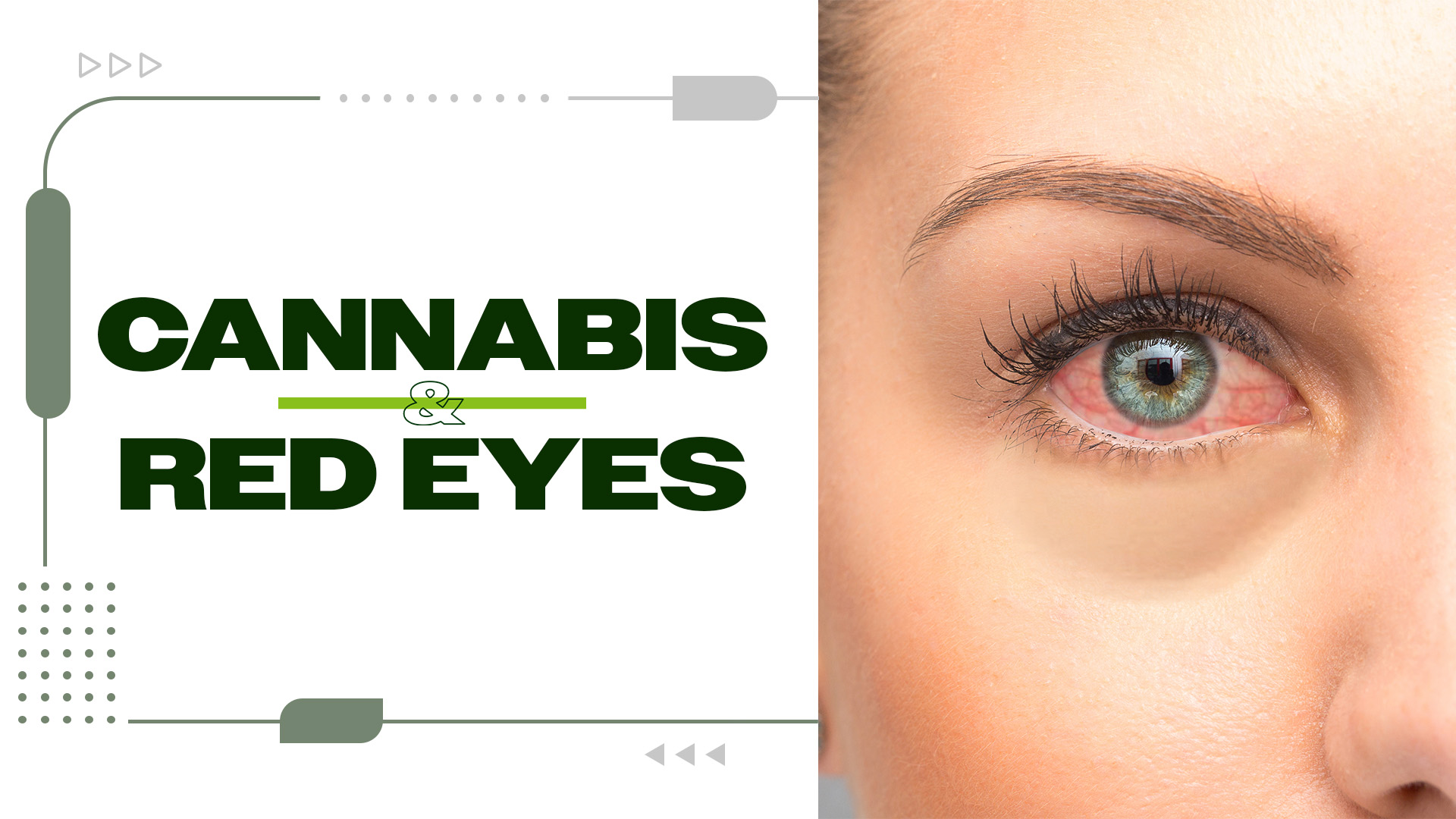
Cannabis is believed to cause red eyes primarily through vasodilation, the widening of blood vessels in your eyes when THC enters your bloodstream, though the precise physiologic mechanisms are not yet fully understood. This is the telltale pink or red appearance many cannabis users experience, regardless of how you consume it.
The process happens because THC binds to cannabinoid receptors throughout your body, including those in your eyes. When these receptors activate, they trigger blood vessels to expand, which increases blood flow and creates the redness you see.
Understanding why this happens can help you manage the effect and know what to expect from different consumption methods.
The Science Behind Cannabis Red Eyes
Red eyes are thought to occur when tiny blood vessels and capillaries in your eyes expand in response to THC’s vasodilatory effects, which is currently the most widely accepted explanation, though it may not be the complete picture. Tetrahydrocannabinol (THC) binds to CB1 and CB2 receptors in your endocannabinoid system, which are present throughout your body, including your eyes.
When THC activates these cannabinoid receptors, it triggers a chain reaction that relaxes the smooth muscle tissue surrounding your blood vessels. This relaxation allows the vessels to widen, increasing blood flow to the area. The increased blood flow makes the normally invisible capillaries more prominent, giving your eyes that characteristic red or bloodshot appearance.
The same vasodilation believed to cause red eyes is also why cannabis has been studied for glaucoma, since it can temporarily reduce intraocular pressure by improving fluid drainage from the eye. That effect is short-lived and comes with its own side-effect profile, though, which is why cannabis is not currently considered a standard treatment for glaucoma despite the ongoing research interest.
How Long Do Red Eyes Last After Cannabis Use?
Red eyes from cannabis typically last 1-3 hours, but the duration depends on several key factors that affect how your body processes THC. Understanding these variables helps you plan accordingly and manage the effect.
The timing varies significantly based on your consumption method. Smoking or vaping produces red eyes within minutes, with peak redness occurring 15-30 minutes after use. Edibles create a delayed onset – red eyes may not appear for 30-90 minutes but can persist longer due to the extended release of THC through digestion.
Key factors that influence duration include:
- Dosage and potency – Higher THC concentrations create more pronounced redness that lasts longer
- Individual tolerance – Regular users often experience less severe redness for shorter periods
- Body composition – THC is fat-soluble, so body fat percentage affects how quickly you metabolize it
- Eye drop use – Over-the-counter drops can reduce redness within 5-10 minutes
Most people find that the redness fades as THC levels in their bloodstream decrease. The how long cannabis effects last varies by consumption method, and eye redness typically follows a similar timeline to other THC effects.
Do Edibles Make Your Eyes Red Like Smoking?
Yes, edibles can make your eyes red just like smoking, because THC causes vasodilation regardless of how it enters your system. The misconception that edibles don’t cause red eyes stems from differences in onset timing and intensity, not the underlying mechanism.
When you consume edibles, THC still binds to the same cannabinoid receptors that control blood vessel dilation. The key difference lies in how quickly THC reaches these receptors and how long it stays active in your bloodstream.
Smoking vs. Edibles: Red Eye Comparison
| Method |
Onset Time |
Peak Redness |
Duration |
Intensity |
| Smoking/Vaping |
5-15 minutes |
15-30 minutes |
1-2 hours |
Moderate to high |
| Edibles |
30-90 minutes |
1-3 hours |
2-4 hours |
Mild to moderate |
| Tinctures |
15-45 minutes |
30-90 minutes |
1-3 hours |
Moderate |
Many people don’t associate edibles with red eyes because the delayed onset means the redness appears hours after consumption, when they may not connect it to the edible they ate earlier. Additionally, the gradual release of THC through digestion can create a less noticeable but longer-lasting effect compared to the immediate spike from smoking.
How to Prevent and Treat Cannabis Red Eyes
The most effective way to manage red eyes is using over-the-counter eye drops designed to reduce redness. These drops work by counteracting THC’s vasodilatory effects, constricting dilated blood vessels within 5-10 minutes of application. Research on adrenergic vasoconstrictors confirms their effectiveness for reducing ocular redness.
Choose eye drops specifically labeled for redness relief rather than basic lubricating drops. Products containing tetrahydrozoline or naphazoline are most effective at reducing the appearance of bloodshot eyes. Follow the product’s labeling closely, since frequent or prolonged use can cause rebound hyperemia, a cycle where your eyes end up redder once the drops wear off. If redness or irritation persists despite following the label, it’s worth checking in with an eye care professional rather than reaching for the drops more often.
Prevention strategies that can minimize red eyes include:
- Stay hydrated – Dehydration makes eye redness more noticeable and longer-lasting
- Choose lower THC strains – Higher CBD ratios may produce less pronounced vasodilation
- Use smaller doses – Start low to gauge your individual response before increasing
- Time your consumption – Plan use when red eyes won’t interfere with your activities
Additional remedies that may help include applying a cold compress for 5-10 minutes to constrict blood vessels naturally, or wearing sunglasses to conceal mild redness. However, these methods are less reliable than eye drops for consistent results.
If you want to stop looking high completely, combining eye drops with proper timing and dosing gives you the most control over visible effects. Remember that red eyes pose no health risks – they’re simply a cosmetic side effect of THC’s interaction with your body.
Ready to explore medical cannabis safely and legally? Find a qualified doctor who can guide you through the process and answer your questions about cannabis effects.
Note: The content on this page is for informational purposes only and is not intended to be professional medical advice. Do not attempt to self-diagnose or prescribe treatment based on the information provided. Always consult a physician before making any decision on the treatment of a medical condition.
Note: Veriheal does not support illegally consuming therapeutic substances such as cannabis but acknowledges that it transpires because of the current illicit status, which we strive to change by advocating for research, legal access, and responsible consumption. Always consult a physician before attempting alternative therapies.
FAQ
Are red eyes from cannabis dangerous?
No, red eyes from cannabis are harmless and pose no health risks. They’re simply a cosmetic side effect of THC’s vasodilatory properties and will fade as the compound clears your system.
Why don’t some people get red eyes from cannabis?
Individual variation in cannabinoid receptor density and sensitivity affects how strongly you respond to THC. Some regular users report less noticeable redness over time, though the evidence for a true tolerance effect specific to red eyes is limited, and individual responses vary quite a bit.
Can CBD cause red eyes?
CBD alone typically doesn’t cause red eyes because it doesn’t bind directly to CB1 receptors like THC does. However, full-spectrum products containing THC may still produce redness.
Do eye drops work immediately for cannabis red eyes?
Over-the-counter redness-relief drops work within 5-10 minutes by constricting dilated blood vessels. Choose drops containing tetrahydrozoline or naphazoline for best results.
Can you build tolerance to cannabis red eyes?
Some regular users report less severe and shorter-lasting red eyes over time, though solid evidence for a specific tolerance to this effect is limited, and how much it changes for you personally can vary quite a bit.
Author, Share & Comments