West Virginia medical cannabis certification is the physician-issued authorization that makes your state patient card possible. Without it, you cannot register with the West Virginia Office of Medical Cannabis (OMC) or access a dispensary. That’s why it’s worth understanding the process before you book an appointment.
This guide covers every step between deciding you want a card and walking into a dispensary. You’ll learn who can legally certify you, how telehealth appointments work, what documents you need, and how long each stage realistically takes.
What Is a Medical Cannabis Certification in West Virginia?
A medical cannabis certification is a document a registered physician issues after evaluating you for a qualifying condition under the West Virginia Medical Cannabis Act. It is not the same as your state-issued patient card. The certification is the physician’s professional determination that you have a condition the state recognizes. The card is what the OMC issues after it approves your application.
Getting a card involves two separate steps:
- Physician certification: A certifying physician reviews your medical history and, if appropriate, issues a certification.
- State registration: You complete your application through the OMC patient portal and wait for the state to approve your card.
Confusing these two steps can lead to delays. Knowing what each one requires lets you prepare for both at once, and the sections below walk through them in order.
Who Can Certify Patients in West Virginia?
Not every licensed physician in West Virginia can issue a medical cannabis certification. Under the West Virginia Medical Cannabis Act, a certifying practitioner must:
- Hold the right license: Be an MD or DO fully licensed in West Virginia.
- Complete the training: Finish the state’s required four-hour training course.
- Register: Be registered with the OMC.
A state medical license alone isn’t enough.
To find a registered physician, use the OMC’s “Schedule an Appointment” page under its Patients tab. According to the OMC, it lists registered physicians and telehealth companies with West Virginia registered physicians. A certification from an unregistered physician can’t support your application, so confirm registration before your appointment to avoid having to start over.
This matters if you’d like to use a physician you already know. Your primary care provider or specialist may be licensed in West Virginia but not registered with the OMC. Ask whether they’re registered, and if they aren’t, whether they plan to be.
Can My Own Doctor Certify Me?
Your existing physician can certify you, but only if they have completed the required course and are registered with the OMC as a certifying practitioner. If they are not, you will need to see a provider who is. Many patients choose a dedicated cannabis certification provider because those physicians maintain active OMC registration and typically have appointment availability within a few days.
How the Telehealth Certification Process Works
Many West Virginia patients complete their certification visit through telemedicine for medical cannabis. The OMC notes that annual physician appointments can take place in person or online. Keep in mind that West Virginia’s Medical Cannabis Act defines the “continuing care” a certification requires as including an in-person consultation. West Virginia’s telehealth law also generally calls for an in-person visit within 12 months for established telehealth patients. Your physician can tell you whether any in-person follow-up applies to you.
The appointment itself is a structured medical evaluation. Your physician reviews your medical history, your qualifying condition, and your current treatment. It’s more than approving a form. The visit follows a consistent sequence, and knowing it in advance helps it run smoothly.
What to Expect During Your Appointment
- Identity verification: The physician confirms your name, date of birth, and West Virginia residency using your government-issued ID.
- Medical history review: You share your diagnosis documentation, physician notes, and any relevant test results. The physician reviews your history of treatment for the qualifying condition.
- Condition and symptom discussion: The physician asks about your current symptoms, how your condition affects daily function, and what treatments you have tried.
- Medication review: You discuss your current medications. Under W. Va. Code §16A-4-3, the physician must also check the state’s prescription drug monitoring program and consider any other controlled substances you take before certifying you.
- Certification decision: If the physician determines you meet the criteria, they complete your certification and submit it to the OMC. If they need additional documentation, they will tell you what to gather and how to proceed.
If the physician does not certify you, ask specifically what additional records would support a certification so you can follow up without scheduling a full new evaluation unnecessarily.
What to Bring to Your Certification Appointment
Having your documentation ready before the appointment shortens the session and reduces the chance of the physician needing to reschedule while you gather records. Requirements can vary slightly by certifying physician, so confirming with your provider ahead of time is advisable. That said, the following items are expected at virtually every West Virginia certification appointment.
- Government-issued photo ID (driver’s license, state ID, or passport)
- Proof of West Virginia residency, which the OMC requires with every patient application
- Medical records documenting your qualifying condition, including physician notes, a formal diagnosis, and any relevant lab or imaging results
- A list of your current medications, including dosages
- Any prior treatment history relevant to your qualifying condition, particularly records showing treatments you have already tried
Bring what you have and be transparent about any gaps. A certifying physician who works primarily with cannabis patients understands that records are not always complete. They can often work with partial documentation, as long as your qualifying condition is clearly established.
Understanding the benefits of a medical marijuana card before your appointment can also help you frame your questions for the physician and understand what you are working toward once the certification is issued.
What Your Certification Document Must Include
West Virginia law sets out what a physician certification must contain. Under W. Va. Code §16A-4-3, a certification must include, among other items:
- A statement that you have a serious medical condition and are under the physician’s continuing care for it
- Any requirement or limitation on the form of medical cannabis or the duration of use, including whether you are terminally ill
- The physician’s attestation, on the state’s form, that they have met the statute’s requirements for issuing a certification
Your physician submits the certification to the OMC directly, and you also upload a copy with your patient application. Before you upload it, confirm that it is current and shows your correct name and qualifying condition.
The OMC lists an invalid electronic physician certification among the most common reasons it rejects applications. If anything looks wrong, ask your certifying physician for a corrected certification before you submit.
How to Apply to the WV OMC After Your Certification
The OMC patient portal is where your physician certification becomes a state-issued patient card. This is the stage that causes the most patient anxiety, so the steps below walk through what the portal requires and in what order, based on the OMC’s registration guidance.
- Create your account: Go to the OMC patient portal at wv-public.mycomplia.com and create a patient account using your name and email address.
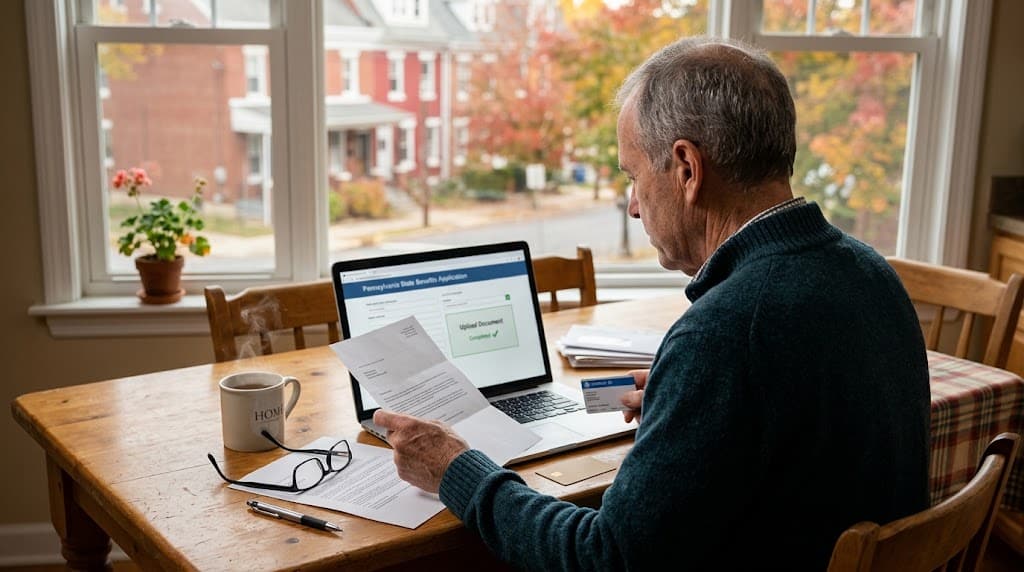
- Upload your documents: Upload a passport-quality digital photo, a current and unexpired photo ID, proof of West Virginia residency, and your physician certification. Blurry or filtered photos and expired IDs are common reasons for rejection.
- Pay the application fee: The fee is $50, set by W. Va. Code §16A-5-1. You can pay online or by mail. If your income is below 200% of the federal poverty level, you can request a financial hardship waiver and upload proof of income instead of paying.
- Submit your application: Review all uploaded documents before submitting.
The OMC reviews applications within 30 days and emails you the result. If you are approved, you log back in to the portal and download your digital medical cannabis card. If your application needs corrections, the OMC sends it back with instructions, and you fix and resubmit the same application rather than starting over.
If you haven’t heard back within 30 days, log back into the portal to see whether the OMC has asked for more information. If your application is still pending, contact the OMC directly.
To see what affects processing times in different states, read Veriheal’s guide on how long it takes to get a medical card. If you want a broader walkthrough of digital applications, see Veriheal’s guide on how to get your medical marijuana card online.
West Virginia Medical Cannabis Certification Timeline
One of the most common pre-certification questions is how long the full process takes from the first appointment to the first dispensary visit. The answer depends on how quickly you move through the steps you control and how long the OMC takes during its review. The table below gives realistic ranges for each stage.
| Stage |
Typical Timeframe |
Notes |
| Schedule a certification appointment |
Same day to 3 days |
Varies by provider availability; dedicated cannabis certifiers typically have faster availability than general practitioners |
| Complete the appointment and receive certification |
Same day |
Most certifications are completed at the end of the appointment if documentation is complete |
| Submit the OMC patient application |
Same day as certification |
Can be submitted as soon as you have your certification and documents |
| OMC application processing |
Up to 30 days |
The OMC reviews applications within 30 days and emails you the result |
| Receive your patient card |
Upon OMC approval |
You download your digital card from the portal |
| Dispensary access |
Upon card approval |
Confirm with your chosen dispensary what it needs to see at your first visit |
The stages you control (scheduling, showing up prepared, and submitting your application promptly) can typically be completed within a few days. The OMC review is where timelines vary most, so build up to 30 days into your plan.
Certification Renewal vs. Card Renewal: What’s the Difference?
Most patients assume that renewing a state card means sending one form to one place. In West Virginia, renewal involves two linked steps, and understanding both prevents card lapses.
Physician certification renewal means returning to a registered physician for a new evaluation. The OMC requires an annual physician appointment, and you cannot renew your card without a new, current certification. This is a medical appointment, not a paperwork submission.
Card renewal is the second step. Your card expires within one year of issuance under W. Va. Code §16A-5-1. It can expire earlier if your physician specified a shorter duration in your certification under §16A-5-5. To renew, you create a Patient Renewal application in the OMC portal and submit it with your new certification and payment. The physician visit comes first, and the portal renewal comes second.
If your qualifying condition changes, talk with your physician, since your certification must reflect the condition you are currently being treated for.
The table below summarizes how the two steps fit together.
|
Physician Certification Renewal |
State Card Renewal |
| Who initiates it |
Patient schedules an appointment with a registered physician |
Patient submits a Patient Renewal application through the OMC portal |
| How often |
Annually |
Before the card expires, within one year of issuance or earlier if the certification set a shorter duration |
| What it requires |
A new evaluation and certification |
The new certification, current documents, and payment or a hardship waiver |
If you have questions about your current card status, check the OMC patient portal first. If you’re concerned about privacy, Veriheal’s guide on whether a medical cannabis card shows up on a background check covers it directly.
Ready to start your West Virginia certification? Book a consultation with a Veriheal-connected physician who is registered with the West Virginia OMC. A Veriheal evaluation costs $149, and every one comes with a “get approved or your money back” policy.
Note: The content on this page is for informational purposes only and is not intended to be professional medical advice. Do not attempt to self-diagnose or prescribe treatment based on the information provided. Always consult a physician before making any decision on the treatment of a medical condition.
Note: Veriheal does not support illegally consuming therapeutic substances such as cannabis but acknowledges that it transpires because of the current illicit status, which we strive to change by advocating for research, legal access, and responsible consumption. Always consult a physician before attempting alternative therapies.
Frequently Asked Questions
What is the difference between a medical cannabis certification and a medical cannabis card in West Virginia?
A medical cannabis certification is a document from an OMC-registered physician. It confirms that you have a qualifying condition under the West Virginia Medical Cannabis Act. The patient card is what the OMC issues after it approves your application, which must include the certification. In short, the certification comes first, and the card follows.
Does my regular doctor have to certify me, or can I see a different physician?
No, you can see a different physician. Any West Virginia-licensed MD or DO can evaluate and certify you, as long as they have completed the state’s training course and are registered with the OMC. If your current doctor isn’t registered, a dedicated cannabis certification provider is a simple alternative.
Can I get a West Virginia medical cannabis certification through a telehealth appointment?
Yes, in most cases. The OMC says annual physician appointments can take place in person or online. It also lists telehealth companies with registered West Virginia physicians. State law does define continuing care as including an in-person consultation, so your physician can tell you whether any in-person follow-up applies to you.
What happens if my certification has an error when I submit to the OMC?
The OMC will send your application back for corrections. Ask your physician for a corrected certification, then resubmit the same application rather than starting a new one.
Do I need to see a physician every year to keep my West Virginia medical cannabis card?
Yes. The OMC requires an annual physician appointment, and you cannot renew your card without a new certification, so the medical appointment comes before your portal renewal.
How long does it take to get a West Virginia medical cannabis patient card after submitting the OMC application?
The OMC reviews applications within 30 days and emails you the result. If you are approved, you download your digital card from the portal.
Author, Share & Comments