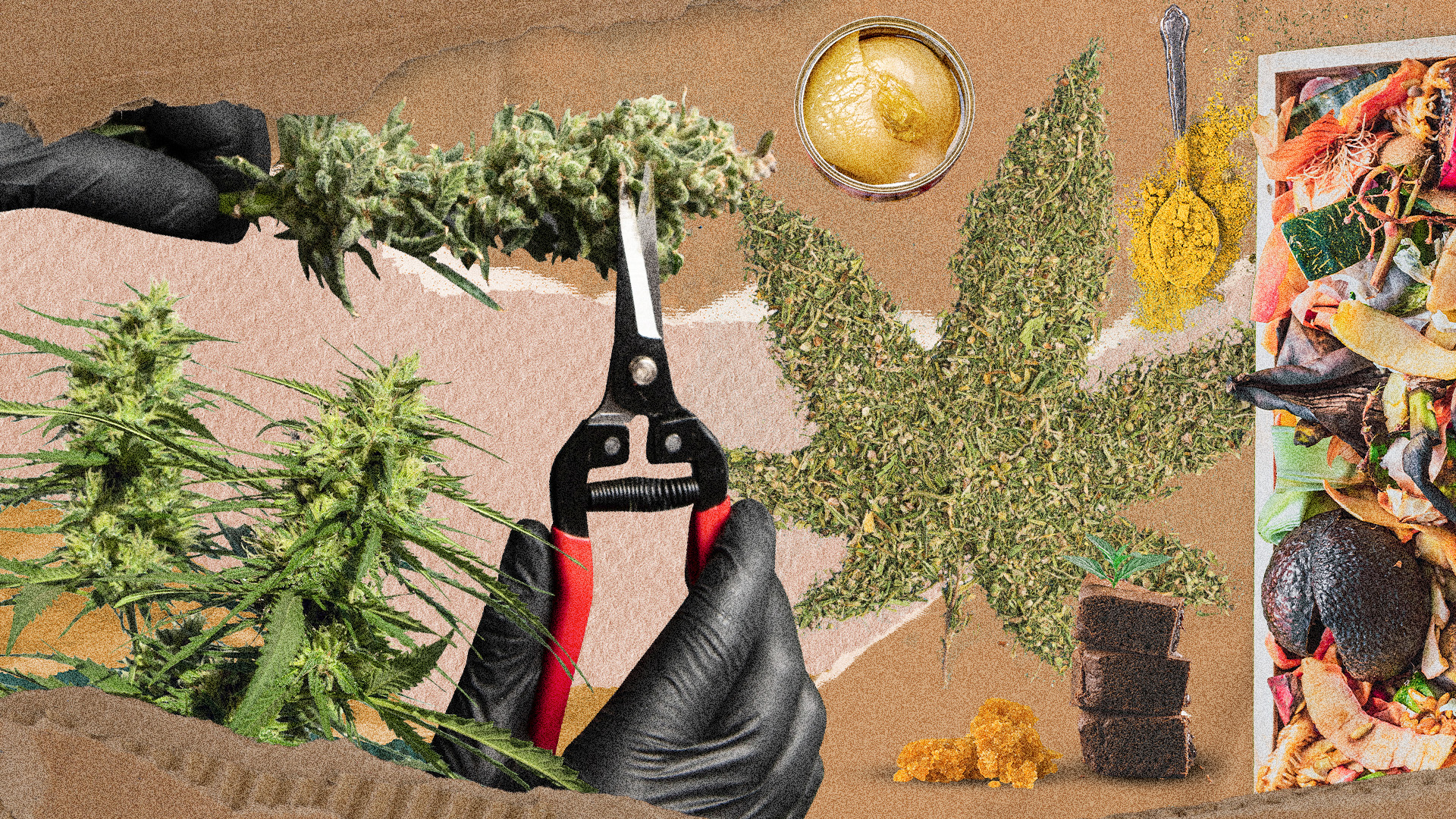
Leftover cannabis trim is more useful than most growers realize. Whether you have a bag of sugar leaves from a recent harvest or a pile of fan leaf material you were about to toss, there are practical ways to put it to work, from dry-sift kief and bubble hash to cannabutter, tinctures, and topicals.
What Is Cannabis Trim?
Cannabis trim is all the plant material removed during the post-harvest trimming process. That includes sugar leaves, fan leaves, and small bits of stem that come off when you manicure your buds. Understanding the cannabis plant anatomy helps clarify why some trim is worth processing and some is better suited for the compost bin.
Trim is often compared to cannabis shake and how it differs from flower, but the two are distinct. Shake is loose flower material that falls from dried buds during handling. Trim is the green leafy material removed intentionally before or after drying, and it varies widely in quality depending on where it came from on the plant.
Sugar Leaves vs. Fan Leaves: Which Trim Is Worth Processing?
Not all cannabis trim carries the same value, and the distinction between sugar leaves and fan leaves determines which methods are worth your time.
Sugar Leaves
Sugar leaves are the small leaves that grow directly out of cannabis buds during flowering. They get their name from the visible coating of cannabis trichomes that makes them appear frosted with crystals. That trichome concentration is what makes sugar leaf trim worth processing. Sugar leaves are viable for all extraction methods, cannabutter, tinctures, and topicals, and they typically produce a noticeably better result than fan leaf material.
Fan Leaves
Fan leaves are the large, iconic leaves that grow along the stem throughout the plant’s life cycle. They contain minimal trichomes and therefore carry very low cannabinoid content. Fan leaf trim is generally better suited for compost, garden mulch, or as a non-psychoactive base in topicals where the goal is plant-based soothing rather than cannabinoid delivery.
| Trim Type |
Trichome Content |
Best Uses |
| Sugar leaves |
High |
Kief, bubble hash, cannabutter, tinctures, topicals |
| Fan leaves |
Very low |
Compost, garden mulch, non-psychoactive topicals |
Knowing which trim type you have makes every decision that follows easier. If your material is mostly fan leaves, extraction is unlikely to be worth the effort.
How Long Does Cannabis Trim Stay Fresh? (Storage Before Processing)
If you cannot process your trim immediately after harvest, storage conditions matter more than most growers expect. Trichomes begin degrading through oxidation, light exposure, and moisture the moment they are removed from the plant. As tetrahydrocannabinolic acid (THCA) breaks down progressively under these conditions, it converts toward cannabinol (CBN), which is far less psychoactive, according to research on cannabinoid degradation pathways. This is why trim that has been sitting in an open bag for a week will typically produce weaker results than freshly harvested material.
The good news is that proper storage can slow this process significantly. Vacuum-sealed containers eliminate oxygen exposure, which is the primary driver of oxidative degradation. Freezer storage adds another layer of protection by slowing the chemical reactions that break down cannabinoids. A dark environment matters too, since UV light accelerates trichome breakdown even through clear containers.
As a practical guide, fresh trim processed within a few days of harvest typically retains the most trichome viability. Trim stored in a vacuum-sealed bag in the freezer can typically remain viable for several weeks to a few months, though potency will still decline over time. For more on maintaining quality after harvest, the same principles that apply to properly storing cannabis flower also apply to trim.
| Storage Method |
Estimated Viability Window |
Best Use After Storage |
| Open bag at room temperature |
1 to 3 days |
Compost or topicals |
| Sealed container, dark and cool |
Up to 1 week |
Topicals, cannabutter |
| Vacuum-sealed, freezer |
Several weeks to a few months |
Kief, bubble hash, tinctures |
If your trim has been stored poorly and shows signs of moisture or mold, do not attempt extraction. Compost it instead.
What You Can Do With Cannabis Trim
Sugar leaf trim in good condition can go in several directions depending on your equipment, skill level, and how much material you have. The methods below move roughly from simplest to most involved, so you can pick the entry point that fits your setup.
1. Make Dry-Sift Kief or Bubble Hash From Your Trim
Extraction is one of the most efficient uses for sugar leaf trim because it concentrates the trichomes from a large volume of lower-potency material into a smaller, more usable product. The right method depends on your equipment and how refined you want the final product to be. For a deeper comparison of the end products, see kief vs. hash.
Dry-Sift Kief (No Equipment Needed)
Dry sift hash is the most accessible extraction method available to home growers. Place your trim over a fine mesh screen or a trim tray with a collection chamber, then agitate the material gently so the trichomes fall through the screen and collect below. The resulting kief can be pressed into hash using finger pressure or a pollen press, or used directly by adding it to a bowl or vaporizer.
What you need:
- Fine mesh screen or trim tray with kief catcher
- Clean, dry trim (frozen trim works especially well)
- A card or soft brush to gather the collected kief
Bubble Hash (Ice Water Extraction)
Bubble hash uses ice water to freeze and dislodge trichomes from the trim material, then separates them through a series of mesh bags called bubble bags. The process produces a higher-quality cannabis concentrate than dry sift because the water washing removes more plant material from the final product. Hash rosin can then be pressed from dried bubble hash using a rosin press, which takes the process one step further without solvents.
What you need:
- 5-gallon bucket
- Bubble bags (set of 4 to 8, varying mesh sizes)
- Ice
- Cold water
- Sugar leaf trim
If you plan to use either product in edibles, the decarboxylation process for trim is required first. Raw kief and bubble hash contain THCA, not tetrahydrocannabinol (THC), and will not produce the same effects unless heated.
Scissor Hash: The Easiest Trim Byproduct You’re Already Making
If you hand-trim your plants, you have been producing scissor hash without realizing it. The sticky, dark resin that builds up on your trimming scissors during harvest is a natural concentration of trichomes, which makes it more potent than loose trim material by a significant margin.
Collecting it takes less than five minutes. Use a razor blade or the back of a clean knife to scrape the blades and handles of your scissors, collecting the resinous buildup onto a clean surface. Roll the collected material into small balls. You can smoke scissor hash directly, press it onto a pre-roll, or layer it into a bowl on top of flower.
2. Add Trimmings to Food
Raw cannabis trim added to food will not produce psychoactive effects because the cannabinoids have not been activated through heat. That makes raw trim a non-intoxicating option for adding plant-based nutrients and flavor to dishes. Fan leaves work well here since they are similar in texture to other leafy greens, making them a natural fit for smoothies, salads, and juiced blends.
If your goal is a psychoactive effect from food, decarboxylation is required before adding trim to any recipe. Without it, you are adding plant matter, not active cannabidiol (CBD) or THC.
3. Add Trimmings to Drinks
Cannabis tea is one of the simplest drink applications for trim. Steep dry trim in hot water, strain out the plant material, and drink the infused liquid. Cannabis tea made from undecarbed trim will be mild and non-intoxicating, which suits readers looking for a relaxing herbal drink rather than a psychoactive effect.
For a stronger effect, add a fat source such as coconut oil or butter to the steeping water. Cannabinoids are fat-soluble, meaning they bind to fat rather than water, so the fat carrier is what makes the cannabinoids bioavailable when consumed as a drink.
Making a Cannabis Tincture With Trim
A cannabis tincture is a high-proof alcohol extraction that pulls cannabinoids from plant material efficiently, making it one of the best uses for lower-potency trim. Alcohol extracts thoroughly even from material with reduced cannabinoid density, so trim that might produce a weak result through dry sifting can still yield a functional tincture.
The basic process: decarb your trim first, then submerge it in food-grade high-proof alcohol (at least 190-proof ethanol works well), and let it sit for a minimum extraction period before straining. Store the finished tincture in a dark glass dropper bottle. Trim tinctures will typically be less potent than flower tinctures, so start with a small dose and adjust based on individual response. For step-by-step instructions on how to make a cannabis tincture, Veriheal has a dedicated guide that covers the full process.
4. Make Cannabutter or Cannabis-Infused Oil With Your Trim
Cannabutter and cannabis-infused oil are the most practical bases for cannabis edibles, and trim works well for both when the starting material is sugar leaf trim in good condition. Before you begin either process, decarboxylation is required. Skipping the decarboxylation process for trim means the cannabinoids stay in their acid form and will not activate the way most edible recipes expect.
Cannabutter
Cannabutter is made by simmering decarbed trim in unsalted butter with water, then straining out the plant material once the cannabinoids have had time to bind to the fat. Infused butter made from trim will typically be less potent than butter made from flower, so dose cautiously when using it in recipes and wait the full onset window before consuming more.
Cannabis-Infused Coconut Oil
Cannabis-infused coconut oil is often a better choice for trim because coconut oil has a high saturated fat content, which improves cannabinoid absorption. The process mirrors cannabutter: simmer decarbed trim in coconut oil at low heat, then strain. The result works well in baked goods, capsules, and topicals. For a reliable baseline process, Veriheal’s cannabis coconut oil recipe walks through the full method. Potency of trim varies depending on trim type and storage conditions, so start conservative and adjust over time.
5. Create a Topical Salve or Cream
Cannabis topicals made from trim are applied directly to the skin and do not produce psychoactive effects because cannabinoids absorbed transdermally do not reach the bloodstream in meaningful concentrations. That makes topicals a useful application for both sugar leaf and fan leaf trim. Sugar leaf trim produces cannabis topicals with higher cannabinoid content, while fan leaf trim works as a plant-based base for a soothing salve without significant cannabinoid activity.
To make a basic topical, infuse your trim into coconut oil or another carrier fat, strain out the plant material, then mix the infused oil with melted beeswax to create a salve consistency. Essential oils can be added for scent and additional skin benefits.
6. Create Herbal Cooking Spices
Dried cannabis trim can be ground and used as a cooking spice in savory dishes. The flavor profile is herbal and slightly bitter, making it a reasonable addition to spice blends used in marinades, rubs, and sauces. Raw dried trim used this way is non-intoxicating since the cannabinoids have not been activated, so this is purely a flavoring application.
Fan leaves work well here alongside sugar leaves since the goal is flavor rather than cannabinoid extraction.
7. Use for Garden Compost
Fan leaf trim and degraded sugar leaf trim that is no longer viable for extraction or infusion can go directly into compost. Cannabis plant material breaks down readily and adds organic matter to the compost pile. There is no evidence that composted cannabis material introduces unwanted compounds into soil at meaningful concentrations, according to research on cannabis plant matter in composting systems.
This is the responsible disposal route for trim that has been stored too long, has taken on moisture, or came entirely from fan leaves with no trichome content worth processing.
8. Smoke Your Cannabis Trim
You can smoke cannabis trim directly, though the experience differs from smoking cured flower. Sugar leaf trim that has been properly dried will burn and produce effects, though the smoke tends to be harsher than flower and the potency of trim is generally lower. Fan leaf trim is not worth smoking given its minimal cannabinoid content.
If you want to smoke your trim, dry it fully first and consider mixing it with a small amount of flower to smooth out the harshness. Trim rolled into a joint or packed into a bowl works as a practical way to use up material before processing the rest into extracts or infusions.
If you are a medical cannabis patient looking to maximize your harvest or explore new consumption methods, speak with a Veriheal cannabis doctor who can help you navigate options suited to your needs and qualifying condition.
Note: The content on this page is for informational purposes only and is not intended to be professional medical advice. Do not attempt to self-diagnose or prescribe treatment based on the information provided. Always consult a physician before making any decision on the treatment of a medical condition.
Note: Veriheal does not support illegally consuming therapeutic substances such as cannabis but acknowledges that it transpires because of the current illicit status, which we strive to change by advocating for research, legal access, and responsible consumption. Always consult a physician before attempting alternative therapies.
Frequently Asked Questions
Can you smoke cannabis trim?
Sugar leaf trim can be smoked after it has been properly dried. It burns and produces effects, but it tends to be harsher than cured flower and carries lower potency than bud material. Fan leaf trim is not worth smoking because it contains minimal trichomes and therefore very little cannabinoid content.
What is the difference between sugar leaves and fan leaves?
Sugar leaves are the small leaves that grow directly from cannabis buds during flowering and are coated with trichomes, making them suitable for extraction and infusion. Fan leaves are the large structural leaves found along the stem throughout the plant’s growth cycle and contain very few trichomes. For most processing methods, only sugar leaf trim is worth using.
What is scissor hash?
Scissor hash is the sticky, resinous buildup that collects on trimming scissors during a hand-trim harvest. It forms from trichomes that transfer from the plant onto the metal blades and handles as you work. It can be scraped off with a razor blade and is typically more potent than loose trim material because it represents a natural concentration of trichomes.
Does cannabis trim need to be decarboxylated before making edibles?
Yes. Cannabis trim contains THCA, not active THC, in its raw state. Decarboxylation converts THCA to THC by applying heat, which is the step that allows cannabinoids to produce psychoactive effects when consumed. Skipping decarboxylation means your cannabutter or infused oil will not activate the way a standard edible recipe expects.
How long does cannabis trim stay viable for processing?
Fresh trim processed within a few days of harvest typically retains the most trichome viability. Trim stored in a vacuum-sealed container in the freezer can typically remain viable for several weeks to a few months, though potency will decline over time. Trim left in an open bag at room temperature degrades quickly and may be better suited for compost after just a few days.
Author, Share & Comments