1-855-452-6224 (Customer Support Available 24/7)

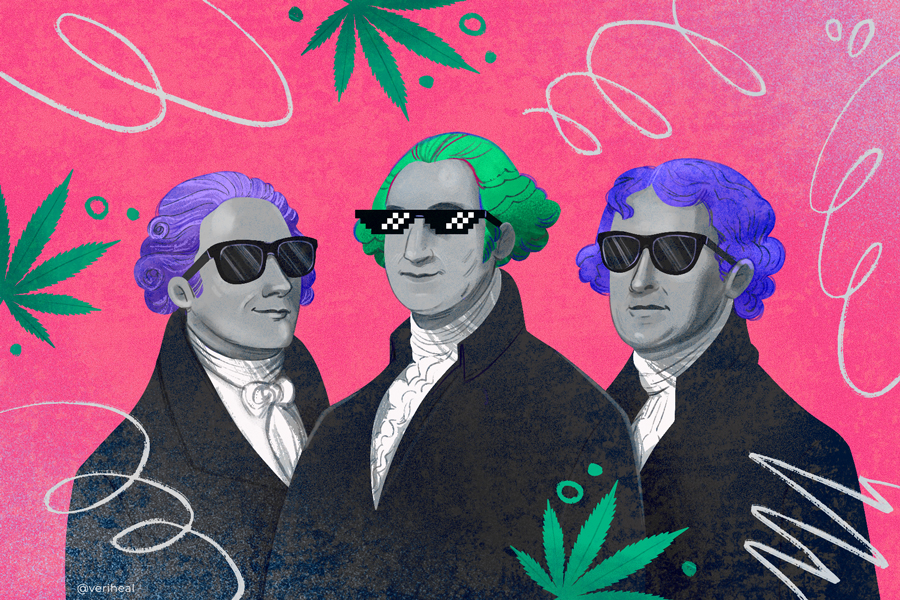
Hemp has deep roots in American history, stretching back to the very first English settlements on the continent. Long before cannabis became a political flashpoint, it was a staple crop that colonial farmers were legally required to grow, that Founding Fathers cultivated on their plantations, and that colonial physicians prescribed for everyday ailments.
Cannabis sativa is one of the oldest cultivated plants in recorded history. The earliest documented cultivation dates to Taiwan around 3000 BCE, from which it spread westward through Central Asia and into Europe via ancient trade routes, eventually taking root in the British Isles as an established fiber crop centuries before English colonists ever set foot in North America.
When settlers arrived at Jamestown in 1607, they brought hemp cultivation with them as part of a well-established agricultural tradition, not as a discovery. The plant thrived in the new world’s climate, and colonists quickly put it to work across a range of practical needs. Hemp was one of the most versatile materials available to early American communities, serving roles that no other single crop could fill.
Key colonial uses for hemp included:
By 1619, the Virginia Assembly was formally encouraging all settlers to grow hemp in response to surging demand from Britain, setting the stage for the colonial cultivation mandates that would follow.
Hemp cultivation in colonial America was not simply a matter of agricultural preference. It was, in several colonies, a legal obligation. Virginia’s General Assembly issued directives in 1619, 1632, and 1633 requiring settlers to grow hemp, with penalties attached for non-compliance. Massachusetts and Connecticut passed comparable statutes, reflecting how critical hemp production had become to colonial self-sufficiency and to British imperial interests.
Britain actively subsidized colonial hemp production through formal bounty payments, including measures formalized under the 1764 Hemp Bounty Act. The strategic motive was straightforward: Britain depended on Baltic hemp from Russia and Poland for the rope and sail supply of the Royal Navy, and that dependence was a vulnerability. Encouraging colonial hemp production through financial incentives reduced that risk.
This meant colonial farmers were not simply responding to market demand. They were being legally compelled and financially rewarded by imperial policy to scale up hemp production as fast as possible.
That imperial foundation had an unintended consequence. When the Revolution came, the hemp infrastructure Britain had built became a resource the colonists turned against it. Hemp fiber supplied the sails and rigging of American ships, and the history of cannabis in Egyptian culture shows how deep the plant’s roots run across cultures well beyond colonial America. Hemp paper carried the pamphlets and newspapers that circulated revolutionary ideas across the colonies.
|
Colony |
Year |
Statute |
|
Virginia |
1619 |
General Assembly directive encouraging all settlers to grow hemp |
|
Virginia |
1632 |
Renewed mandate with penalties for non-compliance |
|
Virginia |
1633 |
Further reinforcement of hemp cultivation requirement |
|
Massachusetts |
1630s |
Statute requiring hemp cultivation on colonial farmsteads |
|
Connecticut |
1640s |
Similar cultivation mandate mirroring Virginia’s approach |
The short answer is: probably not for psychoactive effect, and the evidence for recreational use is thin. The Founding Fathers grew hemp extensively, but industrial hemp and psychoactive cannabis are not the same thing. The varieties cultivated on colonial plantations were bred for fiber yield and contained very low levels of tetrahydrocannabinol (THC), the compound responsible for cannabis’s psychoactive effects. Smoking that crop would have produced little to none of the effect associated with modern recreational cannabis.
Understanding that distinction is key to reading the historical record accurately. When Washington or Jefferson wrote about their hemp crops, they were writing about a fiber and textile operation, not a psychoactive one. The confusion arises because Cannabis sativa is a single species, but cultivation for fiber and cultivation for resin content are fundamentally different agricultural practices. With that context established, the documented record of individual Founders becomes easier to read clearly.
George Washington cultivated hemp at Mount Vernon from the 1760s onward, and his farm diaries record acreage, planting schedules, and yields in detail. A frequently cited passage notes that Washington wrote to a farm manager about separating male and female hemp plants.
Some have interpreted this as evidence of interest in higher-resin cannabis varieties, but the more straightforward explanation is seed quality management: separating male plants before they pollinate females produces cleaner seed stock and stronger fiber yields. Washington’s hemp operation was a fiber and rope-making enterprise, consistent with plantation agriculture of the period.
Thomas Jefferson grew hemp at Monticello and corresponded about hemp cultivation practices with some regularity. He is occasionally cited for a diary entry referencing a particularly productive crop, though the specific wording and its interpretation have been disputed by historians.
What is documented is that Jefferson viewed hemp as an economically important crop and was interested in improving cultivation methods. Like Washington, his engagement with hemp was agricultural and commercial rather than recreational.
John Adams is on record expressing the view that hemp was among the most useful plants in existence, consistent with how most colonial leaders regarded it. William Penn, the founder of Pennsylvania, also cultivated hemp on his lands. Neither Adams nor Penn is associated with any documented personal use of cannabis for psychoactive purposes.
Their relationship to the plant was the same as their contemporaries’: it was a crop with profound economic and strategic value, and that was reason enough to grow it.
While the Founding Fathers’ relationship to hemp was largely agricultural, colonial physicians and apothecaries had a parallel and distinct engagement with cannabis: they used it medicinally. British herbals circulated widely in the colonies, and one of the most commonly owned medical references in colonial households was Nicholas Culpeper’s Complete Herbal (1653), which listed cannabis preparations for pain, inflammation, and muscle spasm.
These remedies were not smoked. Colonial medicinal cannabis typically involved the plant’s resin or seed oil, applied or ingested for specific complaints including joint pain and insomnia.
This medicinal tradition had a long institutional life. Cannabis appeared in the US Pharmacopeia records documenting cannabis as an official medicine from 1850 to 1942 for nearly a century, bridging colonial-era practice and 19th-century formal medicine. That continuity matters: when Congress passed the Marihuana Tax Act in 1937, it was not removing a fringe substance from circulation.
It was effectively ending a medicinal relationship that American pharmacists and physicians had maintained for generations, drawing on practices that colonial healers had adapted from European herbalism.
The distinction between colonial medicinal use and recreational use is worth stating directly, because some readers come to this topic wondering whether cannabis smoking was common in early America. It was not. Colonial medicinal preparations drew on the plant’s ancient heritage without adopting smoking as a primary delivery method.
Smoking cannabis as a recreational practice arrived in the United States much later, spreading through port cities in the early 20th century as part of broader cultural exchange, including through jazz communities. The cannabis culture in the Roaring Twenties tells a very different story from the colonial period.
Hemp’s decline in America was not sudden. For most of the 19th century it remained a commercially viable crop, particularly in Kentucky and Missouri, where it supplied the rope and bagging used in cotton production. The invention of the mechanical hemp decorticator in the 1930s briefly seemed to promise a hemp revival, but the political winds were moving in the opposite direction.
The Marihuana Tax Act of 1937 effectively ended legal hemp farming in the United States by imposing prohibitive taxes and licensing requirements on all Cannabis sativa cultivation, industrial or otherwise. That legislation, and the anti-cannabis propaganda through time that accompanied it, collapsed nearly three centuries of continuous hemp agriculture in a matter of years.
The act’s framing is telling. By using the term “marihuana” rather than hemp, legislators obscured the fact that they were criminalizing the same crop Virginia’s General Assembly had once made legally mandatory. Critics have argued, and historians have documented, that racial animus and industry lobbying played significant roles in the legislation’s passage.
The Schedule I drugs classification that cannabis eventually received under the Controlled Substances Act of 1970 extended that framework, placing a crop the Founding Fathers had been legally obligated to grow into the same category as heroin.
The modern story of hemp and cannabis has moved in a different direction. The 2018 Farm Bill federally legalized hemp cultivation for crops containing less than 0.3% THC, partially restoring what colonial law had once compelled. Broader cannabis legalization continues state by state, a pattern that raises questions about federal consistency.
The US government holding a cannabis patent adds its own layer of irony to that inconsistency. Understanding that history, from mandatory colonial cultivation through federal prohibition and back toward legalization, gives the current debate a context that makes the political choices involved much harder to dismiss.
For readers exploring cannabis in Rastafari culture or other traditions, the colonial American chapter is one piece of a genuinely global story.
If you are exploring how cannabis fits into your own health and wellness decisions today, speak with a Veriheal medical provider about what options are available in your state.
Note: The content on this page is for informational purposes only and is not intended to be professional medical advice. Do not attempt to self-diagnose or prescribe treatment based on the information provided. Always consult a physician before making any decision on the treatment of a medical condition.
Note: Veriheal does not support illegally consuming therapeutic substances such as cannabis but acknowledges that it transpires because of the current illicit status, which we strive to change by advocating for research, legal access, and responsible consumption. Always consult a physician before attempting alternative therapies.
Cannabis cultivation is documented in Taiwan by at least 3000 BCE. From there it spread through Central Asia and into Europe and the Middle East via trade routes, making Cannabis sativa one of the oldest cultivated plants in recorded history.
Hemp was brought to the Americas by English colonists in the early 1600s. The first permanent English settlement at Jamestown, Virginia, began cultivating hemp shortly after its founding in 1607, and by 1619 the Virginia Assembly was formally encouraging all settlers to grow it.
Some Indigenous North American peoples used cannabis or related plants ceremonially, but widespread recreational smoking of cannabis was not a documented feature of pre-colonial North American Indigenous culture. Hemp was primarily an Old World crop introduced to the continent by European settlers.
Great article, Marcus! Good content and well written. Cheers!
“There are rumors where he is mentioned to have been caught high as a kite with another upper-class woman, in a bathroom, with foolish smiles on their faces”
What bathrooms? There was no indoor plumbing. No toilets. Did he get nasty in a outhouse?
Sign up for our newsletter
Learn the process in your state
All Rights Reserved Veriheal Inc. ©
Terms Privacy Policy Advertising Agreement Content Disclamer


Get your medical marijuana card today
Sign up in under 5 minutes
Start By Selecting Your State
 Alabama
Alaska
Arizona
Arkansas
California
Colorado
Connecticut
Delaware
Florida
Georgia
Hawaii
Idaho
Illinois
Indiana
Iowa
Kansas
Kentucky
Louisiana
Maine
Maryland
Massachusetts
Michigan
Minnesota
Mississippi
Missouri
Montana
Nebraska
Nevada
New Hampshire
New Jersey
New Mexico
New York
North Carolina
North Dakota
Ohio
Oklahoma
Oregon
Pennsylvania
Rhode Island
South Carolina
South Dakota
Tennessee
Texas
Utah
Vermont
Virginia
Washington
West Virginia
Wisconsin
Wyoming
Puerto Rico
Alabama
Alaska
Arizona
Arkansas
California
Colorado
Connecticut
Delaware
Florida
Georgia
Hawaii
Idaho
Illinois
Indiana
Iowa
Kansas
Kentucky
Louisiana
Maine
Maryland
Massachusetts
Michigan
Minnesota
Mississippi
Missouri
Montana
Nebraska
Nevada
New Hampshire
New Jersey
New Mexico
New York
North Carolina
North Dakota
Ohio
Oklahoma
Oregon
Pennsylvania
Rhode Island
South Carolina
South Dakota
Tennessee
Texas
Utah
Vermont
Virginia
Washington
West Virginia
Wisconsin
Wyoming
Puerto Rico