Knowing exactly what a gram, an eighth, or an ounce looks like, and what it should cost, is what lets you spot a bad deal before you pay for it. Cannabis flower is sold by weight everywhere, from licensed dispensaries to informal sales, using the same scale of units: grams, eighths, quarters, half ounces, and ounces. Understanding each one makes every purchase easier.
How Is Weed Measured?
Cannabis flower is dried, cured, and sold by weight, almost always in grams or fractions of an ounce. Most everyday products use the metric system, but cannabis has historically mixed metric and imperial units, which is why you will hear “grams” and “eighths of an ounce” used interchangeably at the same counter. The gram is the smallest standard unit, and everything else is a fraction or multiple of an ounce.
Understanding weed measurements before you shop means you know exactly what you are getting, how long it is likely to last, and whether the price you are being quoted is reasonable. The quick-reference table below covers every standard unit at a glance. The sections that follow explain each one in detail.
Quick-Reference Weed Measurements Table
Use this table as a fast lookup whenever you need to convert a measurement or check a price range. The detailed breakdown for each unit starts in the next section.
| Measurement |
Fraction of an Ounce |
Grams |
Approx. Price Range |
Common Slang |
| 1 gram |
1/28 oz |
1g |
$5 to $15 |
Dime bag, nick |
| Dub sack |
~1/14 oz |
2g |
$20 to $25 |
Dub |
| Eighth |
1/8 oz |
3.5g |
$25 to $60 |
Slice, half-quarter |
| Quarter |
1/4 oz |
7g |
$50 to $100 |
Quad |
| Half ounce |
1/2 oz |
14g |
$75 to $150 |
Half, half-zip |
| Ounce |
1 oz |
28g |
$150 to $300 |
Zip, O |
| Quarter pound |
4 oz |
113g |
Commercial only |
QP |
A Gram of Weed
A gram is the smallest amount of cannabis you can typically buy at a licensed dispensary and the foundational unit that every other measurement is built on. If you are trying cannabis for the first time or testing a new strain before committing to a larger quantity, starting with a single gram is the practical choice.
What Does 1 Gram Look Like?
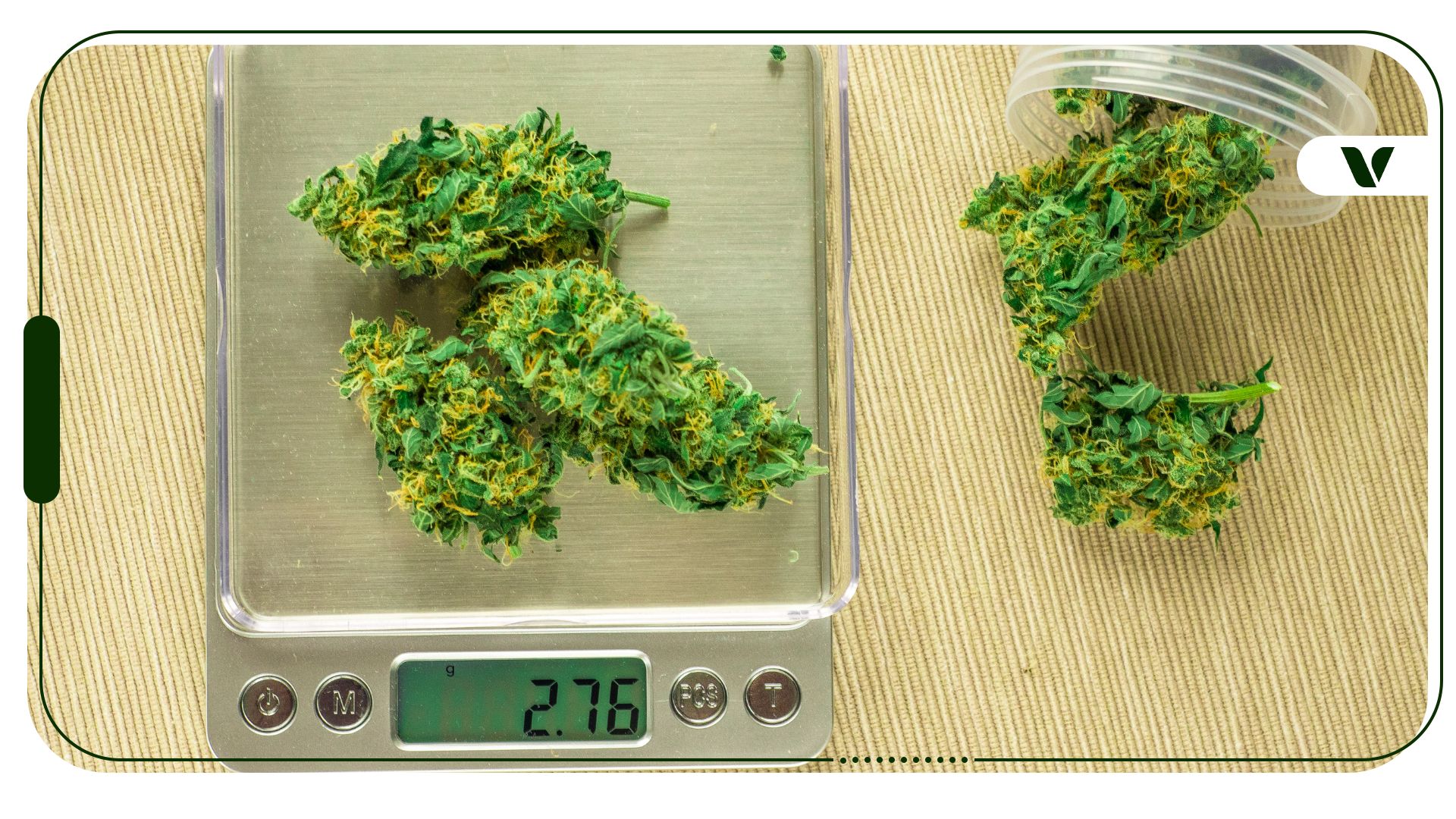
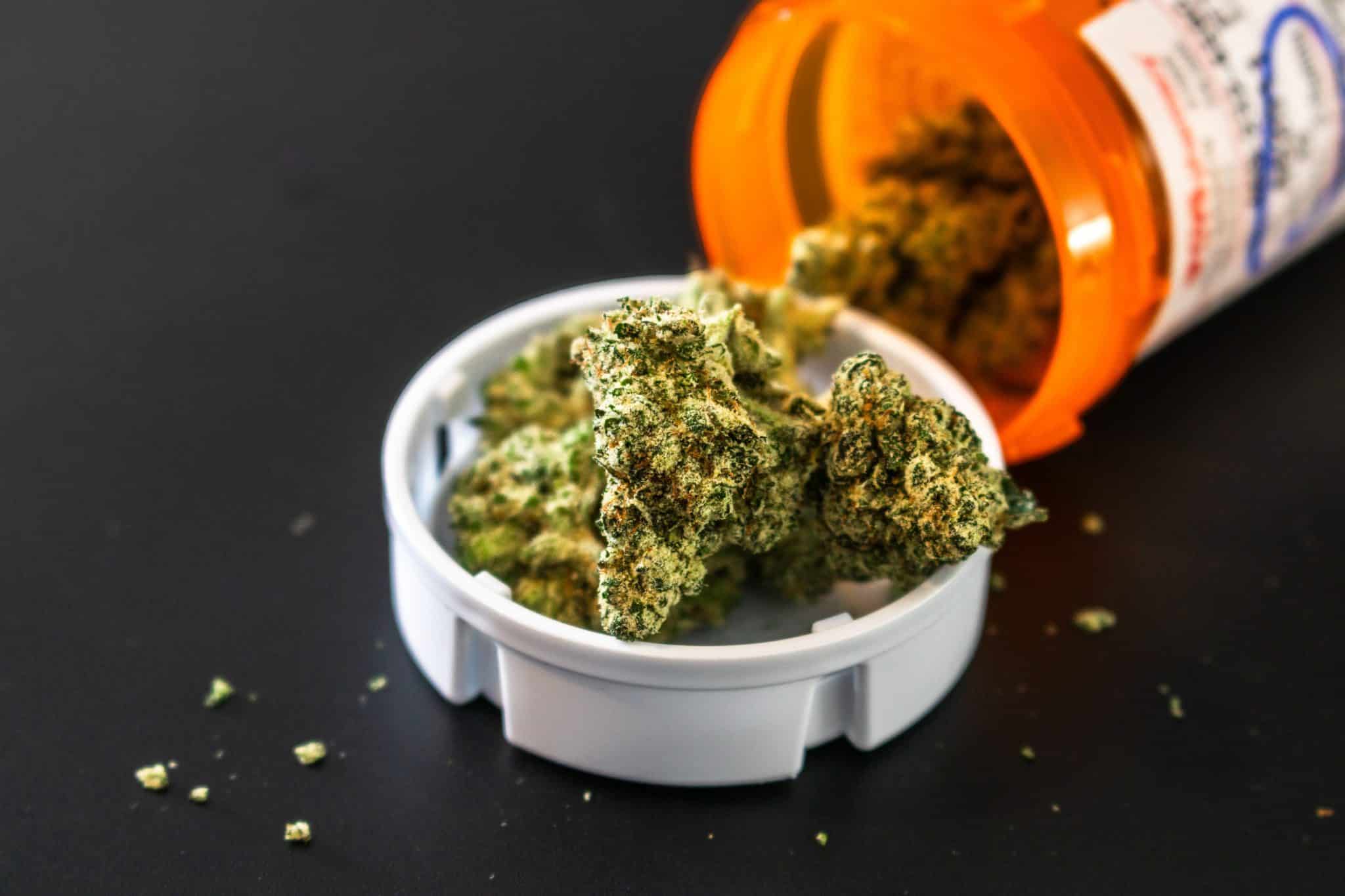
A gram of cannabis is roughly the size of a bottle cap, or a single dense nugget that fits easily in the palm of your hand. Loosely broken up, it fills a small shot glass about halfway. The exact appearance varies by strain: dense, compact buds will look smaller than an airy, fluffy gram of the same weight.
How Much Does 1 Gram Cost?
At licensed cannabis dispensaries across the US, you can expect to pay between $5 and $15 for a gram, depending on quality tier and your state’s market. Premium or craft cannabis sits at the higher end of that range. Prices in states with well-established adult-use markets, like Colorado or Oregon, tend to be lower than in newer markets.
How Many Joints Is 1 Gram of Weed?
One gram is enough for one standard joint or two smaller ones, depending on how tightly you roll and how much you pack. Pre-rolled joints sold at dispensaries typically contain between 0.5g and 1g each, which gives you a useful benchmark.
A Dub Sack (2 Grams)
A dub sack, or simply a “dub,” refers to 2 grams of cannabis. The term comes from legacy and informal markets, where a dub typically cost $20. Most licensed dispensaries do not package cannabis in 2-gram increments, so if you encounter this unit it is more likely in an informal context or as part of a pre-roll two-pack. Knowing what a dub is helps you understand pricing conversations even when you are shopping somewhere that does not use the term officially.
An Eighth of Weed (3.5 Grams)
The eighth is the most common purchase unit at dispensaries and the one most first-time buyers encounter first. An eighth is one-eighth of an ounce, which works out to 3.5 grams. It is enough for several sessions and gives you a meaningful amount to work with without a large upfront spend.
How Many Grams Are in an Eighth?
An eighth of an ounce contains exactly 3.5 grams. That is the standard used by every licensed dispensary in the US, and it is the measurement you will see on pre-packaged flower labels.
How Much Does an Eighth Cost?
For how much an eighth of weed costs, national prices typically range from $25 to $60. Budget flower and house strains sit closer to $25, while premium or small-batch cannabis can push toward $60 or higher in some markets. State tax structures and local market competition both affect what you will pay.
What Does 3.5 Grams of Weed Look Like?
An eighth is roughly the size of a small fig or a tight cluster of grapes. If you spread it out on a flat surface, it covers an area about the size of your palm. Dense indica buds will look noticeably smaller than the same weight of a lighter, more open sativa strain.
A Quarter of Weed (7 Grams)
A quarter, sometimes called a “quad,” is a quarter of an ounce, which equals 7 grams. It represents a step up in both quantity and value: most dispensaries offer a slightly better price per gram at the quarter level than at the eighth, making it a practical choice for regular consumers who have already identified strains they enjoy.
How Many Grams Are in a Quarter?
A quarter of weed contains 7 grams, exactly double an eighth. For more detail on how much a quarter of weed costs across different markets, the price typically ranges from $50 to $100 nationally.
How Much Does a Quarter Cost?
A quarter of cannabis typically costs between $50 and $100 at a licensed dispensary, depending on quality and state. Higher-end flower and lower-volume markets push toward the top of that range.
A Half Ounce of Weed (14 Grams)
A half ounce, known as a “half” or “half-zip,” equals 14 grams. At this quantity, you are buying enough cannabis for many sessions, and the price per gram at the half-ounce level is usually noticeably lower than at the eighth or quarter. It makes sense for established consumers who know what they like and have a reliable way to store cannabis properly.
How Many Grams Are in a Half Ounce?
A half ounce of cannabis equals 14 grams, which is four eighths or two quarters. At the half-ounce level, personal possession limits begin to matter in some states. Many states that have legalized adult-use cannabis cap personal possession at 1 ounce, meaning a half-zip is within legal limits, but two of them may not be. The possession limits table in the next section covers this by state.
How Much Does a Half Ounce Cost?
A half ounce typically costs between $75 and $150 at licensed dispensaries, with significant variation by state and quality tier.
A Full Ounce of Weed (28 Grams)
An ounce, called a “zip” or an “O,” is 28 grams and represents the largest quantity most consumers buy at one time. It is also the personal possession limit in most adult-use states, which makes it the ceiling for what you can legally carry in a single purchase from a dispensary. For more on how much an ounce of weed costs in your state, prices nationally range from $150 to $300 depending on quality and market conditions.
How Many Grams Are in an Ounce?
One ounce of cannabis contains 28 grams. That equals eight eighths, four quarters, or two half ounces. Licensed dispensaries in adult-use states typically list ounce pricing on their menus, and this quantity often comes with the best per-gram value of any standard purchase size.
How Much Does an Ounce Cost?
An ounce of cannabis typically costs between $150 and $300 at licensed dispensaries in the US. For a detailed breakdown of what a zip costs across different states, see our article on how much a zip of weed costs.
Larger Quantities: Quarter Pound, Half Pound, and Full Pound
Once you move beyond an ounce, you enter quantities that are outside personal possession limits in every US state. These units are most relevant to licensed cultivators, commercial operators, and growers tracking harvest yields. Understanding what a quarter pound of weed represents is useful context even for consumers, since the terminology appears in discussions about the broader cannabis market.
| Name |
Ounces |
Grams |
Legal Context |
Common Slang |
| Quarter pound (QP) |
4 oz |
113g |
Exceeds personal possession limits in all US states |
QP |
| Half pound |
8 oz |
226g |
Commercial/cultivation use only |
Half pack |
| Full pound |
16 oz |
453g |
Commercial/cultivation use only |
Pack, bird |
Purchasing or possessing any of these quantities for personal use is illegal under federal law and exceeds state possession limits in all adult-use jurisdictions. These larger quantities are the territory of licensed commercial operations, not personal consumers.
Cannabis Possession Limits by State
Knowing how much cannabis you can legally possess is as practical as knowing how much you are buying. Possession limits vary by state, and in most adult-use states the standard limit for recreational consumers is 1 ounce. Medical cannabis patients typically have access to higher limits under their state programs.
The table below covers adult-use possession limits for states where recreational cannabis has been legalized. Laws change, and you should verify current regulations with your state’s cannabis regulatory authority before purchasing.
| State |
Adult-Use Legal |
Possession Limit |
Gram Equivalent |
| Alaska |
Yes |
1 oz |
28g |
| Arizona |
Yes |
1 oz |
28g |
| California |
Yes |
1 oz |
28g |
| Colorado |
Yes |
1 oz |
28g |
| Connecticut |
Yes |
1.5 oz |
42g |
| Delaware |
Yes |
1 oz |
28g |
| Illinois |
Yes |
~2.1 oz (non-residents: ~1 oz) |
60g / 30g |
| Maine |
Yes |
2.5 oz |
70g |
| Maryland |
Yes |
1.5 oz |
42g |
| Massachusetts |
Yes |
1 oz (home: up to 10 oz) |
28g |
| Michigan |
Yes |
2.5 oz |
70g |
| Minnesota |
Yes |
2 oz |
56g |
| Missouri |
Yes |
3 oz |
85g |
| Montana |
Yes |
1 oz |
28g |
| Nevada |
Yes |
1 oz |
28g |
| New Jersey |
Yes |
6 oz |
170g |
| New Mexico |
Yes |
2 oz |
56g |
| New York |
Yes |
3 oz |
85g |
| Ohio |
Yes |
2.5 oz |
70g |
| Oregon |
Yes |
1 oz (public) |
28g |
| Rhode Island |
Yes |
1 oz |
28g |
| Vermont |
Yes |
1 oz |
28g |
| Virginia |
Yes |
1 oz |
28g |
| Washington |
Yes |
1 oz |
28g |
Medical cannabis patients in most states are permitted to possess larger amounts than recreational consumers. Veriheal’s state-by-state resources cover qualifying conditions, patient possession limits, and how to get a medical card in each program state.
Note that cannabis regulations change regularly. Always verify the current possession limit in your state directly with your state’s cannabis regulatory authority before purchasing or carrying cannabis.
How to Calculate Price Per Gram (And Why It Matters)
Price per gram is the one number that lets you compare any cannabis purchase at any quantity on a level playing field. A quarter for $60 and an eighth for $35 look different on a dispensary menu, but the math tells the real story.
To calculate price per gram, divide the total price by the number of grams. An eighth at $35 works out to $10 per gram. A quarter at $60 works out to $8.57 per gram. The quarter is the better value, even though it costs more upfront.
Prices vary based on strain quality, state tax rates, and whether you are shopping at a licensed dispensary or informally. A peer-reviewed analysis of cannabis price trends in legal recreational markets has shown that legal market prices have dropped significantly in mature adult-use states like Oregon as supply has increased.
Budget, mid-tier, and premium flower can all occupy very different price points at the same dispensary, so the price per gram calculation applies within quality tiers, not just across quantities.
Cannabis Measurement Slang: What Each Term Actually Means
Most slang terms for cannabis measurements come from informal market pricing conventions that predate legal dispensaries. Knowing them helps you follow conversations and understand what is being offered, even in contexts where formal terminology is not used.
| Slang Term |
Unit It Refers To |
Context |
| Nick |
~0.5 to 1g |
Legacy market term; rarely used in dispensaries |
| Dime bag |
~1g |
Legacy pricing at $10; informal use |
| Dub / Dub sack |
2g |
Informal market unit; uncommon in dispensaries |
| Slice / Half-quarter |
3.5g (eighth) |
Dispensary and informal use |
| Quad |
7g (quarter) |
Common in both dispensary and informal contexts |
| Half / Half-zip |
14g (half ounce) |
Widely used |
| Zip / O |
28g (ounce) |
Very common; used in dispensary and informal settings |
| QP |
113g (quarter pound) |
Commercial and cultivation contexts |
| Half pack |
226g (half pound) |
Commercial contexts |
| Pack / Bird |
453g (pound) |
Commercial and large-scale distribution |
| Finger |
~1 oz |
Visual estimation term; informal |
Slang terms shift regionally and generationally, so the same term can mean slightly different amounts depending on where and from whom you are buying. At a licensed dispensary, packaging will always show the exact weight in grams, which is the number you should use for any price or quantity comparison.
How to Weigh Weed at Home
If you want to verify that a purchase matches what you paid for, a digital scale is the only reliable method. Visual estimation is not accurate enough to catch small discrepancies, and no other household object gives you a consistent result.
A digital pocket scale accurate to 0.01 grams is the standard tool for weighing cannabis at home. These are widely available and typically cost between $10 and $20. When you use a scale, place your container on the platform first and press the tare button to zero out the container’s weight, then add your cannabis. This gives you the net weight of the cannabis alone, not the combined weight of the product and its packaging.
Digital milligram scales are also available for those who need precision for edible preparation or microdosing, though a 0.01g scale is sufficient for standard flower purchases. A 2020 PMC commentary proposing a standardized cannabis dosing unit has argued that wide variation in THC potency makes consistent measurement important for research and consumers alike, which is part of why weighing your own supply accurately is worth the habit.
How Much Weed Should You Buy?
The right quantity depends on how often you use cannabis, whether you have tried the strain before, and how well you can store what you buy. Buying more than you can use before quality degrades is a common mistake, especially for newer consumers.
A few practical guidelines:
- Start with a gram or an eighth if you are trying a new strain or are new to cannabis. A gram lets you evaluate effects without committing to a larger quantity.
- Buy a quarter or half ounce if you are a regular consumer who has confirmed strains you enjoy and has proper storage for your flower.
- Avoid buying in bulk purely for price unless you know you will use it within a reasonable timeframe. Cannabis stored improperly loses potency and flavor over time.
- Check your state’s possession limit before purchasing larger quantities. Carrying more than your state allows, even from a licensed dispensary, creates a legal risk.
Most dispensaries offer better pricing per gram at higher quantities, but that value disappears if the flower degrades before you finish it. Learning how to store cannabis properly preserves potency and keeps your investment from going to waste.
If you are a medical cannabis patient, your possession limit under your state’s medical program is typically higher than the recreational limit, and your dispensary will be able to confirm the exact amount you are permitted to carry.
If you are ready to access cannabis through a licensed medical program in your state, find a medical marijuana doctor through Veriheal and get your medical card with support from a qualified physician.
Note: The content on this page is for informational purposes only and is not intended to be professional medical advice. Do not attempt to self-diagnose or prescribe treatment based on the information provided. Always consult a physician before making any decision on the treatment of a medical condition.
Note: Veriheal does not support illegally consuming therapeutic substances such as cannabis but acknowledges that it transpires because of the current illicit status, which we strive to change by advocating for research, legal access, and responsible consumption. Always consult a physician before attempting alternative therapies.
Frequently Asked Questions
How is weed measured?
Cannabis flower is measured by weight in grams and fractions of an ounce. The standard units are: gram, eighth (3.5g), quarter (7g), half ounce (14g), and ounce (28g). Licensed dispensaries label all pre-packaged flower with the exact weight in grams.
How many grams are in an eighth of weed?
An eighth of weed contains 3.5 grams. An eighth is one-eighth of an ounce, and it is the most common purchase quantity at cannabis dispensaries in the US.
How much does a gram of weed cost?
A gram of cannabis typically costs between $5 and $15 at a licensed dispensary in the US. The price varies based on quality tier, strain, and your state’s cannabis market and tax structure.
What is a zip of weed?
A zip is slang for one ounce of cannabis, which equals 28 grams. The term is widely used in both dispensary and informal contexts. An ounce is the personal possession limit in most adult-use states.
How much weed can you legally possess?
Personal possession limits vary by state. Most adult-use states allow 1 ounce (28 grams) for recreational consumers. Some states, including New Jersey, Missouri, and New York, permit higher amounts. Medical cannabis patients in most states are permitted to possess more than recreational consumers under their state program.
What is a dub sack?
A dub sack is 2 grams of cannabis. The term originates from informal and legacy markets, where a dub typically cost $20. Most licensed dispensaries do not sell cannabis in 2-gram increments, so the term is more common in informal purchase contexts.
How do you calculate price per gram?
To calculate price per gram, divide the total price of your purchase by the number of grams. For example, an eighth (3.5 grams) at $35 works out to $10 per gram. This calculation lets you compare value across different purchase quantities directly.
Author, Share & Comments