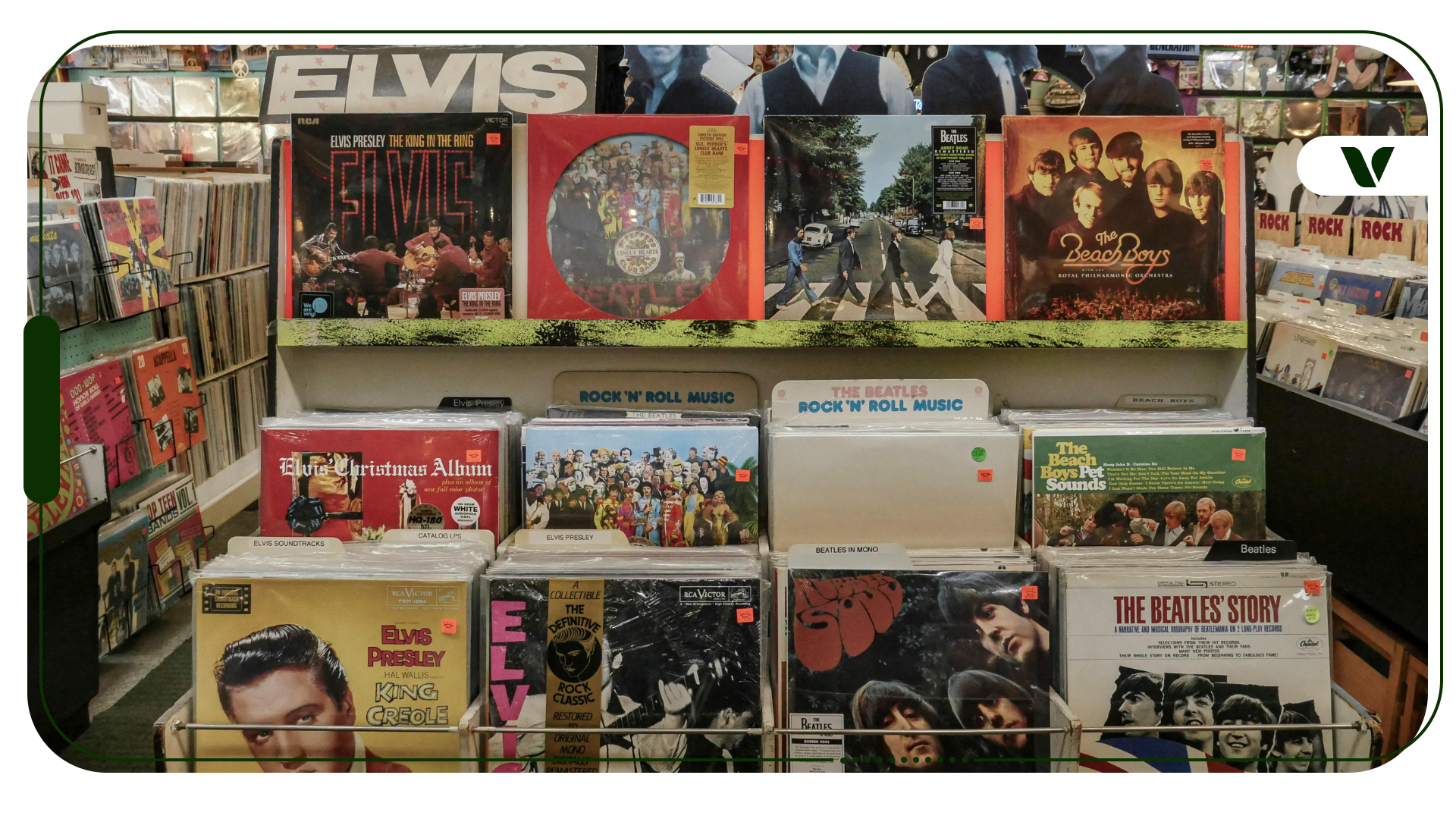
Elvis Presley’s relationship with drugs was complicated, contradictory, and extensively documented. The short answer to whether he smoked weed is almost certainly no, but the full story is more interesting than a simple denial.
What Elvis’s 1977 Autopsy Actually Found
When Elvis died on August 16, 1977, the Shelby County Medical Examiner conducted a toxicology screening that identified fourteen different drugs in his system. The official cause of death was cardiac arrhythmia, though polypharmacy was widely considered a contributing factor. Cannabis was not among the substances found.
The categories present were opiates, barbiturates, and tranquilizers. A subsequent 1979 Tennessee Senate investigation into Elvis’s personal physician, Dr. George Nichopoulos, revealed that Nichopoulos had written prescriptions for approximately 12,000 pills and vials in the final 20 months of Elvis’s life.
That figure, reported by contemporaneous coverage of the investigation into Dr. Nichopoulos’s prescribing practices, remains one of the starkest illustrations of how prescription drug dependency defined Elvis’s final years, and why the absence of cannabis in his system matters to understanding his actual habits.
What Drugs Did Elvis Actually Use?
Elvis’s documented drug use fell into three categories: opiates including codeine, morphine, and meperidine; sedatives and tranquilizers including diazepam, barbiturates, and methaqualone; and stimulants including Dexedrine. These were not recreational substances in Elvis’s own framing. He considered them medically legitimate because physicians had prescribed them.
This ideological distinction is the key to understanding Elvis’s relationship with cannabis. He drew a hard line between prescription medications, which he viewed as legitimate healthcare, and street drugs, which he associated with the counterculture he actively opposed. That distinction was not incidental. It was central to his identity, and it shaped every documented account of his attitude toward marijuana.
The way research on prescription opioid dependence has since framed this pattern applies directly: the perception of medical legitimacy often enables dependency to develop unchecked, even as the patient rejects substances they associate with illicit use.
For readers curious about how cannabis interacts with opioids, Veriheal’s guide on how cannabis interacts with opioids covers the pharmacological relationship in detail.
Elvis, the Nixon Meeting, and the Anti-Drug Stance That Defined His Relationship With Cannabis
On December 21, 1970, Elvis showed up unannounced at the White House and hand-delivered a letter to President Nixon requesting credentials from the Bureau of Narcotics and Dangerous Drugs. The letter, now archived at the National Archives, explicitly identified the “drug culture” and “hippie elements” as forces he wanted to oppose. Cannabis was squarely part of that cultural framework in his mind.
Nixon granted the meeting and Elvis received his BNDD badge, an artifact now displayed at Graceland. To Elvis, this was not a publicity stunt. He genuinely positioned himself as a counterweight to the counterculture, and marijuana was one of the symbols of everything he was pushing back against. That ideological stance explains why so many people close to him reported that he avoided cannabis specifically, even as he consumed prescription opioids at a rate that would have alarmed most physicians.
Unlike many celebrities who use cannabis who have been open about their use, Elvis publicly and privately distanced himself from marijuana throughout his career, framing it as a moral and cultural line he would not cross.
Did Elvis Ever Smoke Weed? What Named Sources Say
Most documented accounts suggest Elvis did not use cannabis regularly, and his 1977 autopsy confirmed none was present in his system at death. However, the record is not entirely without nuance.
Linda Thompson, one of Elvis’s longtime companions, wrote in her memoir “A Little Thing Called Life” that at least one of Elvis’s physicians reportedly suggested marijuana to relieve intraocular pressure related to secondary glaucoma. Whether Elvis actually tried it in that medical context is something Thompson’s account raises but does not definitively resolve. For readers interested in how cannabis has since been studied in relation to eye health, the evidence around cannabis for eye conditions is worth reviewing.
There is also documentation that Elvis tried LSD on at least one occasion, which establishes that his rejection of substances outside his prescriptions was not perfectly categorical. But cannabis specifically carried ideological weight for Elvis that other substances did not. His Nixon letter and his BNDD credentials were public signals of where he stood. The weight of the evidence, including the autopsy toxicology and the accounts from his inner circle, points to a man who used an extraordinary volume of prescription drugs while genuinely avoiding marijuana on ideological grounds.
Could Cannabis Have Helped Elvis?
This is speculative by definition, but it is not an unreasonable question given what the record shows. Elvis was managing chronic pain, glaucoma, and severe anxiety in his final years, all conditions for which cannabis has since been studied as a potential therapeutic option. His physician reportedly floated marijuana as a glaucoma treatment, which suggests that even within his own medical circle, the possibility was considered.
What the record makes clear is that the prescription drug regimen Elvis followed was catastrophic. A substance with a different risk profile, had it been socially and ideologically acceptable to him, might have changed the trajectory. That remains a historical counterfactual, not a clinical claim.
If you’re curious about whether cannabis might address a condition you’re managing, speaking with a licensed cannabis physician is the right starting point. Find a medical marijuana doctor near you through Veriheal’s platform and get a professional evaluation.
Note: The content on this page is for informational purposes only and is not intended to be professional medical advice. Do not attempt to self-diagnose or prescribe treatment based on the information provided. Always consult a physician before making any decision on the treatment of a medical condition.
Note: Veriheal does not support illegally consuming therapeutic substances such as cannabis but acknowledges that it transpires because of the current illicit status, which we strive to change by advocating for research, legal access, and responsible consumption. Always consult a physician before attempting alternative therapies.
Frequently Asked Questions
Did Elvis Presley smoke weed?
Elvis Presley almost certainly did not smoke weed regularly. His 1977 autopsy found no cannabis in his system, and multiple accounts from people close to him indicate he actively avoided marijuana on ideological grounds, viewing it as a street drug while accepting prescription medications as medically legitimate.
What drugs did Elvis actually use?
Elvis used a large volume of prescription drugs, including opiates such as codeine and meperidine, sedatives and tranquilizers including diazepam and barbiturates, and stimulants such as Dexedrine. His personal physician, Dr. George Nichopoulos, wrote prescriptions for approximately 12,000 pills and vials in the final 20 months of Elvis’s life.
Why did Elvis meet with President Nixon?
Elvis showed up unannounced at the White House on December 21, 1970, to request credentials from the Bureau of Narcotics and Dangerous Drugs. His handwritten letter to Nixon identified the drug culture and hippie elements as forces he wanted to oppose, and Nixon granted the meeting, giving Elvis a BNDD badge that is now displayed at Graceland.
Was cannabis ever suggested to Elvis for medical reasons?
According to Linda Thompson’s memoir, at least one of Elvis’s physicians reportedly suggested marijuana to relieve intraocular pressure from secondary glaucoma. Whether Elvis tried it in that context is not definitively resolved by the available record, and his autopsy found no cannabis in his system at the time of his death.
Author, Share & Comments