Your medical cannabis journey simplified: find partnered dispensaries, explore pricing options, earn rewards, and get answers to FAQs, all in one spot.
In the green bubble of the cannabis world, we often forget that there is still a good deal of stigma surrounding cannabis use. But in 2024, the Pew Research Center reported that 11% of American adults believe that cannabis should not be legalized for any reason. So while some of us may be fortunate enough not to have anyone in our inner circle who feels negatively about our cannabis use, that’s certainly not the case for everyone.
Responding to the negative stereotypes that surround cannabis use when they come from health care professionals or government officials is one thing. You almost expect people in these positions to look at marijuana dismissively. However, dealing with negative attitudes and misconceptions becomes much harder when they come from people close to you.
Here, we’ve rounded up four of the most common marijuana myths we hear time and time again, and provided you with facts and responses to help you push back against them in real time. So next time someone wants to call you a lazy stoner for taking that gummy before bed or hints that your pre-roll will lead to a life of hard drug addiction, you’ll be a little more prepared.
Cannabis Makes You Lazy and Unproductive
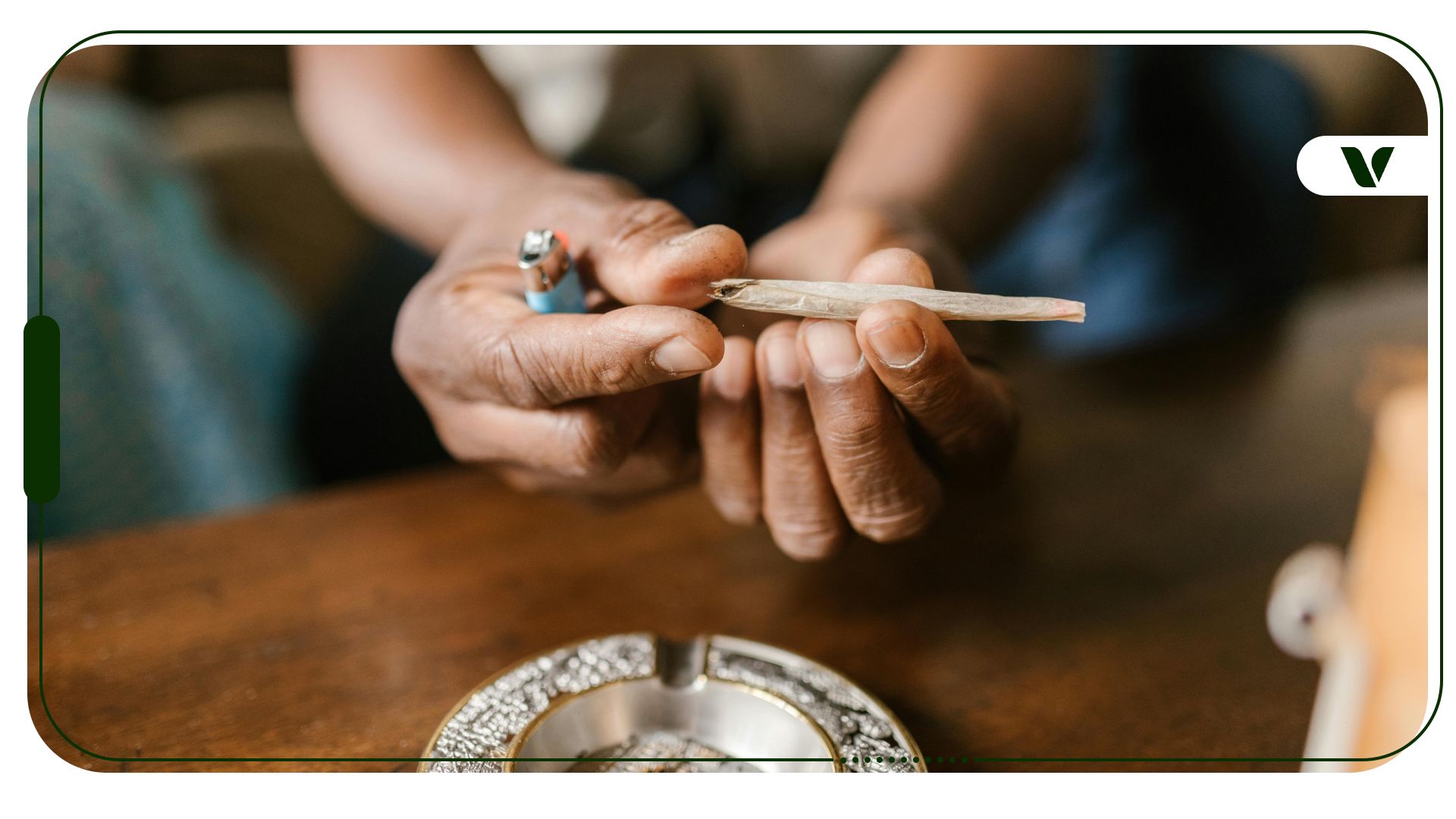
The lazy stoner stereotype is quite possibly the most pervasive cannabis stereotype that exists. Marijuana smokers have been portrayed as uninspired and unmotivated in pop culture for so long— think The Dude in The Big Lebowski or Spicoli in Fast Times at Ridgemont High— that it’s hard to blame folks for assuming that anyone who engages in a smoke sesh is at least a partial burnout.
Pushback against this stereotype can take one of three forms.
First, you can point to the huge number of successful people who have openly discussed their cannabis use. Dozens of highly successful and well-respected people—including former presidents Barack Obama, George W. Bush, and Bill Clinton; celebrities like Willie Nelson, Jay-Z, and Madonna; scientists like Carl Sagan; authors like Maya Angelou and Stephen King; and artists like Salvador Dalí and Pablo Picasso—have smoked marijuana. You’d be hard-pressed to argue that world leaders and Pulitzer Prize nominees are “lazy and unproductive” due to their cannabis use.
Additionally, you can point to the way cannabis actually helps many people manage conditions, like chronic pain, anxiety, and depression, that otherwise keep them from being motivated and productive. Anyone who’s struggled with their mental or physical health can tell you that, despite their best intentions, these sorts of conditions can prevent you from doing even the most basic tasks. But with studies showing that cannabis can be used to manage depression, anxiety, and other mental illnesses in addition to physical ones, having some marijuana might actually be the thing that allows some individuals to be productive and live balanced lives.
Lastly, we’d be remiss not to mention that the origins of the War on Drugs are rooted in systemic oppression and racism intended to stop the productivity and advancement of marginalized communities. These are ideally not values that your friends would like to espouse today, and enlightening them about its origins helps them be more informed and have an easier time letting the stigma go. We highly recommend reading our detailed breakdown of this complex topic here: The War on Drugs.
Cannabis Is a Gateway Drug
Many people who are against the legalization of cannabis for any reason, medical or recreational, cite their fears that cannabis is a gateway drug as the reason behind their stance. They worry that smoking marijuana, or normalizing smoking marijuana, will lead to experimentation with harder drugs.
While the jury is still out on whether cannabis actually does lead to increased hard drug usage (some studies have found links between cannabis use and heroin or methamphetamine use), many experts are now agreeing that the two aren’t connected in any meaningful way. Recently, the CDC published a 2024 report that finds “most people who use cannabis do not go on to use other, ‘harder’ drugs.”
See If You Qualify For Medical Marijuana -Select Your State!
Select Your State
Alabama
Alaska
Arizona
Arkansas
California
Colorado
Connecticut
Delaware
Florida
Georgia
Hawaii
Idaho
Illinois
Indiana
Iowa
Kansas
Kentucky
Louisiana
Maine
Maryland
Massachusetts
Michigan
Minnesota
Mississippi
Missouri
Montana
Nebraska
Nevada
New Hampshire
New Jersey
New Mexico
New York
North Carolina
North Dakota
Ohio
Oklahoma
Oregon
Pennsylvania
Rhode Island
South Carolina
South Dakota
Tennessee
Texas
Utah
Vermont
Virginia
Washington
West Virginia
Wisconsin
Wyoming
Never miss a post
Get updates on cannabis culture, new research, and expert insights
What many experts now believe is that the link between cannabis and things like cocaine is one of correlation, not causation. Meaning that people are not experimenting with harder drugs because they smoke cannabis, but that other social, political, or economic factors influence individuals to engage in both cannabis and other drug use.
Women Don’t Smoke Cannabis
The idea that cannabis is a “man’s drug” and that women who use it are unladylike, promiscuous, or somehow otherwise lacking in morals or character is an old one. We could blame it on society’s double standards for women or the way stoner movies almost always feature all-male casts, but wherever the idea comes from, it’s still prevalent in many circles to this day. Historically, males have had more cannabis use prevalence in studies, but that data itself is subject to investigator and research bias in an era that also used to favor recruiting healthy, white, male subjects in general across life sciences research, including on cannabis.
In reality, the perception that gender has anything to do with who can, or should, use cannabis is pretty dated. While it’s next to impossible to gather exact gender breakdowns when it comes to cannabis consumption, there is evidence showing that Gen Z women are the fastest-growing group of cannabis consumers. Another study finds that while more men than women self-report using cannabis in social settings, more women self-report using cannabis for medicinal purposes.
At the end of the day, there are no gender requirements for marijuana use. There’s not even strong data showing that it affects men and women differently. So, when people try to use this misogynistic reasoning against you, simply remind them that times have changed and that people of all genders and gender expressions are now treated equally, even when it comes to their substance use!
There’s often this idea surrounding cannabis that it’s only for youth or twenty-somethings who are big into partying. Maybe this stems from the misconception that marijuana has no place in a healthy, goal-focused life. Or maybe it has to do with the fact that young people are more likely to flout the law, although increasingly less so, or non-violently. Or maybe it’s related to the fact that young people tend to be more liberal politically and more accepting of a wide range of lifestyles.
But wherever this idea comes from, it’s wrong.
One study done by the University of Michigan found that 12% of adults aged 50 and older had used cannabis at least once a month over the last year. There are a wide range of reasons these older adults are using cannabis, ranging from relaxation and enjoyment to help with sleep and mood, and to treat pains and aches like arthritis, soreness, stiffness, and more.
While that number is still smaller than the 42% of 19 to 30-year-olds who used cannabis within the last year, and 29% of 30 to 50-year-olds who used it in the previous year, the gap is not nearly as wide as people may lead you to believe.
As the stigma around cannabis dries up, adults of all ages and gender identities are more likely to use it with some regularity, and to live productive, healthy lives while they’re at it.
Madison Troyer is a Brooklyn-based freelancer with 10 years of experience covering pop culture, entertainment, lifestyle, and wellness content. Her work has appeared in outlets like The Chicago Tribune, Newsweek, and a host of other places. When she's not at her desk, you can find her training for her next marathon or reading.
Oklahoma’s medical-only dispensary market gives licensed patients access to a wide range of cannabis products, but every purchase must follow OMMA rules. This guide explains how to find licensed dispensaries, what identification to bring, purchase and possession limits, product testing, pricing, and what to expect during a visit.
Oklahoma’s advertised $25 medical marijuana card renewal covers the physician evaluation, but patients must also pay a separate OMMA license fee. This guide explains the full renewal cost, reduced-fee eligibility, required documents, online renewal steps, processing times, and the new physician recommendation requirement.
Medical marijuana has been legal in Oklahoma since 2018, with eligibility determined by physician judgment rather than a fixed list of qualifying conditions. This guide explains how the OMMA program works, patient rights and possession limits, recreational cannabis laws, federal restrictions, and how Oklahoma compares with neighboring states.
Ohio medical marijuana dispensaries offer registered patients benefits such as lower taxes, higher purchase allowances, and access to certain medical-only products. This guide explains how to find licensed dispensaries, verify their credentials, understand purchase limits, prepare for your first visit, and navigate medical versus recreational purchasing rules.
Oklahoma offers a temporary medical marijuana license for out-of-state patients who already hold a valid medical cannabis card in their home state. This guide covers eligibility, required documents, the OMMA application process, costs, possession limits, and what happens when the 30-day license expires.
The statements made regarding cannabis products on this website have not been evaluated by the Food and Drug Administration (FDA). Cannabis is not an FDA-approved substance and is still illegal under federal law. The information provided on this website is intended for educational purposes only and is not intended to diagnose, treat, cure, or prevent any disease. It is not intended as medical advice and should not be considered as a substitute for advice from a healthcare professional. We strongly recommend that you consult with a physician or other qualified healthcare provider before using any cannabis products. The use of any information provided on this website is solely at your own risk.