Your medical cannabis journey simplified: find partnered dispensaries, explore pricing options, earn rewards, and get answers to FAQs, all in one spot.
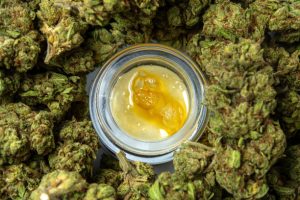
Wax is one of the most affordable and common forms of cannabis concentrates. This sticky, messy, sometimes crumbly concentrate is a classic go-to for any consumer seeking increased potency during their experience. Dabbing isn’t the only way to enjoy wax; you can also use it to make edibles!
Wax-based edibles deliver off-the-charts potency, making them especially appealing to DIY consumers eager to supercharge their homemade treats. The process is somewhat similar to making edibles with traditional cannabis material; however, there are some slight variations with the concentrated form, which can make or break your edibles batch.
What Exactly is Wax?
Phot Credit: iStock
Wax is a potent cannabis hash concentrate made by extractors through a professionally operated, expensive extraction process. This process is also a very dangerous one, utilizing volatile compounds and solvents along with heat sources, which is why professional extraction technicians are the only people who should make wax. Extractors typically use a mix of hydrocarbon gases like butane to dissolve all the plant material of cannabis, separating the cannabinoid rich resins primarily found in mature marijuana flower buds.
After extractors apply and properly purge the solvents—typically in a closed-loop system—the remaining compound is a concentrated form of those resins, such as wax. Extraction technicians winterize the concentrate to remove any remaining toxins or solvents and agitate/stir slightly to achieve a desired consistency.
Why Use Wax for Edibles?
Consumers vaporize or “dab” wax and other concentrates for a more potent and flavorful experience. Concentrates like wax are typically in the 70–95% THC range, a much larger percentage compared to the typical cannabis flower potency, which is often 15-25% on average. Home chefs who use wax for making brownies or gummies provide high levels of activated THC, a large boost of potency to an already power-packed recipe.
Think of eating edibles made from cannabis flower as boarding a steady 747, cruising you to a smooth, long-lasting high. Now, imagine edibles made from wax — that’s like blasting off in a supersonic jet straight into the stratosphere.
There is also the case of having too much wax lying around, which some consumers may find themselves dealing with. Decarbing the excess wax into cannabutter or cannaoil always helps to best utilize an older batch of wax that seems to be losing its terpenes and flavor as the days go by.
What Is Decarbing & Why Do I Have To Do It for Wax?
Decarboxylation—often called decarbing—activates cannabis or derivatives like wax, making their cannabinoids available for the body to experience their full effects. When you smoke weed or vaporize cannabis, you are decarbing it by applying a heat source that modifies the hydrocarbon chain within the biology of the cannabinoids.
You can’t just eat raw weed; the human body’s endocannabinoid system doesn’t process it properly to activate it that way. Home chefs must instead pre-cook—also called decarboxylate—weed to activate it for human consumption and potential intoxication.
Combusting and vaporizing cannabis is at a higher temperature range than what is needed to decarb cannabis or cannabis concentrates for edibles. While combustion can reach well over 1600°F and vaporization over about 450°F, decarbing for edibles only needs around 230°F to activate it. Home chefs decarboxylate wax in much the same way.
How to Decarb Wax for the At-Home Extractor
Decarbing cannabis can be done in a multitude of different ways, and so too can decarbing wax. You can achieve the process most simply with everyday items you have at home, but on the other end of the spectrum are machines that provide the most exact and full decarb possible. Maintaining the right time and temperature is key, no matter what method is chosen.
How Much Wax Should I Use to Decarb for Edibles?
There’s no clear consensus on how much wax DIY edible chefs at home should use for their decarbing—it all relies on the specific potency that a laboratory has hopefully tested to determine your wax’s potency. Consumers who purchase wax on the black or gray market aren’t always privy to the actual potency and THC percentage of their purchases. This question mark is many times an outlying factor concerning how much to use.
See If You Qualify For Medical Marijuana -Select Your State!
Select Your State
Alabama
Alaska
Arizona
Arkansas
California
Colorado
Connecticut
Delaware
Florida
Georgia
Hawaii
Idaho
Illinois
Indiana
Iowa
Kansas
Kentucky
Louisiana
Maine
Maryland
Massachusetts
Michigan
Minnesota
Mississippi
Missouri
Montana
Nebraska
Nevada
New Hampshire
New Jersey
New Mexico
New York
North Carolina
North Dakota
Ohio
Oklahoma
Oregon
Pennsylvania
Rhode Island
South Carolina
South Dakota
Tennessee
Texas
Utah
Vermont
Virginia
Washington
West Virginia
Wisconsin
Wyoming
Never miss a post
Get updates on cannabis culture, new research, and expert insights
Wax is several times more potent than even the strongest cannabis flower, so use a smaller amount when decarboxylating and then combining it with oil or butter for the next step in making edibles. According to some at-home concentrate chefs, even 3.5 grams of wax with a lower potency in the 70% THC range can provide enough activated cannabinoids to make a batch of brownies (14–20 count) or other treats in the 80–100mg range per treat.
Photo Credit: iStock
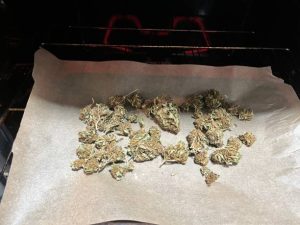
Use Your Kitchen’s Oven To Decarb Wax
Decarbing wax in its most simple, at-home practicality is achievable with your very own oven. There are just a few small things you need to get started this way.
An oven-safe glass or silicone baking dish, silicone concentrate holder, or mason jar
Reliable oven timer (preferably digital)
Parchment paper
Aluminum foil
Oven gloves
Several grams of wax
Room temperature wax is most optimal for decarbing since it’s already in a more workable state compared to frozen wax. Place the entire amount of wax you are using into your preferred oven-safe container. If using a glass container, line it with parchment paper.
If using a mason jar, leave the lid on loosely to allow for pressure to release during decarb.
If using a glass or silicone baking dish, cover loosely with aluminum foil to maintain a consistent temperature and preserve terpenes. Also, line it with parchment paper.
If using small silicone dab containers that typically store wax, ensure they’re in a deep enough container to account for bubbling from the heat. You can also place the container inside a parchment paper-lined baking dish to protect it as well.
Researchers Have Discovered the Ideal Decarboxylation Conditions
Once you place the wax in the oven-safe vessel for decarbing, warm your oven to about 230°F.
Consumers who decarb at 230°F for about 45 minutes activate the most cannabinoid content, according to decarb researchers and experienced at-home extractors. There’s a lot of information out there about what the right time and temperatures are to maximize the decarb, but this study is one of the only peer-reviewed sources on the subject.
Instructions for Decarbing Wax in the Oven
Fire your oven up to 230°F and place the containers with the wax in immediately—this ensures the container gets up to temperature right alongside the oven, and they are on the same page.
Place your oven-safe digital thermometer in the oven. Give the thermometer a moment to register the exact temperature in your oven and compare it to your oven’s readout. There’s a good chance your oven is off by a few degrees in either direction, since a lot of ovens aren’t calibrated exactly. Adjust your oven’s temperature in either direction until the digital thermometer reads 230°F—this is the most accurate way to decarb.
Once 230°F is achieved on your thermometer, it’s time to start the timer for 45 minutes. Don’t start the timer until your oven has reached the right temperature according to the digital thermometer.
During the 45-minute decarb time, pay attention to any major fluctuation in temperature and adjust for any minor to major swings by increasing or decreasing the heat. This is a major drawback of using a basic kitchen oven.
Some at-home extractors like to stir the concentrates to ensure a consistent decarb, but please note that doing so will add a large temperature swing to your oven when you open it up and stir, so be aware!
Wax forms bubbles when decarbed—this means the heat releases CO₂.
Once your timer goes off, remove the decarbed wax, let it cool for about 20 minutes, and add it to your favorite edible recipe or store it in a mason jar in a cool, dark place until ready to use!
An excellent rule of thumb is that once the wax is done bubbling, stir it up again, and if it’s done bubbling again (after about 45 minutes or more, depending on the amount), you’ve finished decarbing it.
Sous vide cookers use hot water baths at precise temperatures to cook various types of foods. They also work well to decarb weed and wax. Here are a few materials needed to use a precision cooking device like a sous vide for decarbing wax.
Sous vide immersion cooker
Large boiler pot or bucket
Sealable mason jar
Vacuum-sealed bag or ziplock
Several grams of wax
Fill the pot or bucket with tap water ⅓ way.
Place the wax you’re decarbing into a mason jar, then place the mason jar in a vacuum-sealed sous vide bag or a sealable ziplock bag.
Place the jar-filled bag into the bottom of the bucket or pot.
Set the immersion cooker to 203°F and place it inside the water. We recommend a lower temperature for sous vide because it requires a longer decarbing time.
Once the proper temperature is reached, start the timer for about 75 minutes.
Watch for a shift from gold to a darker brown as a surefire sign that you’re properly decarboxylating your wax.
Once complete, remove from the container and use or store.
Use A Decarboxylation or Infusion Machine to Decarb
Everything is automated these days—even decarboxylation. Digital decarboxylation machines automatically run and hold specific temperatures, like 230°F, for any desired amount of time. Consumers can remove variables that affect full decarboxylation by using a decarboxylation machine. Decarboxylation devices are an excellent pick-up for the at-home extractor for several reasons.
Automatically programmed temperatures that stay put with no swings whatsoever.
Plug and play functionality–simply plug in, add the wax, set time and temperature, and relax until you hear the final beep!
No need to sit by a hot oven or boiler pot to watch for temperature swings.
Dramatically reduces any residual odor from decarboxylation.
The price tag practically pays for itself after even just a few very potent batches of precisely decarbed wax or weed creations.
Read the Instructions First, But Then Just Set It And Forget It!
The decarboxylation process is relatively simple with an automated machine, but please read any instructions included with the device before starting. Decarbing with a device made specifically to do so is often just a matter of laying down a piece of parchment paper in the stainless steel bowl inside the device and placing however many grams of wax you wish to decarb on top of it. Turn on the device and program it to the desired decarb temperature (230°F still works) and time (45 minutes).
The device will beep once the decarb is done. Let the material cool for about 20 minutes before removing it. You can now use your decarbed wax immediately in a recipe or store it in a mason jar in a cool, dark place until ready to use in a recipe!
Now That You Know How to Decarb Wax, It’s Time to Take Your Edibles to the Max!
Cannabis consumers in need of a giant boost to their edible cannabis intake take note: decarbing wax is just as easy as decarbing flower. You can get the best use out of old or extra wax by decarbing it and infusing it with butter or oil. Share the potency-boosted treats you make with friends and family—edibles will never be the same ever again!
Anthony DiMeo is a Southern New Jersey-based journalist and cannabis advocate whose work and advocacy have been featured in Leafly, DOPE Magazine, and the Philadelphia Inquirer. Hobbies include navigating interdimensional psychedelic energy vortexes and tennis.
According to the New York Times, 64 million gabapentin prescriptions were dispensed in 2016, with numbers continuing to rise each year. Many patients now explore medical cannabis as an alternative after experiencing gabapentin’s concerning side effects, including FDA warnings about serious respiratory problems. Both treatments target similar conditions like nerve pain and seizures, but they…
An Oklahoma medical marijuana card provides legal protection under state law, but it can still affect employment, commercial driving, firearms, privacy, and federally regulated situations. This guide explains the main consequences to consider before applying, including workplace drug testing, CDL rules, insurance, housing, and registry privacy.
Getting a medical marijuana card in Oklahoma can be completed online, with no specific qualifying condition required for adult applicants. This guide covers eligibility, telehealth evaluations, required documents, OMMA application steps, fees, processing times, and what patients can do once approved.
A same-day telehealth appointment in Oklahoma can get you a physician recommendation quickly, but OMMA still needs to process your medical marijuana license application. This guide explains the timeline, required documents, costs, and when you can legally visit a dispensary while waiting for the physical card.
Medical marijuana has been legal in Oklahoma since 2018, with eligibility determined by physician judgment rather than a fixed list of qualifying conditions. This guide explains how the OMMA program works, patient rights and possession limits, recreational cannabis laws, federal restrictions, and how Oklahoma compares with neighboring states.
The statements made regarding cannabis products on this website have not been evaluated by the Food and Drug Administration (FDA). Cannabis is not an FDA-approved substance and is still illegal under federal law. The information provided on this website is intended for educational purposes only and is not intended to diagnose, treat, cure, or prevent any disease. It is not intended as medical advice and should not be considered as a substitute for advice from a healthcare professional. We strongly recommend that you consult with a physician or other qualified healthcare provider before using any cannabis products. The use of any information provided on this website is solely at your own risk.