Minnesota has two cannabis systems: a long-running medical program and a licensed adult-use market. Choosing the right one can save you money and protect your legal status in ways recreational shopping cannot. This guide covers how the two systems differ, how to enroll in the medical registry, and what patients get that recreational buyers do not.
Do You Still Need a Medical Card in Minnesota?
Minnesota legalized adult-use cannabis under H.F. 100. The bill was signed in May 2023 and took effect August 1, 2023. Tribally owned dispensaries opened their doors first, and state-licensed retailers followed once the Office of Cannabis Management (OCM) started licensing stores.
Today, any adult 21 or older can walk into a licensed retailer and buy cannabis, no registration required. So why would anyone bother with a medical card?
It comes down to what you need from cannabis. The benefits of a medical marijuana card go well beyond getting through the door, and they pay off most if you use cannabis regularly for your health.
Here’s what enrolled patients in Minnesota get:
- A tax break: Medical cannabis bought by or for an enrolled patient skips Minnesota’s 15% cannabis tax, according to the Minnesota Department of Revenue.
- Access before 21: If you’re under 21, the medical program is your only legal route. Minors enroll through a parent, legal guardian, or spouse acting as caregiver.
- Patient protections: Under Minn. Stat. §342.57, enrolled patients get protections tied to their status, including in employment and custody decisions.
- Free, three-year enrollment: Minnesota charges nothing to enroll, and your enrollment lasts three years.
If you have a qualifying condition and buy regularly, the tax savings alone can cover the cost of your certification visit.
Minnesota’s Medical Cannabis Dispensary Network
Minnesota’s medical cannabis program began in 2015 under the Minnesota Department of Health. The department licensed two medical cannabis manufacturers to grow, process, and dispense to patients. Brands such as Green Goods and RISE trace back to that original medical network. The program has since moved to OCM’s Division of Medical Cannabis. Medical cannabis is now sold at businesses with a medical cannabis retail endorsement.
Adult-use retailers have opened alongside these medical locations, but not every adult-use store is set up to serve registered patients. If you are a medical patient, confirm that a location serves the medical program before you visit.
Locations are concentrated in the Twin Cities metro, with more access in markets such as the Duluth area, Rochester, and Moorhead. Because locations change as the market grows, use OCM’s medical cannabis dispensary locations page for current addresses and hours. If distance is a barrier, ask the operator near you whether it offers delivery.
How to Access the Minnesota Medical Cannabis Registry
The Minnesota medical cannabis registry is run by OCM’s Division of Medical Cannabis. It’s your gateway to medical patient status.
Enrollment starts with a certification from a Minnesota-licensed doctor of medicine, physician assistant, or advanced practice registered nurse. They confirm that you have a qualifying medical condition under Minn. Stat. §342.01, subdivision 63. That definition covers 19 listed conditions, plus any condition your practitioner recommends cannabis for.
How long it takes to get a medical card depends on provider availability. Veriheal’s telehealth model connects you with a certifying practitioner without an in-person visit.
The enrollment steps are:
- Confirm that your condition qualifies, either on the list or through your practitioner’s recommendation.
- See a registered practitioner, who certifies your condition through the registry.
- Complete your free enrollment application within 90 days of your certification date.
- Wait for a decision. Under Minn. Stat. §342.52, the office must approve or deny your application within 30 days.
- Receive your patient registry number and registry verification, which licensed medical retailers use to confirm your status.
Minnesota does not issue a physical card, and your enrollment is valid for three years. The state has historically asked enrolled patients to complete periodic self-evaluations of their symptoms. After you enroll, check with the Division of Medical Cannabis about any current requirements.
What Medical Patients Get That Recreational Buyers Do Not
The difference between medical and adult-use purchasing in Minnesota is not cosmetic. It affects what you pay, who can buy, and which legal protections apply. Understanding medical vs. recreational cannabis taxes makes the financial case clear before you decide whether to enroll.
| Category |
Medical Patient |
Adult-Use Customer |
| Cannabis tax |
Exempt from Minnesota’s 15% cannabis tax |
Pays the 15% cannabis tax, plus sales taxes |
| Age access |
Available under 21 (minors through a caregiver) |
21 and older only |
| Purchase rules |
Governed by medical program rules |
Governed by adult-use possession limits |
| Legal protections |
Patient-status protections under Minn. Stat. §342.57 |
General protections for lawful off-duty use |
For regular buyers, the 15% cannabis tax exemption adds up quickly over a year. Any sales tax treatment of your medical purchases would add to those savings, so check your receipts or ask your dispensary.
What to Know About OCM Licensing and Product Testing
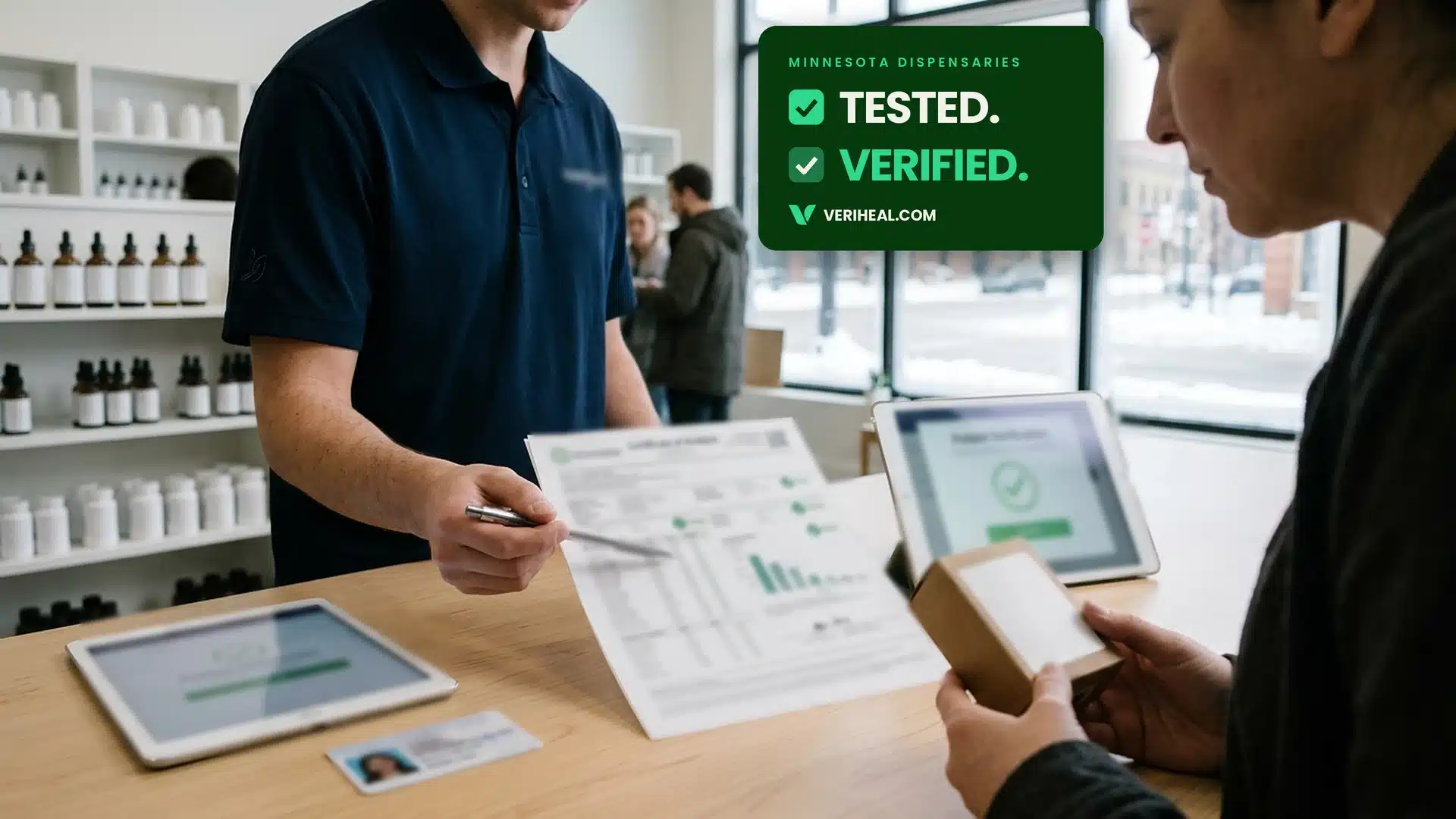
Every state-licensed cannabis business in Minnesota operates under an OCM license. That license carries real regulatory weight, not just a permit number on the wall. Licensed operators are subject to state oversight, inspections, and inventory tracking, and they may sell only products that have passed required laboratory testing. Tribally owned dispensaries are the exception, since they operate under tribal authority and may follow different rules.
Minnesota’s testing framework covers:
- Potency: Cannabinoid content, including tetrahydrocannabinol (THC) and cannabidiol (CBD) levels.
- Pesticides: Screening for residues above allowed levels.
- Heavy metals: Including lead, arsenic, cadmium, and mercury.
- Microbials: Testing for harmful bacteria and mold.
Tested products come with a Certificate of Analysis (COA) from the testing lab, and many licensed dispensaries will share it if requested. For medical patients choosing products for a specific condition, the COA’s potency and contaminant results matter more than a label’s marketing claims. You can also read what the National Center for Complementary and Integrative Health says about cannabis safety for broader context.
When you are ready to enroll, connect with a Minnesota practitioner through Veriheal and start your registry enrollment. Every Veriheal evaluation comes with a “get approved or your money back” policy.
Note: The content on this page is for informational purposes only and is not intended to be professional medical advice. Do not attempt to self-diagnose or prescribe treatment based on the information provided. Always consult a physician before making any decision on the treatment of a medical condition.
Note: Veriheal does not support illegally consuming therapeutic substances such as cannabis but acknowledges that it transpires because of the current illicit status, which we strive to change by advocating for research, legal access, and responsible consumption. Always consult a physician before attempting alternative therapies.
Frequently Asked Questions
Do I need a medical card to buy at a dispensary in Minnesota?
No, if you are 21 or older. Adults can buy at licensed adult-use retailers without a card, but enrolled patients are exempt from the 15% cannabis tax and can access medical cannabis before 21.
What dispensaries ship to MN?
Some licensed Minnesota operators may offer delivery within the state, but availability varies by operator. Shipping cannabis across state lines is not legal under federal law, regardless of what state programs permit.
What are the current marijuana laws in Minnesota, and will they change in 2026?
Adult-use cannabis has been legal in Minnesota since August 1, 2023, and OCM administers both the adult-use market and the medical program under Minnesota Statutes chapter 342. The Legislature amended chapter 342 again in 2026, so check OCM’s website for the latest rules.
Do you lose your gun rights if you have a medical card in MN?
Not automatically, but real federal risk remains. Federal law, 18 U.S.C. §922(g)(3), still bars unlawful users of controlled substances from possessing firearms. State-licensed medical marijuana moved to Schedule III in April 2026, and the Supreme Court’s Hemani ruling limits prosecutions for marijuana use alone. But ATF Form 4473 still asks about controlled substance use, so see our guide on medical cannabis and gun rights and consult a licensed attorney about your situation.
Does a medical card show on a background check?
It depends on the type of check and who is running it. See the guide on whether a medical card shows up on a background check. Minnesota’s registry is confidential under state law, and it is also worth understanding how your privacy is protected as a patient before you apply.
Author, Share & Comments