Bruce Banner is one of the most potent sativa-dominant hybrid strains available at US dispensaries today, with tetrahydrocannabinol (THC) levels that typically reach 27-30%. Named after the Incredible Hulk’s alter-ego, this strain earns the reference, delivering a fast-acting, high-intensity experience that catches new users off guard if they go in unprepared.
Bruce Banner Strain History
Bruce Banner was created by Los Angeles-based Dark Horse Genetics in 2009 by crossing OG Kush with Strawberry Diesel. The goal was a strain that combined the heavy resin production of OG Kush with the uplifting, energetic qualities of Strawberry Diesel, and the result became one of the most talked-about cultivars to come out of that era.
Over the following years, breeders refined the genetics and identified multiple stable phenotypes. Bruce Banner #3 became the benchmark cut, the one most dispensaries carry and the one most often cited when the strain’s record-breaking THC numbers come up. It remains one of the legendary cannabis strains that helped push commercial breeding toward high-THC targets.
Bruce Banner Strain Phenotypes
Three phenotypes have come to define Bruce Banner commercially. Knowing which cut you are buying matters, because the effect character shifts meaningfully across them.
| Phenotype |
THC Range |
Primary Effect Character |
Availability Notes |
| Bruce Banner #1 |
20-25% |
Balanced euphoria and body relaxation |
Less common; found at select dispensaries |
| Bruce Banner #3 |
27-30% |
Strong cerebral onset, euphoric and energizing |
Most widely available; the industry benchmark |
| Bruce Banner #5 |
22-26% |
Slightly more indica-leaning, calmer body effect |
Available at dispensaries carrying the full line |
Bruce Banner #3 is the phenotype behind most of the strain’s reputation. If a dispensary menu simply lists “Bruce Banner” without a number, it is almost always #3. Patients who want a more grounded, less stimulating experience may find #1 or #5 a better fit, particularly if high-THC sativa-leaning strains have felt too activating in the past.
Bruce Banner Strain Genetics
Bruce Banner is a sativa-dominant hybrid, typically running around 60% sativa and 40% indica. Its parent strains are OG Kush and Sour Diesel, which together account for both the heavy resin production and the energetic, diesel-forward character the strain is known for.
Cannabidiol (CBD) levels in Bruce Banner run low, generally under 1%, so the experience is driven almost entirely by THC. The terpene profile centers on caryophyllene, myrcene, and limonene, which shape both the aroma and the way the effects land. Caryophyllene contributes a peppery, spicy edge and may interact with the endocannabinoid system in ways that support the strain’s reported stress-relieving qualities, based on a 2014 PMC review on caryophyllene as a dietary cannabinoid.
Aroma, Flavor, and Appearance
The sensory profile of Bruce Banner is a direct expression of its lineage. OG Kush brings the earthy, fuel-tinged base while Strawberry Diesel pushes sweet, fruity notes to the front.
What Does Bruce Banner Smell Like?
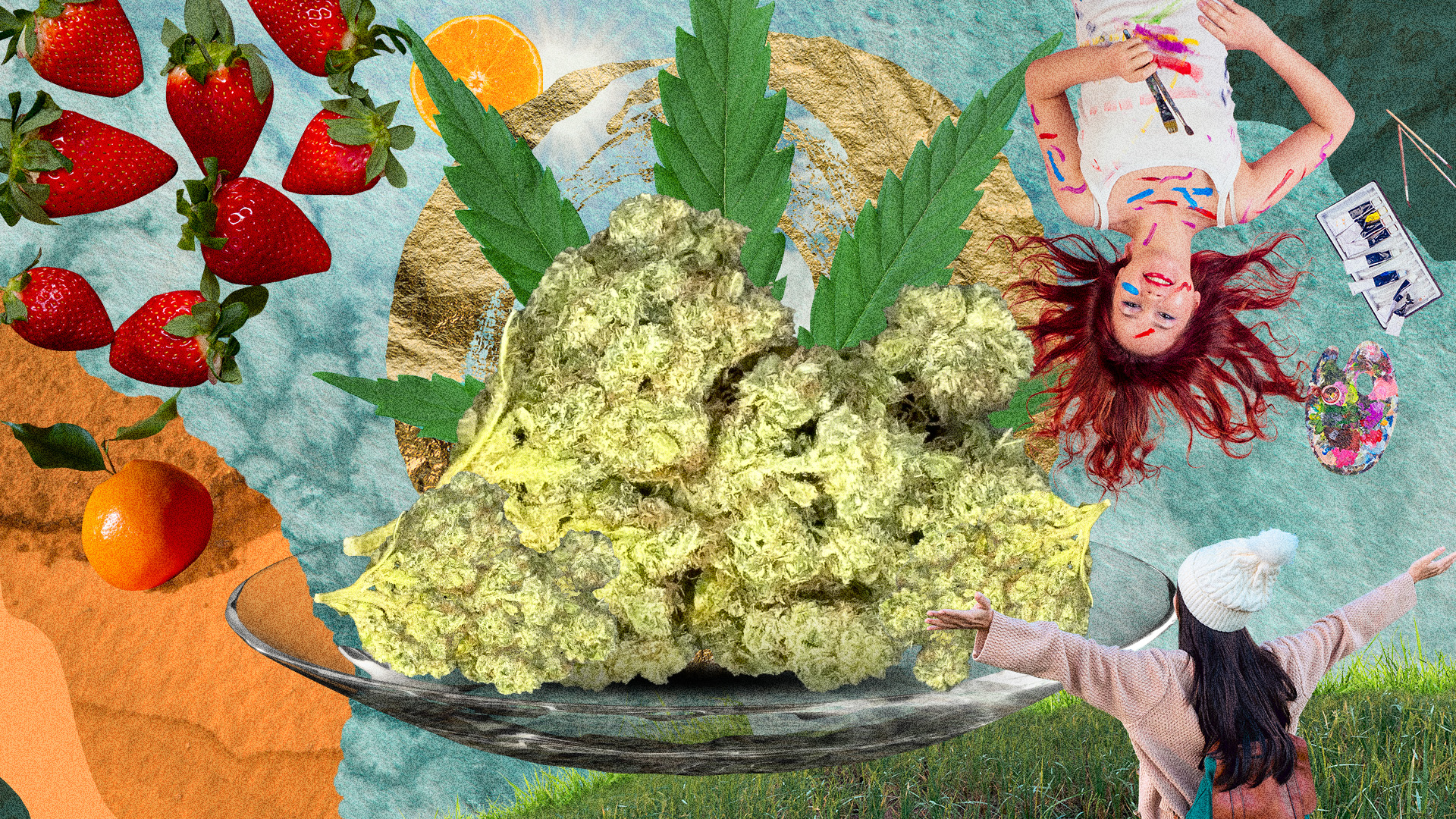
Bruce Banner opens with a sharp diesel note that gives way to sweet strawberry on the back end, a combination that reflects the Strawberry Diesel parentage clearly. Underneath those top notes sits an earthy, slightly floral base that keeps the aroma grounded rather than candy-sweet.
What Does Bruce Banner Taste Like?
The smoke profile follows the nose closely. The inhale tends to be sweet and fruity, with the strawberry and diesel notes coming through most clearly on the first draw. The exhale shifts toward earthy and peppery, where the caryophyllene and myrcene terpenes become more noticeable, leaving a spiced, slightly herbal finish.
What Does Bruce Banner Look Like?
Bruce Banner bud is typically dense and chunky, with forest-green coloring and a generous coat of orange pistils. What stands out most is the trichome coverage, which gives mature flower a frosted, almost silvery appearance that reflects the strain’s high-THC profile. The bud structure is consistent with its OG Kush heritage: tight, heavy, and resinous.
Bruce Banner Strain Effects
Bruce Banner’s effects move quickly and land hard, which is part of what has made it such a sought-after strain for experienced users. Understanding how the experience unfolds helps you decide whether this is the right choice for your situation.
Immediate Effects
Bruce Banner is a strong strain. The onset is fast and cerebral, with a rush of euphoria that typically hits within minutes of smoking. That initial wave is energizing and uplifting rather than sedating, which makes this a strain people reach for during the day rather than at the end of it. The daytime suitability is one of Bruce Banner’s defining traits, with the sativa dominance keeping the early experience mentally active rather than couch-locking.
Duration and Intensity
Bruce Banner is a high THC strain, and the intensity reflects that. Effects typically last two to three hours, with the cerebral energy of the onset gradually softening into a more relaxed body state as the session progresses. Understanding how long a cannabis high lasts depends on tolerance, consumption method, and dose, but Bruce Banner’s effects tend to run longer than mid-potency strains at comparable doses.
What to Expect as a New User
New users may want to start low, given the strain’s THC range. The fast onset means the full effects arrive before many users realize how much they have consumed, which is a common pattern with high-potency strains. Starting with a small amount and waiting to gauge the response before consuming more is a reasonable approach for anyone who has not used high-THC cannabis regularly.
Medical Uses and Qualifying Conditions
Bruce Banner has built a following among medical cannabis patients alongside its recreational reputation. Its effect profile, combining initial euphoria with progressive relaxation, maps onto several conditions that qualify for medical cannabis programs across US states.
Patients commonly report using Bruce Banner for chronic pain, anxiety, depression, and stress. The terpene combination of myrcene and limonene may contribute to the mood-lifting and relaxing qualities users describe, with research on cannabis terpenes for pain and inflammation suggesting these compounds play a role beyond simple background flavor. Limonene in particular has been associated with elevated mood in early research, though clinical evidence in humans remains limited.
If you are considering Bruce Banner for a qualifying condition, a medical cannabis physician can help you assess whether the strain’s potency and effect profile are appropriate for your specific situation. High-THC strains are not the right fit for every patient, particularly those managing anxiety who may find very high THC levels counterproductive.
How to Grow Bruce Banner
Bruce Banner rewards growers who put in the work, but it is not a beginner-friendly strain. The plant stretches tall and produces generously under the right conditions, making environment management and training important from early in the grow.
| Stat |
Detail |
| Flowering Time |
8-10 weeks indoors |
| Indoor Yield |
400-500g/m2 (approximate, under optimal conditions) |
| Outdoor Harvest |
Late September to early October |
| Plant Height |
Tall; can exceed 6 feet outdoors |
| Difficulty |
Intermediate to advanced |
Indoor vs. Outdoor Growing
Indoors, Bruce Banner performs well in both soil and hydro setups, with yield potential typically in the 400-500g/m2 range under optimized lighting and nutrition. The plant’s height requires topping or low-stress training (LST) early to keep canopy management practical in a tent or grow room. Understanding the weed plant growth stages helps you time training and transitions correctly to avoid the stretch getting ahead of you.
Outdoors, Bruce Banner can reach over six feet and produces well in warm, dry climates. The outdoor harvest window typically falls in late September to early October in most US growing regions, though local climate affects the exact timing. The plant’s size outdoors makes training early in the season worth the effort, and growers in humid environments should watch for mold pressure given the density of the buds.
Flowering Time and Yield
Indoor flowering runs eight to ten weeks, which is fairly standard for a sativa-dominant hybrid of this profile. Yield figures in the 400-500g/m2 range are achievable indoors under optimal conditions, though actual results vary with experience level, light intensity, and nutrient management. Pushing past that range is possible with advanced techniques, but first-time growers should treat those numbers as a ceiling rather than a baseline.
Plant Height and Training
Bruce Banner’s sativa genetics drive a significant stretch during the flowering transition, which can double plant height if left unmanaged. Topping during the vegetative stage and using LST to spread the canopy improves light penetration and promotes more even bud development across the plant. Growers who skip training often end up with one dominant cola and uneven smaller sites below, which reduces overall yield relative to what the genetics can produce.
Note: The content on this page is for informational purposes only and is not intended to be professional medical advice. Do not attempt to self-diagnose or prescribe treatment based on the information provided. Always consult a physician before making any decision on the treatment of a medical condition.
Note: Veriheal does not support illegally consuming therapeutic substances such as cannabis but acknowledges that it transpires because of the current illicit status, which we strive to change by advocating for research, legal access, and responsible consumption. Always consult a physician before attempting alternative therapies.
If you are exploring medical cannabis options and want to know whether your state qualifies you for a program, speak with a Veriheal physician to get a personalized recommendation based on your conditions and goals.
Frequently Asked Questions
Is Bruce Banner a strong strain?
Bruce Banner is one of the strongest commercially available strains, with THC levels that typically range from 27-30%. The onset is fast and cerebral, and the intensity is high enough that new users or those with low tolerance should approach it cautiously and start with a small amount.
Is Bruce Banner strain sativa or indica?
Bruce Banner is a sativa-dominant hybrid, generally running around 60% sativa and 40% indica. The sativa dominance shapes the experience, producing an energizing, uplifting onset before a more relaxed body state settles in later.
How potent is Bruce Banner?
Bruce Banner typically reaches 27-30% THC, placing it among the higher end of commercially available strains. The #3 phenotype is the strongest and most widely stocked, and effects usually last two to three hours depending on dose and individual tolerance.
What does Bruce Banner smell like?
Bruce Banner has a diesel-and-strawberry aroma with an earthy base. The sharp fuel note from its Strawberry Diesel parentage comes through first, followed by sweet fruity undertones and a grounded, slightly floral finish.
What conditions is Bruce Banner used for?
Medical cannabis patients commonly use Bruce Banner for chronic pain, anxiety, depression, and stress. Its combination of euphoric onset and progressive relaxation makes it a candidate for conditions where both mood and physical discomfort are factors, though individual responses vary and a physician consultation is recommended before using it for any medical purpose.
Author, Share & Comments