1-855-452-6224 (Customer Support Available 24/7)

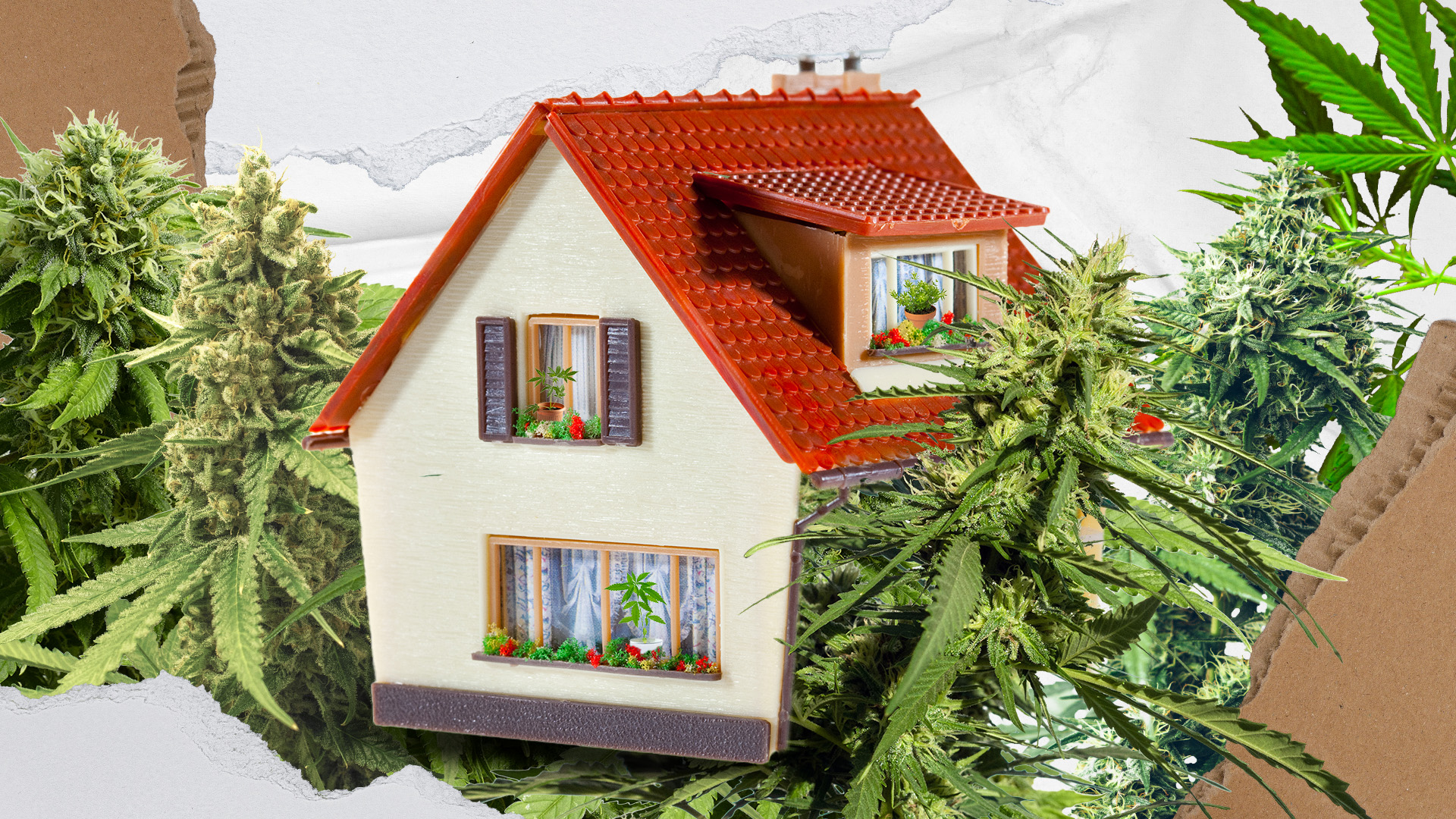
As cannabis legalization is progressing around the world, many cannabis users are looking at whether or not growing their own plants at home is right for them. Before attempting home growing, it’s crucial to have the space, the right environment, and knowledge about cultivation. In this beginner’s guide to growing cannabis, we’ll walk you through the basics of growing your own cannabis indoors.
Growing marijuana properly admittedly requires ideal conditions and careful attention: cannabis plants require specific conditions such as proper humidity, consistent watering, regular airflow, and pH-balanced soil to produce greater yields. But don’t let these factors intimidate you: learning how to grow weed indoors can be done successfully with the right tools, and, in no time, you’ll learn all of the benefits of growing cannabis at home through personal experience.
To grow weed indoors, you’ll need to choose a space where you can easily control factors like temperature, humidity, lighting, and airflow. To thrive, cannabis plants need specific lighting conditions, consistent watering, proper airflow, and ventilation to ensure proper growth and reduce the risk of mold, mildew, or unwanted pests. They also need adequate space for successful growth, so make sure to choose a space where your plants won’t get overcrowded.
Using cannabis grow tents, hydroponic set-ups, and indoor closets or basements could be decent options for beginning growing your cannabis.
Growing marijuana indoors requires careful replication of the ideal outdoor conditions that help cannabis plants thrive outdoors. As such, lighting is a crucial factor for maximizing plant growth (and cannabinoid production to ensure you’re growing high-quality flower). To achieve these optimal conditions, growers must balance light intensity and wavelengths to replicate the ideal conditions for photosynthesis.
There are three main types of cannabis grow lights:
After choosing your lighting set-up, you’ll need to adjust this set-up frequently as your plant grows, as different stages of growth require requires adjusting the light intensity, spectrum, and duration to meet the specific needs of the cannabis plants.
One important aspect of growing cannabis indoors is being able to control the temperature and humidity within your grow space. In other words, you must create the perfect environment for your plants to thrive in order to produce an optimal yield.
Start with a good thermometer and hygrometer to keep an eye on these conditions. If you’re using hot lights, make sure you add fans to your room to manage the temperature and add either a humidifier or a dehumidifier to get the humidity just right for each grow stage. Use heaters, heat lamps, insulation, heat mats to warm things up, and fans to spread the warmth around your growing space.
Effective ventilation leads to healthier, more robust cannabis plants. Proper ventilation can help to regulate temperature and humidity while maintaining a stable environment for your plants to thrive. Additionally, decent airflow ensures that plants receive all the CO2 they need, vital for photosynthesis and other natural plant processes. Plus, good ventilation can help to strengthen your plant stems, making them more resilient and helping to facilitate a larger yield.
When choosing the right growing medium for cannabis growth, it’s essential to focus on nutrient content, pH level, drainage, and aeration. The soil should be rich in key nutrients like nitrogen, phosphorus, and potassium, with a slightly acidic pH between 6.0 and 7.0 to ensure nutrient availability. Good soil should also provide excellent drainage and aeration to prevent waterlogging and allow roots to breathe.
Some popular mediums for growing cannabis include:
When choosing a container to grow your cannabis plants, look for something durable and non-toxic to ensure a safe growing environment, and prevent any unwanted chemicals from seeping into your plants. Generally, containers should have adequate drainage holes to prevent root rot and waterlogging.
The size of the container is also a crucial factor to consider and should be adjusted throughout the various grow stages of cannabis cultivation. For seedlings, small pots of 1-3 gallons are adequate. As plants grow, transferring them to larger containers is beneficial. For mature plants, a container size of 5-7 gallons is typically suitable for most indoor grows. If you aim for larger plants, 10-gallon pots might be necessary. Above all, keep an eye on your plants as they grow to ensure they have enough room to establish robust root systems.
Cannabis plants need three primary macronutrients: nitrogen (N), phosphorus (P), and potassium (K), often represented as the NPK ratio on fertilizer products. These nutrients are essential for plant health and growth. Additionally, cannabis requires secondary nutrients like calcium, magnesium, and sulfur, which support cell wall development, photosynthesis, and protein production. Micronutrients such as boron, chlorine, copper, iron, manganese, molybdenum, and zinc, though needed in smaller quantities, are also crucial for various aspects of plant health.
Cannabis fertilizers differ in nutrient ratios, ingredients, and whether they are designed for soil or hydroponic systems. Always meet your plants’ macro and secondary nutrient needs before adding supplements to avoid nutrient burn or imbalances. While your plants’ feeding needs will differ in each stage of growth, you should always follow feed charts provided by fertilizer brands to ensure correct nutrient ratios and avoid common issues like nutrient burn, lockout, or deficiencies.
Regularly monitoring pH, PPM, and EC levels helps maintain optimal nutrient absorption and plant health
READ MORE: Best Fertilizers for Indoor Cannabis Cultivation
Watering your cannabis plants is essential to their growth, and your plants’ watering needs change during each stage of growing. The frequency of watering can depend on many other factors as well, including the type of growing medium, container size, environmental conditions, and the specific needs of the strain.
However, here are some general tips on watering your cannabis plant:
Unwanted pests and disease can sabotage any cannabis grow. Prevention is key to maintaining plant health, and methods like ensuring a clean environment, enhancing ventilation, and quarantining new plants can help you do so. Make sure to regularly inspect your plants for pests or disease, and, if you find that a plant may be diseased, be sure to prune affected areas and isolate affected plants until they return to full health.
In case of a pest infestation, methods like pruning, companion planting, and organic solutions like insecticidal soaps, neem oil, or spinosad can help eliminate pests like whiteflies, fungus gnats, aphids, and spider mites.
Make sure to keep a close eye on your cannabis plants as they grow. Regular monitoring — and adjusting watering, nutrients, container space, etc. as needed — is essential for maintaining plant health and acheiving an optimal yield. As you monitor your plants, take note of factors such as leaf color and growth rate, and take note of any changes in appearance, including yellowing or browning of leaves, stunted growth, or wilting. These symptoms could indicate issues with water, nutrients, or pests.
While maintaining a consistent watering and feeding schedule based on the plant’s stage of growth, make sure to be flexible with these schedules depending on the health of your individual plants. Utilize tools like pH and EC meters to ensure proper nutrient uptake and soil conditions.
As your plants enter the flowering stage of growth, adjust your watering and feeding schedule — as well as how much light your plants are getting — to make room for their new growth. Flowering cannabis plants should be given a light cycle of 12 hours of light and 12 hours of darkness to mimic natural seasonal changes, signaling to the plants that it’s time to flower.
Alongside this, switch to a flowering-specific nutrient formula with higher phosphorus and potassium levels to support blooming. When you’re adjusting their nutrient formula, be sure to prune excess foliage to promote better airflow and light penetration to the budding sites.
As always, monitor your plants’ environmental factors such as temperature and humidity closely. Fluctuation of these can affect your yield. Flowering plants can also be more susceptible to pests and disease, so preventative measures should be taken, alongside vigilant monitoring and prompt action if you suspect disease.
Now comes the fun part: once your cannabis plant is ready for harvest, you can reap the rewards of all your hard work. When it’s time for harvesting and then drying and curing cannabis, follow these guidelines:
While the discussion of indoor vs outdoor grown cannabis depends on a number of factors, indoor cannabis growth is great for those who want to control the conditions and achieve optimal yield. Some of the things you will need to set up a grow operation at home include lights, grow containers, seeds or clones, a thermometer, a CO2 monitor, a humidity monitor, timers, nutrients, and most of all, patience.
Before you get started on your first grow, let’s go over some of the most common growing mistakes to avoid.
Giving your plants too many nutrients, sometimes referred to as overfeeding, can be a very easy mistake to make, especially since it may not be your fault. It has been found that most nutrient companies are recommending feeding schedules that are too high. Complying with the feeding schedules can overfeed your plant and cause more harm than good. More food does not mean more goods. Read more about common nutrient issues here.
Over and underwatering are both common mistakes, although overwatering the plant happens more commonly. Both can be detrimental to your plant, but both are easy to fix. An overwatered cannabis plant will have leaves that are drooping but are firm to touch, whereas an underwatered cannabis plant will have leaves that are limp and brittle.
Proper temperature and humidity are crucial to the growth and development of high-quality cannabis. The most common mistake people make is not being fully aware of the climate the plants are growing in. Temperatures that are too cold can stunt plant growth and can even kill the plants in more extreme cases. If the temperature is too hot, it will cause the plant to stress, which can lead to curling leaves, very bad buds, and it can also kill the plants in extreme cases.
Not having enough lighting for the plants is a common problem for indoor growers. When growing outdoors, common mistakes include positioning the plant with insufficient sunlight coverage, placing the plants too close to light sources, or exposing the plants to light for too long of periods, causing light burn.
With regards to harvesting, common mistakes include doing so too early or too late. This can result in reduced effects from the cannabinoids of the plant and minimizing the medicinal and recreational effectiveness. Harvesting needs to be done at the right time to avoid losing potency as well as to avoid extreme cases such as rotting.
There are many benefits to growing cannabis in general. Here are some of the top reasons why patients and consumers chose to grow their own cannabis even in markets where dispensary access is abundant.
One thing that many personal growers really enjoy about cultivating cannabis at home is their ability to know precisely what their medicine has been exposed to. Unfortunately, many large commercial grows require the use of pesticides, herbicides, and other chemicals. When you are growing your own cannabis, you get to choose how you control pests and what type of nutrients you feed your plants. For many people, this provides peace of mind that what they are consuming is safe and of the highest purity.
Aside from the cost of the initial setup to grow at home, in the long run growing cannabis at home will likely save you a lot of money. If you are someone who seldomly consumes, growing is probably not the most cost-effective. However, if you are a medical cannabis patient or a recreational consumer that utilizes a lot of cannabis regularly, growing at home could save you thousands of dollars each year.
For many consumers and patients alike, there are specific strains of Indica or Sativa that we enjoy consistently or that always seem to provide relief. Unfortunately, sometimes finding that particular strain regularly is easier said than done. Growing at home can open up your options to specific strains, and there are seed banks and dispensaries across the country that provide genetics to home growers.
The love and care that cannabis plants desire is another reason why many people enjoy growing at home. It can be very therapeutic to nurture a plant throughout its lifespan. Growing is also a great way to connect with nature, and after all, it’s always fun to get your hands a little dirty!
There are some advantages to indoor growing in comparison to outdoor cultivation. In outdoor environments, it is much easier to maintain light and moisture as mother nature takes care of most of it. However, outdoors plants are susceptible to various pests and environmental risks—like spiders, aphids, and other creepy-crawly bugs—as well as animals that munch on cannabis leaves, like deer and rabbits. These risks can be prevented much easier in an indoor setting.
Some of the most common places where people grow cannabis at home include a closet, spare room, bathroom, grow boxes, or tents. Let’s take a closer look at the advantages and disadvantages of each grow space.
While closets are convenient, they aren’t always the best grow room; it is difficult to tend to your plants in such a small space with access from only one side. It is also difficult to prevent light leaks as there are many ventilation issues that could lead to heat buildup, humidity issues, and light issues. If growing in a closet is your only option, though, go for it. It is advised, however, that this environment likely will not produce the best results.
Turning an extra room in your home into a grow room can be a great idea, but it can also present some issues. Growing in the open within a large area can make controlling aspects such as your lighting, humidity, temperatures, and fresh air intake challenging.
Bathrooms are not ideal grow rooms. The amount of moisture in a bathroom is almost guaranteed to cause issues with mold and mildew. Not to mention that the excessive amount of moisture will also present a constant battle for you while trying to control humidity. Unless it is the only space you have, it is highly advised not to cultivate in a bathroom.
In recent years, grow tents have become one of the favorite growing areas for at-home cultivators. Grow boxes are a much more superior option for cultivating cannabis in comparison to growing it in a closet, an extra bedroom, or a bathroom. Grow boxes fully enclose the grow environment to help cultivators better maintain optimal conditions. However, they can be quite expensive and difficult to relocate.
Grow tents are self-enclosed tents for cultivating cannabis. They are often prefabricated with areas to hang lighting, introduce airflow, and additional storage for monitors and other tools. Grow tents have become the go-to choice due to their ease of use, efficiency, and availability. Many grow tents offer a reflective interior to make the best use of your lighting. While rather expensive, they are one of the best choices, and many patients and consumers choose to make the investment.
Before starting your own cannabis grow, consider the following factors.
When you decide to grow your own cannabis, be mindful of your local state laws. Each state has their own unique regulatory law for cannabis cultivation, including how many plants each person can grow and how many of these plants can be flowering at the same time. If you have your medical marijuana card, you may be able to grow cannabis for medical use — even if recreational users are not allowed to grow their own cannabis.
In order to establish robust root systems and produce the best yield possible, cannabis plants need plenty of space to grow, ample light, good ventilation, and access to water. Assess your space while considering these factors, and think about what tools you may need to invest in in order to give your plants the best chance for success.
Cannabis plants require constant monitoring and lots of love: it’s almost like having a pet. When you decide to grow your own cannabis plants, make sure you’re fully aware that you’re undertaking a serious, time-consuming project.
Cannabis plants need particular conditions in order to thrive. As such, you’ll need to assemble the proper toolkit to set your plants up for success, including proper fertilizer and containers, montioring tools such as temperature and humidity guages, grow lights, timers, and a number of other tools. If you don’t have space in your budget for the proper tools to help your cannabis thrive, consider saving up for a few months before beginning.
Growing cannabis becomes more intuitive as you gain more experience, but it can be tricky at first. Start small with only a few plants, so that you can learn the ropes without feeling overwhelmed by taking care of an entire nursery of cannabis plants.
When growing cannabis, consider the following risk factors:
Growing cannabis should also benefit you: after all, you’ll most likely be the one consuming the cannabis you grow. When it comes to strain selection, some growers prioritize specific characteristics such as potency, flavor, or medicinal properties, while others may focus on yield or growth traits.
Researching different strains is key to finding the perfect match for one’s preferences and goals. Similarly, choosing between growing methods like soil or hydroponics depends on factors such as space, resources, and desired outcomes. Soil cultivation may offer a more natural approach with enhanced flavor profiles, while hydroponics can provide faster growth and potentially higher yields. Ultimately, aligning strain selection and growing method with desired outcomes requires experimentation and a willingness to adapt based on results.
When growing cannabis, privacy is vital for personal, security, legal, and business reasons. It ensures discretion for individuals, reduces theft risks, and helps navigate legal restrictions. For commercial grows, privacy safeguards proprietary information and maintains competitiveness.
As you can see, there is a lot to consider when setting out to cultivate cannabis at home. The great thing, however, is that no matter what space you have, what level of knowledge you possess, or how little money you wish to spend, there is a way to cultivate healthy plants at home as long as you have the dedication to doing so. Today, there are hundreds of books available that can assist with every aspect of cannabis cultivation, as well as many groups and communities across social media dedicated to helping at-home growers cultivate the best cannabis possible!
So what are you waiting for? Get out there and start growing today, and be sure to let us know what questions you may still have regarding growing cannabis at home in the comments below!
The choice between soil growing vs. hydroponics comes down to personal preferences, as well as proper space and resources. Hydroponics involves growing cannabis in a water-based nutrient solution without soil, offering faster growth and precise nutrient control — though it does require more investment and technical expertise. Soil growing, on the other hand, utilizes traditional soil mediums, providing a simpler setup and potentially richer flavor profiles, but may result in slower growth and requires more space.
Growing weed plants indoors can take anywhere between 20 to 30 weeks or more. A quality seed will likely germinate in 3-10 days, and, from there, each stage of growing can take 2-3 weeks.
Ensuring proper ventilation is crucial to controlling weed odor, though growers can also use carbon filters to absorb some of the pungent smell of the plants.
Indoor vs. outdoor cannabis growing depends on personal preferences. Indoor growing offers more control over environmental variables, allowing for year-round cultivation and potentially higher yields, but it requires more investment in equipment and energy. Outdoor growing relies on natural sunlight and generally has lower operating costs but is subject to seasonal changes and weather fluctuations.
This article was originally published in July 2021 and most recently updated in May 2024.
I’ve grown several strains of sativa; Gorilla Glue being the most recent. This harvest is very very sticky. Even after drying out a little longer, it remains sticky. Very potent, very effective but just curious as to why? I guess that’s why it’s called sticky bush? Comments or suggestions greatly appreciated
Hello Miss Ashley while the plant is in the vegetative cycle when do you clip or prune and what should be manicured from stalk to top
Sign up for our newsletter
Learn the process in your state
All Rights Reserved Veriheal Inc. ©
Terms Privacy Policy Advertising Agreement Content Disclamer

Get your medical marijuana card today
Sign up in under 5 minutes
Start By Selecting Your State
 Alabama
Alaska
Arizona
Arkansas
California
Colorado
Connecticut
Delaware
Florida
Georgia
Hawaii
Idaho
Illinois
Indiana
Iowa
Kansas
Kentucky
Louisiana
Maine
Maryland
Massachusetts
Michigan
Minnesota
Mississippi
Missouri
Montana
Nebraska
Nevada
New Hampshire
New Jersey
New Mexico
New York
North Carolina
North Dakota
Ohio
Oklahoma
Oregon
Pennsylvania
Rhode Island
South Carolina
South Dakota
Tennessee
Texas
Utah
Vermont
Virginia
Washington
West Virginia
Wisconsin
Wyoming
Puerto Rico
Alabama
Alaska
Arizona
Arkansas
California
Colorado
Connecticut
Delaware
Florida
Georgia
Hawaii
Idaho
Illinois
Indiana
Iowa
Kansas
Kentucky
Louisiana
Maine
Maryland
Massachusetts
Michigan
Minnesota
Mississippi
Missouri
Montana
Nebraska
Nevada
New Hampshire
New Jersey
New Mexico
New York
North Carolina
North Dakota
Ohio
Oklahoma
Oregon
Pennsylvania
Rhode Island
South Carolina
South Dakota
Tennessee
Texas
Utah
Vermont
Virginia
Washington
West Virginia
Wisconsin
Wyoming
Puerto Rico