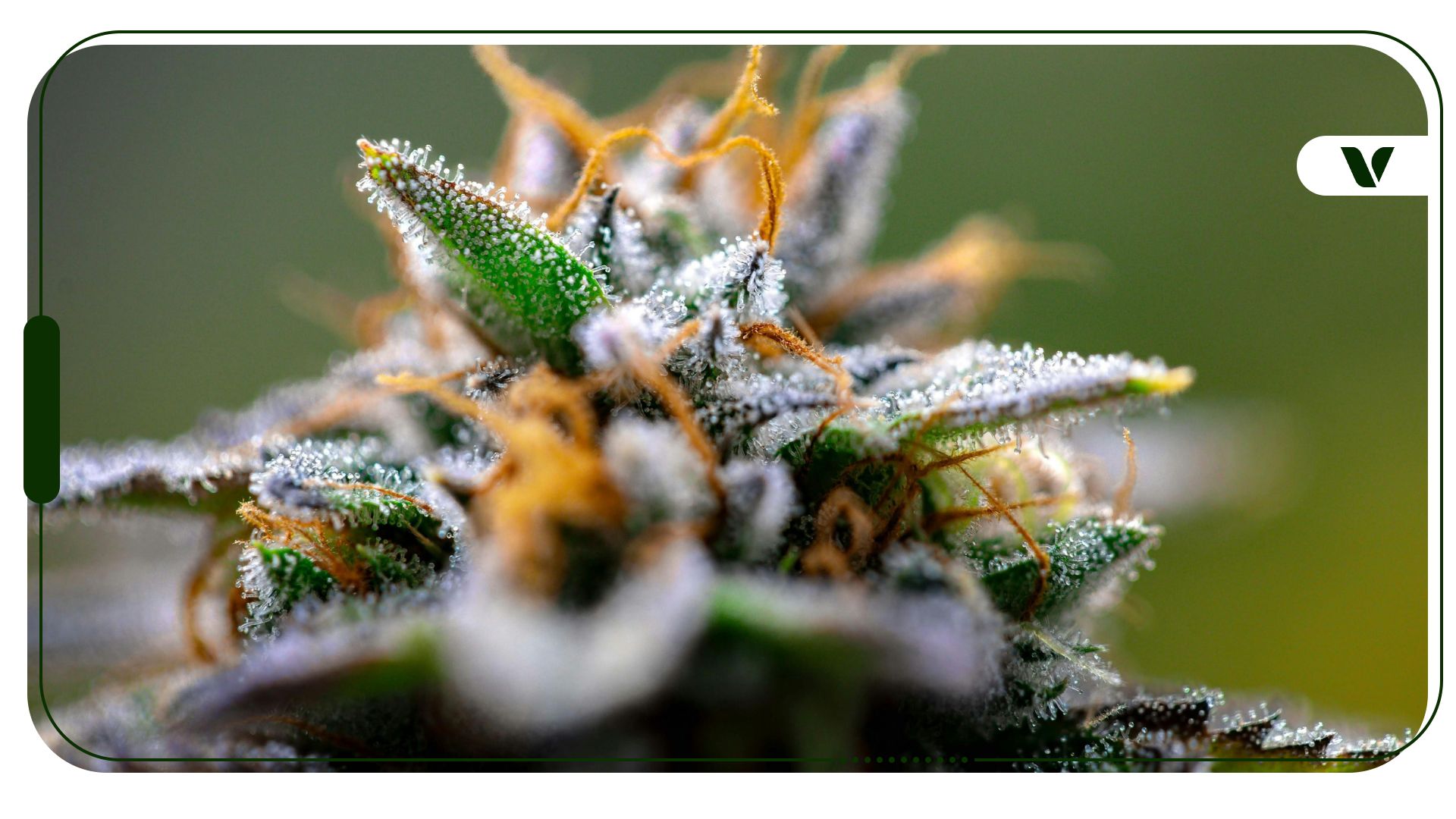
Trichomes are the tiny, crystal-like structures that coat cannabis flowers and give it that frosty look. If you want to understand potency, quality, or when a plant is ready to harvest, you need to understand trichomes. Their type and color reveal how the plant has developed and what kind of experience you can expect.
This guide breaks down what cannabis trichomes are, the different types you’ll find, and what clear, milky, and amber trichomes tell you about potency and timing.
What Are Cannabis Trichomes?
Trichomes coat cannabis flowers, giving them a sticky, sugar-like coating. You can see them on the buds, especially under light. They form at high concentrations on the flower and at much lower levels on stems and fan leaves.
These structures act as small resin glands. They produce and store the compounds that define how cannabis smells, tastes, and feels. Research shows that most of a plant’s THC is concentrated in these resin glands, which makes trichomes central to potency.
Trichomes also support the plant’s survival. The sticky resin helps deter pests and protects the plant from environmental stress like heat and UV exposure. Their presence reflects both the plant’s health and its chemical output.
Inside these resin glands, you will find a range of plant compounds that shape the final experience:
- Cannabinoids such as THCA, CBDA, and CBGA, which influence effects and therapeutic use
- Terpenes, which drive aroma, flavor, and how the effects feel
- Other plant compounds that support defense and growth
The density, structure, and condition of these trichomes give you a clear signal of cannabis quality.
The Three Types of Cannabis Trichomes
Cannabis plants produce three main types of trichomes, each with a distinct structure, size, and role in chemical production. These types develop at different stages and contribute unevenly to potency.
Bulbous Trichomes
Bulbous trichomes are the smallest and most widely distributed structures on the plant. They measure about 10 to 15 micrometers, making them invisible without magnification. You will find them across stems, leaves, and flowers, though they remain difficult to detect even under light.
These trichomes produce cannabinoids at a very low level. Their structure lacks a large gland head, which limits how much resin they can store. While they contribute to the plant’s overall chemical profile, their impact on the final product remains minimal.
Capitate-Sessile Trichomes
Capitate sessile trichomes are larger and more developed than bulbous types, measuring 25 to 100 micrometers. They mostly appear on the undersides of leaves and plant surfaces, sitting directly on the plant without a stalk.
They produce a moderate amount of cannabinoids and terpenes as the plant matures. Their gland heads are more defined, allowing greater resin storage than bulbous trichomes. You will notice their presence increases during early flowering.
Capitate-Stalked Trichomes
Capitate stalked trichomes drive most of the value in cannabis flowers. They range from 50 to 100 micrometers and feature a clear stalk with a large gland head that holds resin. You will see them concentrated on the flower buds, where they create the sticky coating associated with high-quality cannabis.
These trichomes produce the majority of the plant’s cannabinoids and terpenes. Research shows that most THC is stored in these gland heads, which makes them the primary source of potency. Their structure supports higher resin production, which directly affects aroma, flavor, and overall effect.
Trichome Colors and What They Mean for Harvest
Trichome color gives you one of the most reliable signals of harvest readiness. As the plant matures, these resin glands shift in appearance, which reflects changes in cannabinoid content and effect profile. You can examine trichomes with a jeweler’s loupe or digital microscope at 30x to 60x magnification to track these changes with precision.
Clear Trichomes
Clear trichomes appear in the early flowering stage, when cannabinoid production has begun but has not yet reached its peak. Under magnification, they look glass-like and transparent, with little to no cloudiness in the gland head.
At this stage, THC levels remain low since most cannabinoids are still in precursor form. Harvesting cannabis at this point leads to weaker effects and less developed terpene expression. Clear trichomes signal that the plant needs more time to mature before reaching full potency.
Milky Trichomes
Milky or cloudy trichomes mark the stage where THC production reaches its highest level. The gland heads lose their transparency and become opaque, white. This visual shift signals that cannabinoids have fully developed within the resin.
Many cannabis growers track the ratio of cloudy trichomes to determine harvest timing. A range of 50% to 70% milky trichomes often aligns with peak THC content. Cannabis harvested at this stage tends to produce more uplifting and cerebral effects, supported by a strong terpene profile.
Amber Trichomes
Amber trichomes indicate that the plant has moved past peak THC levels and has entered a later stage of maturation. The gland heads shift from cloudy white to amber or light brown, which reflects chemical changes inside the resin.
At this stage, THC begins to convert into CBN, a cannabinoid linked to more body-focused and sedative effects. The proportion of amber trichomes plays a key role in shaping the final experience. Around 20% to 30% amber, with the rest milky, often produces a balanced effect. A higher percentage of amber increases the likelihood of heavier, more relaxing effects.
Why Trichomes Matter for Consumers
Trichomes give you a clear signal of cannabis quality when you look at the flower in a dispensary. Their presence reflects how much of the plant’s active compounds remain intact. Strong trichome coverage often links to better potency, flavor, and overall experience.
When you examine cannabis, these details help you assess quality:
- Dense, frosted coating
A thick layer across the buds signals strong resin production and higher cannabinoid content.
- Intact trichomes
A consistent, sticky surface shows that the resin glands remain preserved. Broken or dusty residue can point to handling damage or age.
- Even distribution
Quality flowers show uniform coverage across the bud rather than patchy areas with low resin.
- Bright and well-defined appearance
Healthy trichomes reflect light and give the flower a vibrant look, while dull buds often signal THC degradation.
- Minimal shake at the bottom of the container
Loose powder often means trichomes have detached, which reduces potency and aroma.
Trichome density plays a direct role in strength. Most cannabinoids sit in these resin glands, so higher coverage often means stronger effects.
Final Thoughts
Trichomes give you a reliable way to understand how cannabis develops and what it delivers. Their structure and condition reflect how well the plant has formed its active compounds and how those compounds will perform.
When you recognize how trichomes relate to quality, you gain more control over what you choose and how it fits your needs. A licensed physician can help you connect those details to the right product and dosage. Talk to a doctor at Veriheal today and get guidance tailored to your goals.
Note: The content on this page is for informational purposes only and is not intended to be professional medical advice. Do not attempt to self-diagnose or prescribe treatment based on the information provided. Always consult a physician before making any decision on the treatment of a medical condition.
Note: Veriheal does not support illegally consuming therapeutic substances such as cannabis but acknowledges that it transpires because of the current illicit status, which we strive to change by advocating for research, legal access, and responsible consumption. Always consult a physician before attempting alternative therapies.
Frequently Asked Questions
Does the Amount of Trichomes Determine Potency?
Yes, a higher amount of trichomes often points to greater cannabinoid concentration and stronger potency. However, trichome type and color also matter, with capitate stalked trichomes in the milky to amber stage producing the highest THC levels.
What Is the Most Important Trichome?
Capitate stalked trichomes are the most important type on a cannabis plant. They produce most cannabinoids and terpenes and are concentrated in the flower buds, where potency is highest.
What Percentage of Amber Trichomes Is Ideal for Harvest?
Around 20% to 30% amber trichomes, with the rest milky, is often considered ideal for a balanced effect. Higher amber levels shift the experience toward more sedating, CBN-rich effects, depending on your desired outcome.
Can You See Trichomes Without a Microscope?
You can see trichomes with the naked eye as a frosty coating on cannabis flowers. However, assessing their color and maturity requires a jeweler’s loupe or digital microscope with at least 30x magnification.
Author, Share & Comments