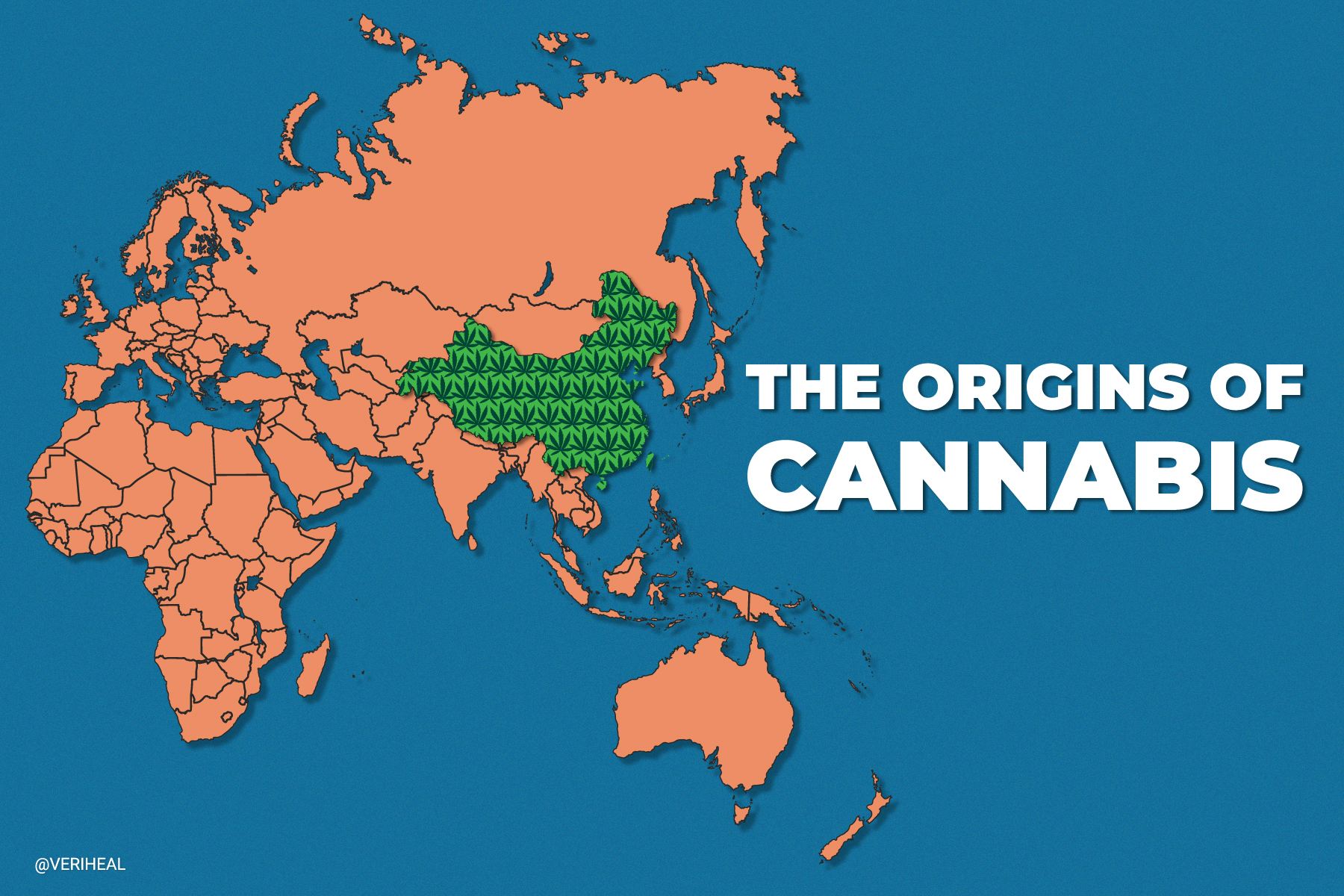
Cannabis has grown alongside human civilization for at least 12,000 years, and scientists now have genomic evidence of where that relationship began to trace its origins. That place, according to the best available research, is northwest China.
For most of recorded history, the question of where cannabis actually came from remained genuinely unsettled. Researchers pointed to Central Asia, the Himalayas, and South Asia at different times, often reaching conflicting conclusions depending on which type of evidence they prioritized. A landmark 2021 genomic study changed that picture in a meaningful way, not by closing every debate, but by providing the most precise and large-scale answer the science has produced.
Why Tracing Cannabis Origins Is Harder Than It Sounds
Cannabis is one of the oldest cultivated plants on Earth, which is part of what makes pinning down its origin so difficult. Humans have been moving cannabis seeds, fibers, and plants across trade routes for thousands of years, selectively breeding different varieties for different purposes along the way. That long history of human-driven dispersal obscures the genetic signal that would otherwise point clearly to a single place of origin.
Decades of criminalization made the problem worse. Research into cannabis biology stalled during the prohibition era, leaving scientists to work with fragmentary archaeobotanical records and limited genomic data for much of the twentieth century. The result was a field where competing theories coexisted without a clear way to test them against each other.
Researchers have historically drawn on three evidence streams to address the origin question: archaeobotanical finds (preserved seeds, fiber impressions, and pollen deposits), classical texts and ethnobotanical records from ancient civilizations, and more recently, genomic analysis of living and historical plant specimens.
These streams did not always agree, which is why the origin question remained open for so long, and why the 2021 study represented a significant step forward when it finally arrived.
Competing Theories Before the Genomic Evidence
Before genomic tools became sophisticated enough to analyze large plant populations, scientists relied on geographic patterns of botanical diversity and scattered archaeological finds.
The Russian botanist Nikolai Vavilov, whose crop origin framework influenced generations of plant researchers, identified Central Asia as a primary center of cannabis diversity, pointing to the Hindu Kush mountain range and surrounding uplands as a likely origin zone.
Other researchers, including McPartland and colleagues whose phylogeographic analysis examined cannabis subspecies distributions, emphasized the Himalayan foothills and suggested that the wild ancestor of cultivated cannabis emerged somewhere in the arc running from northern India through Afghanistan.
The Central Asia and Tibetan Plateau Hypotheses
The Central Asia hypothesis drew support from the sheer variety of cannabis populations found across Afghanistan, Pakistan, and the surrounding region, where wild-type and feral plants grow in forms that differ substantially from cultivated varieties. The Tibetan Plateau hypothesis, favored by some later researchers, pointed to high-altitude archaeological pollen deposits as evidence that cannabis grew there before humans began cultivating it.
Both theories had genuine supporting evidence. Neither had the resolution to exclude the other, or to identify a specific domestication event rather than a broad region of wild distribution.
The Archaeobotanical Record in China
Meanwhile, a parallel body of evidence pointed toward China. Hemp cord impressions preserved at the Yuan-Shan Neolithic site in Taiwan provided some of the earliest evidence of cannabis fiber use, with estimates dating that use to approximately 10,000 to 12,000 years ago.
A burial site in the Xinjiang region of northwest China produced cannabis shrouds dated to approximately 2,500 years ago, suggesting deliberate use of the plant in ritual contexts well before similar evidence appeared elsewhere. Classical Chinese texts referenced cannabis repeatedly and early.
Each of these finds pointed toward China as a site of long and intensive human engagement with the cannabis plant, but archaeobotanical evidence alone could not establish whether China was the origin point or simply an early adopter of a plant that originated elsewhere. The genomic study resolved that distinction.
What the 2021 Genomic Study Actually Found
The 2021 paper by Ren and colleagues gave researchers the largest genomic dataset ever assembled for the cannabis plant at that time. Understanding what the study found requires a brief look at what whole-genome sequencing can reveal that older methods cannot.
What Whole-Genome Sequencing Adds
Pollen analysis and seed morphology, the traditional tools of archaeobotany, can confirm that cannabis was present in a location at a particular time. They cannot tell you how genetically related different populations were, which direction dispersal traveled, or where the deepest ancestral diversity is concentrated.
Whole-genome sequencing maps the complete genetic blueprint of a plant, and when you sequence enough specimens from enough locations, genetic diversity gradients emerge that point back toward a population’s geographic origin. The region with the greatest genetic diversity is typically closest to where a species first diverged from its wild ancestor.
The Key Findings
The Ren et al. study sequenced 110 Cannabis sativa accessions drawn from wild populations, landraces, and cultivated varieties collected from around the world. Population genomics analysis of that dataset produced three findings that reshaped the origin debate:
- All modern cannabis, including both hemp and drug varieties, shares a single ancestral gene pool rather than having multiple independent origins.
- That shared ancestor diverged from a wild progenitor in East Asia approximately 12,000 years ago, with northwest China identified as the most likely domestication center based on where genetic diversity was highest.
- Hemp-type cultivars subsequently dispersed westward into Europe and Africa, while drug-type cultivars spread southward and eastward into South and Southeast Asia, a pattern that aligns with and explains the independent archaeological and textual records of cannabis use across those regions.
What the Study Did Not Resolve
The Ren et al. study was significant, but its authors were careful about its limits. The taxonomy of wild cannabis ancestors remains contested. The study could not rule out the possibility of secondary domestication events in other regions, where populations may have been independently selected for specific traits after the initial dispersal from East Asia.
The northwest China conclusion represents the most probable domestication center given the current evidence, not a definitive closed case. Ongoing genomic research continues to refine the picture as more specimens are sequenced.
How Ancient Chinese Use of Cannabis Fits the Origin Story
Cannabis originally came from East Asia, with northwest China identified as the most likely center of domestication based on genomic evidence and archaeological finds. The plant was cultivated there for fiber, food, and medicine at least 12,000 years ago, making it one of the earliest known agricultural crops. That claim is stronger than any single study because it rests on the convergence of three independent evidence streams: genetic, archaeobotanical, and textual.
The table below summarizes the key archaeological and historical evidence from ancient China that supports the genomic conclusion.
| Site or Source |
Approximate Date |
Evidence Type |
| Yuan-Shan Neolithic site |
10,000 to 12,000 BCE |
Hemp cord impressions in pottery |
| Xinjiang burial site |
~2,500 BCE |
Cannabis shrouds, seeds, burned material |
| Shennong Bencao Jing |
~2700 BCE (attributed) |
Medicinal text referencing cannabis |
| Han dynasty textiles |
200 BCE, 200 CE |
Hemp cloth and rope in archaeological deposits |
Cannabis in Classical Chinese Medicine
The Shennong Bencao Jing, one of the foundational texts of Chinese medicine, listed cannabis among its medicinal substances. Ancient Chinese practitioners recognized different properties in the plant’s seeds, leaves, and flowers, using cannabis in formulations intended to address pain, inflammation, and neurological conditions. This early medicinal framework contributed to what researchers now recognize as one of the longest continuous records of therapeutic cannabis use in any culture.
Understanding the cannabinoid compounds responsible for cannabis’s medicinal effects would take thousands of years more, but the empirical observation that the plant had therapeutic properties was documented in China long before it was systematically studied elsewhere.
Cannabis as Fiber and Food
Hemp cultivation for fiber was arguably the most economically significant use of cannabis in ancient China. The Yuan-Shan site evidence places hemp textile production in the region at the very dawn of the Neolithic agricultural period, suggesting that cannabis was among the first plants humans actively cultivated rather than simply gathered. Hemp seeds were consumed as food, and hemp fiber was processed into rope, cloth, and paper.
To understand the full range of what the cannabis plant anatomy produces, from fiber-bearing stems to seed-producing flowers, helps explain why this single species served so many purposes across ancient societies. You can explore the full structure of the cannabis plant anatomy to see how different parts of the plant correspond to different historical uses.
The history of cannabis in ancient China is not isolated from broader human history with this plant. Comparable depth of engagement appears in cannabis in ancient rituals across other early civilizations, and the history of cannabis use in Egyptian culture shows that independent traditions of cannabis use developed along parallel lines in separate parts of the ancient world. The genomic evidence from Ren et al. connects those separate traditions to a common origin point.
The cannabis plant eventually reached every inhabited continent, carried by trade networks, migration, and deliberate agricultural transfer. How our founding fathers used cannabis in colonial America illustrates how far that dispersal traveled. The anti-cannabis propaganda through time that followed centuries later obscured a botanical history that science is only now fully recovering.
Even the specialized structures that produce cannabis’s psychoactive compounds, the cannabis trichomes found on the plant’s flowers, tell part of the evolutionary story of how cannabis developed the chemistry that made it so valuable to human cultures worldwide.
If you are exploring medical cannabis access in the United States today, find a medical marijuana doctor through Veriheal to get started.
Note: The content on this page is for informational purposes only and is not intended to be professional medical advice. Do not attempt to self-diagnose or prescribe treatment based on the information provided. Always consult a physician before making any decision on the treatment of a medical condition.
Note: Veriheal does not support illegally consuming therapeutic substances such as cannabis but acknowledges that it transpires because of the current illicit status, which we strive to change by advocating for research, legal access, and responsible consumption. Always consult a physician before attempting alternative therapies.
FAQ
What country did cannabis originally come from?
Cannabis originally came from East Asia, with northwest China identified as the most likely center of domestication. A 2021 whole-genome sequencing study of 110 *Cannabis sativa* accessions found that all modern cannabis shares a single East Asian ancestral gene pool that diverged from a wild progenitor approximately 12,000 years ago.
Did Jesus use cannabis in healing?
Some researchers have proposed that cannabis may have been an ingredient in the anointing oil described in ancient Near Eastern healing practices, based on linguistic analysis of Hebrew and Aramaic botanical terms. This interpretation remains contested among historians and biblical scholars and is tangential to the botanical question of where cannabis originated as a species.
When did China make cannabis illegal?
China’s modern drug control framework classifies cannabis as a controlled substance, with possession and use of marijuana prohibited under national law. Industrial hemp cultivation remains legal in certain provinces under tightly regulated conditions, and China is simultaneously the world’s largest producer of hemp fiber and hemp-derived products.
What did ancient Chinese people use cannabis for?
Early Chinese cannabis use was primarily focused on fiber, food, and medicine rather than smoking for psychoactive effects. The earliest archaeological evidence of cannabis being burned in a way consistent with intentional inhalation of its psychoactive compounds comes from burial sites in the Xinjiang region, dating to approximately 2,500 years ago.
Author, Share & Comments