Why Cannabinoids Need Fat to Be Absorbed
Yes, edibles absorb better with fat, and the reason comes down to basic chemistry. Tetrahydrocannabinol (THC) and cannabidiol (CBD) are lipophilic compounds, meaning they dissolve in fat rather than water. When you ingest a cannabis edible, the cannabinoids need lipids to bind to before they can cross the intestinal wall and reach your bloodstream.
Without dietary fat present in your digestive tract, a significant portion of THC and CBD passes through without being absorbed. Your body processes fat-soluble compounds through a specific pathway that depends on the presence of lipids in the gut. Understanding how cannabinoids move through the body helps clarify why this pathway matters so much for edible dosing.
This is also why the same dose of an edible can feel noticeably stronger after a full meal than on an empty stomach. The fat in your meal is not just incidental; it is actively involved in how much cannabinoid your body absorbs and at what rate.
How Fat Type Affects How Much THC and CBD You Absorb
Not all fats trigger the same absorption pathway, and that distinction matters more than most consumer guides acknowledge. Long-chain triglycerides (LCTs), found in foods like olive oil, butter, fatty fish, and whole eggs, stimulate the formation of structures called chylomicrons in the gut. Chylomicrons carry fat-soluble compounds, including cannabinoids, into the lymphatic system, which bypasses first-pass metabolism in the liver and delivers THC and CBD directly into systemic circulation. Medium-chain triglycerides (MCTs), which dominate coconut oil, are absorbed differently: they travel via the portal vein to the liver rather than through the lymphatic route, producing a smaller chylomicron-mediated transport effect.
A 2016 PMC study by Zgair et al. on long-chain triglycerides and cannabinoid absorption found that LCT-rich fats produced significantly higher systemic cannabinoid exposure compared to MCTs, specifically because of this lymphatic transport mechanism.
So is saturated fat better for edibles? The answer depends on chain length rather than saturation. Butter and ghee are saturated fats that are also LCT-dominant, so they support the chylomicron pathway effectively. Coconut oil is also saturated but MCT-dominant, so it does not produce the same lymphatic absorption boost. Olive oil is unsaturated and LCT-dominant, making it one of the most effective carriers for edible absorption despite not being a saturated fat.
The practical implication is that olive oil, butter, and animal fats are likely better choices for cannabis infusions than coconut oil if maximizing bioavailability is the goal. Coconut oil still improves absorption compared to taking edibles with no fat at all; the portal vein route does deliver cannabinoids into circulation. A 2025 Scientific Reports study on high-fat meal and CBD bioavailability confirmed that fat type and meal composition both influence the rate and extent of CBD absorption, producing a measurable biphasic absorption curve when subjects consumed a high-fat meal alongside a CBD-rich extract.
Does the Amount of Fat Matter, or Just the Type?
Fat type is important, but the amount of fat you consume alongside an edible also appears to influence how much THC and CBD your body absorbs. The Zgair et al. study used controlled fat loads in a clinical setting, and the 2025 Saals et al. research used a standardized high-fat meal protocol of approximately 800 to 1,000 calories. Both studies found the most significant absorption improvements under conditions that would represent a full, fat-containing meal rather than a small snack.
Research suggests that a meaningful fat load, roughly a full meal with moderate to high fat content, produces a more substantial absorption boost than a handful of nuts or a small amount of oil. A light snack with fat is still better than no fat at all, but the dose-response relationship indicates that more fat, up to a point, tends to produce greater bioavailability gains. These findings are based on controlled clinical trial conditions, so individual results will vary based on metabolism, the specific edible formulation, and overall diet.
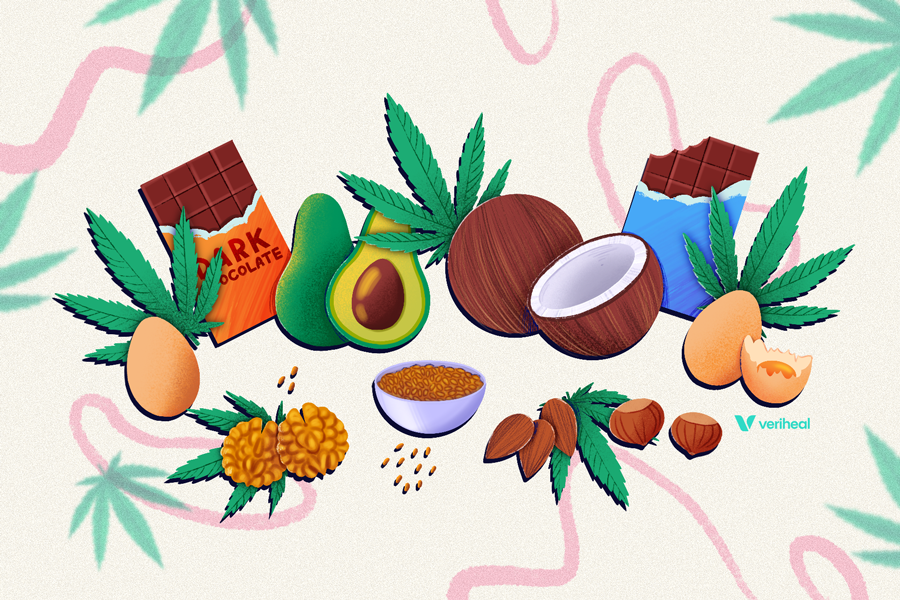
This is also relevant to the question of what the healthiest way to consume cannabis orally might be. Pairing edibles with a nutrient-rich, fat-containing meal, such as one built around avocado, fish, eggs, or olive oil, addresses both the absorption question and general dietary quality. For medical cannabis patients managing specific conditions, this approach to how food intake affects your cannabis experience is a practical consideration worth discussing with a physician.
The Best Fats to Eat With Edibles
The most effective fats to pair with edibles are those that are LCT-dominant, since they trigger the chylomicron-mediated lymphatic pathway that maximizes cannabinoid bioavailability. The following foods represent the most mechanistically useful choices, each illustrating a distinct fat type.
Avocado and Olive Oil
Both avocado and olive oil are rich in monounsaturated long-chain fatty acids, making them effective carriers for cannabinoid absorption. The LCTs in these foods support chylomicron formation in the gut, which is the same lymphatic pathway identified in the Zgair et al. research. Olive oil in particular has been used as a base for cannabis infusions for this reason, and its mild flavor holds up well in both savory and sweet edibles.
Butter and Whole Eggs
Butter is a saturated LCT-dominant fat, which means it stimulates the lymphatic absorption route effectively despite common assumptions that saturated fat is nutritionally inferior. Whole eggs contribute both saturated and unsaturated LCTs through their yolk fat content, along with a dense nutrient profile.
Cannabutter remains one of the most widely used fat bases in edible preparation for exactly this reason; the LCT composition supports the absorption mechanism, not just the flavor. Understanding decarboxylation and why it matters for edibles is the necessary step before making any fat-based infusion, since unactivated cannabinoids will not produce the same effects regardless of fat quality.
Fatty Fish
Fatty fish such as salmon, mackerel, and sardines are dense in omega-3 long-chain fatty acids, including EPA and DHA. These are LCTs that support the same chylomicron-forming pathway, making a meal built around fatty fish a reliable way to enhance edible absorption. The omega-3 content also contributes to endocannabinoid system function, since the endocannabinoid system draws on polyunsaturated fatty acids as precursors for endocannabinoid synthesis.
Coconut Oil
Coconut oil is predominantly MCT-based, which means it does not stimulate chylomicron formation to the same degree as LCT-rich fats. Cannabinoids consumed alongside coconut oil are absorbed via the portal vein rather than the lymphatic route, resulting in lower systemic exposure than you would get from butter or olive oil under otherwise identical conditions.
Coconut oil still improves absorption compared to taking edibles on an empty stomach, and it remains a popular base for infusions because of its high smoke point and neutral flavor. If you want to try a fat-based infusion using this oil, the cannabis coconut oil recipe on Veriheal walks through the process in full; just keep in mind that swapping to an LCT-rich oil may improve how much you absorb from the same dose.
Does This Apply to CBD Edibles Too, Not Just THC?
The fat-absorption relationship applies equally to CBD edibles, not just THC-containing products, according to research on high-fat foods and CBD absorption. The 2025 Saals et al. study published in Scientific Reports examined CBD bioavailability specifically, using a CBD-rich botanical extract, and found that co-administration with a high-fat meal significantly increased absorption compared to fasting conditions. The biphasic absorption curve the study identified suggests that fat affects not just the total amount of CBD absorbed but also the timing and consistency of absorption across individuals.
For people using CBD products therapeutically, whether for anxiety, inflammation, or other qualifying conditions under a medical cannabis program, this has direct practical relevance. Taking a CBD capsule or edible with a fat-containing meal rather than on an empty stomach is a simple, evidence-based adjustment that may meaningfully improve the consistency of therapeutic outcomes. If you are using medical cannabis and want guidance tailored to your specific situation, speaking with a cannabis-knowledgeable physician is the most reliable way to optimize your approach.
How to Get the Most From Fat When Taking Edibles
The mechanism behind fat-enhanced absorption translates into a few concrete practices. Applying them consistently can improve both the reliability and the strength of your edible experience, whether you are dosing for therapeutic reasons or recreational use.
- Choose an LCT-rich fat for your infusion: Butter, ghee, and olive oil are LCT-dominant and stimulate the lymphatic transport pathway more effectively than coconut oil, producing higher cannabinoid bioavailability from the same infused dose.
- Eat a fat-containing meal alongside your edible, not just in the infusion: The 2025 Saals et al. research found that a high-fat meal consumed at the time of CBD administration produced a significantly larger absorption increase than lower-fat conditions, suggesting that dietary fat around the time of dosing matters independently of the fat in the edible itself.
- Avoid taking edibles on a completely empty stomach if consistent effects matter to you: Without fat in the digestive tract, a meaningful portion of the cannabinoid dose may pass through without being absorbed, which can make dosing feel unpredictable. This is one reason why you can’t get high from edibles is a question that comes up often; stomach contents and fat presence at the time of ingestion are frequently overlooked variables.
- Account for the timing effect when dosing: Edibles taken with a high-fat meal tend to show a biphasic absorption pattern, meaning effects may arrive in two waves rather than one steady peak. If you are new to edibles or adjusting your dose, understanding how long a cannabis high lasts and factoring in meal context will help you set realistic expectations. Edibles also convert THC into 11-hydroxy-THC in the liver, which is a more potent metabolite that contributes to the stronger, longer-lasting experience many people associate with eating cannabis versus inhaling it.
Final Takeaway
Fat genuinely changes how much THC and CBD your body absorbs from edibles, and the type of fat you choose makes a difference too. LCT-rich fats like butter, olive oil, and fatty fish trigger lymphatic transport through chylomicron formation, producing higher bioavailability than MCT-dominant fats like coconut oil. Eating a substantial fat-containing meal alongside your edible, not just using a fat-based infusion, appears to amplify this effect based on current research.
For edible users trying to get more consistent results, the practical answer is straightforward: eat a real meal with quality fat when you dose. If you are using cannabis medicinally and want to understand how these variables interact with your specific regimen, a physician familiar with medical cannabis can help you dial in an approach that works for your needs.
Note: The content on this page is for informational purposes only and is not intended to be professional medical advice. Do not attempt to self-diagnose or prescribe treatment based on the information provided. Always consult a physician before making any decision on the treatment of a medical condition.
Note: Veriheal does not support illegally consuming therapeutic substances such as cannabis but acknowledges that it transpires because of the current illicit status, which we strive to change by advocating for research, legal access, and responsible consumption. Always consult a physician before attempting alternative therapies.
If you are ready to explore medical cannabis with guidance from a qualified provider, find a medical marijuana doctor near you.
Frequently Asked Questions
Do edibles absorb better with fat?
Yes, edibles absorb significantly better when taken with fat. THC and CBD are lipophilic compounds that dissolve in fat rather than water, so dietary fat in the digestive tract is required for efficient absorption into the bloodstream. Taking edibles with a fat-containing meal can meaningfully increase how much cannabinoid your body actually absorbs from a given dose.
Is saturated fat better for edibles?
Whether saturated fat improves edible absorption depends on the triglyceride chain length, not the saturation level alone. Saturated fats that are LCT-dominant, such as butter and ghee, support the chylomicron-mediated lymphatic pathway that maximizes cannabinoid bioavailability. Coconut oil is also saturated but is MCT-dominant, so it does not produce the same absorption boost as butter or olive oil.
What is the healthiest way to consume cannabis?
Pairing oral cannabis products such as edibles or capsules with a nutrient-rich, fat-containing meal is a well-supported approach for both absorption efficiency and overall dietary quality. Foods like avocado, fatty fish, eggs, and olive oil provide LCT-rich fats that enhance cannabinoid bioavailability while contributing meaningful nutritional value. Individual health circumstances vary, so consulting a physician before starting any cannabis regimen is recommended.
Does the amount of fat matter, not just the type?
The amount of fat consumed alongside an edible influences absorption outcomes and meal-based dosing effects, with a full fat-containing meal producing a larger effect than a small snack. Controlled studies have used high-fat meal protocols in the range of 800 to 1,000 calories to measure the most significant absorption increases. A small amount of fat is still better than none, but a meaningful fat load appears to produce the most reliable improvement based on current evidence.
Does fat help CBD edibles the same way it helps THC edibles?
Yes, fat enhances CBD absorption from edibles through the same lipophilic mechanism that applies to THC, as shown by research on high-fat foods and CBD bioavailability. A 2025 study published in Scientific Reports found that a high-fat meal significantly increased CBD bioavailability from a CBD-rich botanical extract compared to fasting conditions. The fat-absorption principle applies to any lipophilic cannabinoid taken orally, regardless of whether the product is THC-dominant or CBD-dominant.
Author, Share & Comments