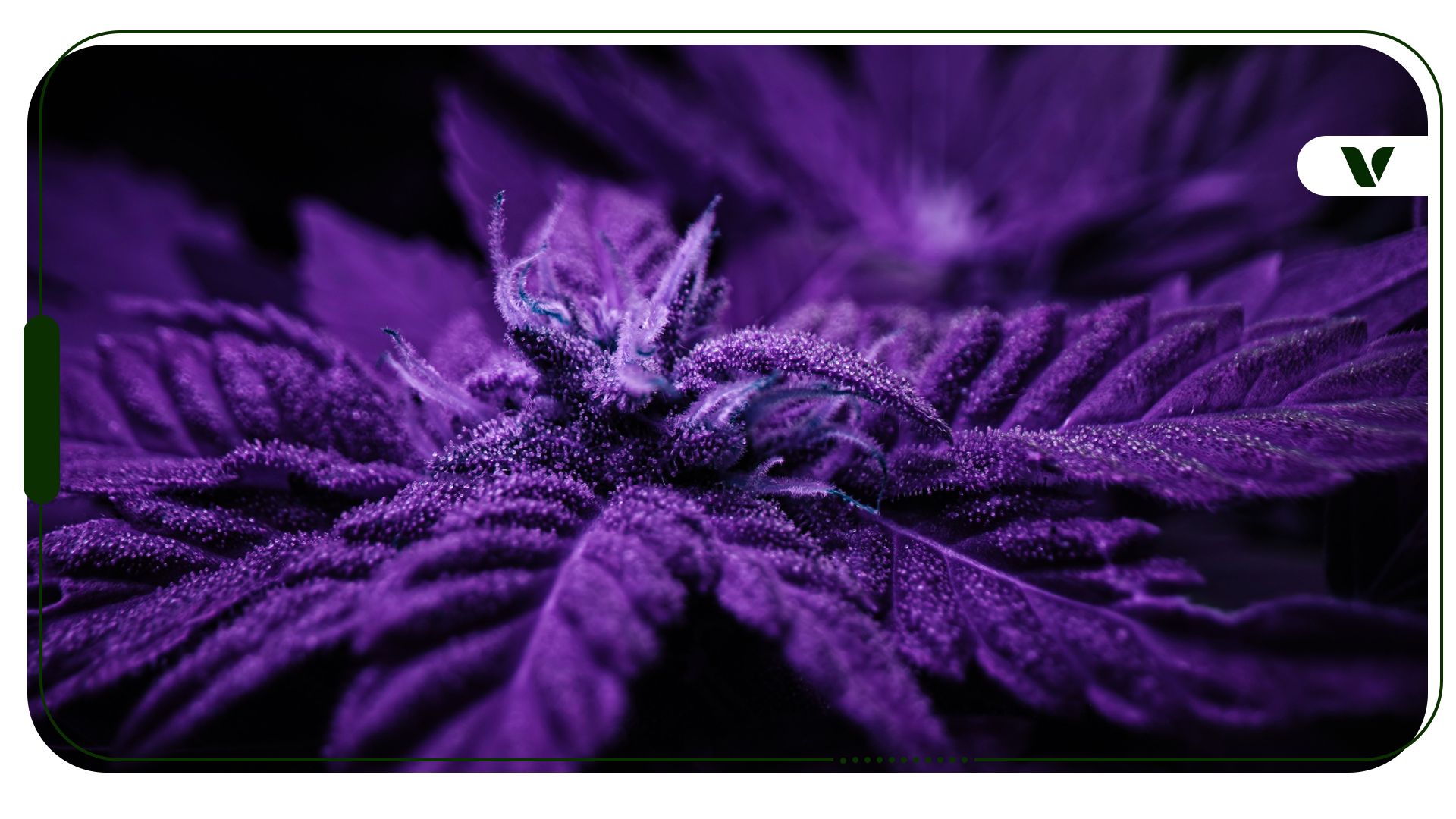
Some cannabis plants turn purple because they contain anthocyanins, the same pigments that create red and purple colors in blueberries and autumn leaves. This color change happens when specific genetics meet the right environmental conditions, typically cooler temperatures that allow anthocyanins to show through as chlorophyll breaks down. Understanding purple cannabis involves both the science behind the color and the practical growing techniques that bring out these striking hues.
The Science Behind Purple Cannabis: Anthocyanins and Genetics
Purple cannabis gets its color from anthocyanins, water-soluble pigments that exist in the plant’s cellular structure alongside chlorophyll. During the growing cycle, chlorophyll masks these pigments, keeping plants green. When environmental stress or genetic triggers cause chlorophyll to break down faster than it can be produced, anthocyanins become visible, creating purple, red, or blue hues.
The intensity and expression of purple colors depend heavily on genetics. Some strains carry dominant genes for anthocyanin production, meaning they will turn purple under normal growing conditions. Others have recessive purple traits that only appear when specific environmental triggers activate the genes. Temperature plays the biggest role in this activation, with nighttime temperatures between 50-65 degrees F typically needed to trigger significant anthocyanin production.
pH levels also affect how anthocyanins appear. In acidic conditions, anthocyanins tend to produce red and pink colors, while neutral to slightly alkaline conditions favor purple and blue hues. This is why the same genetically purple strain can show different color variations depending on soil pH and nutrient conditions.
Research shows that anthocyanin production serves as a natural protection mechanism against UV stress and temperature fluctuations. The pigments help protect plant cells from damage while maintaining photosynthesis efficiency, which is why many purple strains actually perform better under stress than their green counterparts.
Popular Purple Cannabis Genetics and Breeding
Most modern purple strains trace their lineage back to a few foundational genetics that breeders have worked with for decades. Purple Urkle stands out as one of the most influential parent strains, contributing its deep purple coloration and sedating effects to countless crosses. Granddaddy Purple, which combines Purple Urkle with Big Bud, became a cornerstone strain that made purple genetics accessible to both growers and consumers.
Purple Haze represents a different genetic path, offering purple expression in sativa-dominant varieties. This strain proved that purple traits weren’t limited to indica genetics, opening up breeding possibilities for purple sativas that maintain energizing effects while displaying striking colors.
|
Strain Family
|
Genetic Background
|
Purple Expression
|
Typical Offspring Colors
|
|
Purple Urkle
|
Unknown indica landrace
|
Dominant purple genes
|
Deep purple to black
|
|
Granddaddy Purple
|
Purple Urkle x Big Bud
|
Consistent purple expression
|
Purple with green undertones
|
|
Purple Haze
|
Haze x Purple genetics
|
Variable purple expression
|
Light purple to lavender
|
|
Purple Kush
|
Hindu Kush x Purple genetics
|
Strong purple traits
|
Dark purple buds
|
When breeding for purple traits, the percentage of offspring that express purple colors depends on genetic inheritance patterns for those specific genes. Strains with dominant purple genetics can produce 75-90% purple offspring when crossed with non-purple varieties. Recessive purple genes typically result in 25% purple expression in first-generation crosses, though environmental factors can influence these ratios.
The key to successful purple breeding lies in understanding that cannabis plant anatomy includes multiple sites where anthocyanins can accumulate, from fan leaves to bud structures to stem tissue.
Environmental Factors That Trigger Purple Colors
Temperature differential remains the most reliable way to trigger purple expression in genetically capable strains. The technique requires maintaining warm daytime temperatures around 75-80 degrees F while dropping nighttime temperatures to 55-65 degrees F during the final 3-4 weeks of flowering. This temperature stress signals the plant to increase anthocyanin production while chlorophyll synthesis slows.
Light stress can also encourage purple development, though this method carries higher risks of reducing yield. Some growers use UV-B supplementation or increase light intensity during late flowering to stress plants into producing more anthocyanins. However, excessive light stress can damage trichomes and reduce cannabinoid production.
Nutrient manipulation offers another pathway to purple expression, particularly through phosphorus management. Reducing phosphorus availability during late flowering can trigger color changes, as phosphorus deficiency naturally causes plants to break down chlorophyll. This technique requires careful monitoring to avoid severely impacting bud development.
- Temperature Protocol: Maintain 20-25 degrees F temperature differential between day and night for the final month of flowering.
- Nutrient Reduction: Lower phosphorus levels by 30-40% during weeks 6-8 of flowering to encourage chlorophyll breakdown.
- pH Adjustment: Maintain soil pH between 6.0-6.5 to optimize anthocyanin color expression toward purple rather than red.
- Harvest Timing: Allow plants to experience stress conditions for at least 10-14 days before harvest for full color development.
Understanding plant growth stages helps growers time these environmental manipulations correctly, as purple expression typically occurs only during late flowering when the plant’s energy focus shifts from growth to resin production.
Growing Tips for Maximum Purple Expression
Maximizing purple expression requires matching your growing approach to the specific genetics you’re working with. Strains with dominant purple traits will show color under basic temperature stress, while recessive purple genetics need more intensive environmental manipulation to trigger anthocyanin production.
Start with verified purple genetics rather than hoping environmental stress will turn any strain purple. Seeds from reputable breeders that specify purple expression percentages give you the best foundation for achieving the colors you want. Indoor growers have the most control over environmental factors, making them more likely to achieve consistent purple results.
- Growing Medium Selection: Use soil-based mediums that allow for easier pH manipulation compared to hydroponic systems, which can make achieving the optimal pH range more challenging.
- Feeding Schedule Modifications: Begin reducing nitrogen levels by week 5 of flowering while maintaining adequate potassium and calcium to support healthy anthocyanin development.
- Light Spectrum Considerations: Incorporate more red spectrum lighting during late flowering, as this spectrum supports anthocyanin production while maintaining resin development.
- Environmental Stress Timing: Apply temperature and light stress only during the final 25% of the flowering period to avoid impacting overall plant health and yield.
The most successful purple grows balance stress application with plant health. Excessive environmental stress can reduce trichome production and overall potency, defeating the purpose of growing premium purple cannabis. Monitor plants daily during stress application periods and back off if you notice signs of severe stress beyond normal color change.
Growers should also consider that male cannabis plants can express purple traits and pass these genetics to offspring, making them valuable for breeding programs focused on color expression.
Purple Cannabis Myths: Potency, Quality, and Effects
Purple cannabis faces several persistent myths that can mislead both growers and consumers about what the color actually indicates regarding quality and effects.
- Purple means higher potency: Purple coloration has no direct relationship to THC or CBD levels. Anthocyanins exist independently of cannabinoid production, so a purple strain isn’t automatically more potent than its green counterpart from the same genetics.
- Cold stress always produces purple: While temperature stress can trigger purple colors in genetically capable plants, applying cold stress to strains without purple genetics will only damage the plants without producing the desired colors.
- Purple trichomes indicate premium quality: Trichomes themselves don’t turn purple from anthocyanins. Purple coloration appears in plant tissue, while trichome color changes indicate ripeness and cannabinoid development, not anthocyanin presence.
- Purple cannabis has different effects: The anthocyanins responsible for purple colors don’t directly affect how cannabis feels when consumed. Any perceived differences in effects come from the strain’s cannabinoid and terpene profile, not its color.
- All purple strains are indicas: While many classic purple strains lean toward indica effects, purple genetics appear in both indica and sativa varieties. Purple Haze exemplifies how sativa genetics can express purple traits while maintaining energizing effects.
The reality is that purple cannabis represents a visual trait that developed through selective breeding and environmental adaptation. The color adds aesthetic appeal and can indicate successful stress management during cultivation, but it doesn’t guarantee superior potency or unique effects compared to non-purple varieties of the same strain.
Top Purple Cannabis Strains for Growers
Granddaddy Purple remains the most reliable purple strain for both new and experienced growers, offering consistent purple expression across different growing environments. This indica-dominant strain typically shows purple coloration even under basic temperature stress, making it ideal for growers who want guaranteed color results. The strain produces dense, resinous buds with THC levels typically ranging from 20-25%.
Purple Kush delivers deep purple colors with minimal environmental manipulation needed. This pure indica strain expresses its purple genetics reliably, producing dark purple buds with hints of black under optimal conditions. The strain performs well in both indoor and outdoor settings, though indoor growers can achieve more intense coloration through controlled temperature differentials.
For growers interested in purple sativa options, Purple Haze offers uplifting effects alongside its signature purple hues. This strain requires more environmental stress to achieve full purple expression compared to indica varieties, but rewards patient growers with striking light purple and lavender colors throughout the bud structure.
|
Strain
|
Type
|
Purple Expression
|
Growing Difficulty
|
Typical THC Range
|
|
Granddaddy Purple
|
Indica-dominant
|
Highly consistent
|
Beginner-friendly
|
20-25%
|
|
Purple Kush
|
Pure indica
|
Very reliable
|
Moderate
|
18-22%
|
|
Purple Haze
|
Sativa-dominant
|
Moderate consistency
|
Advanced
|
15-20%
|
|
Purple Urkle
|
Indica-dominant
|
Extremely reliable
|
Moderate
|
18-21%
|
Purple Urkle, the genetic foundation for many modern purple strains, offers the most intense purple coloration available. This strain expresses deep purple to nearly black colors with minimal stress application, though it requires longer flowering times than most commercial varieties. Experienced growers value Purple Urkle for breeding projects and for its unique sedating effects that complement its striking appearance.
Is Purple Weed Better Than the Rest?
Purple cannabis isn’t inherently better or worse than green varieties. The color represents an aesthetic trait rather than a quality indicator. Growers and consumers choose purple strains for their visual appeal, genetic diversity, and the satisfaction of successfully expressing challenging traits, but potency and effects depend entirely on cannabinoid and terpene profiles.
The value of purple cannabis lies in the cultivation challenge it presents and the unique market positioning it offers. Many consumers pay premium prices for high-quality purple strains, making them potentially more profitable for commercial growers who can consistently achieve the desired coloration. However, this market premium reflects rarity and visual appeal rather than superior effects.
From a cultivation perspective, purple strains can actually demonstrate superior stress tolerance compared to their green counterparts. The anthocyanins that create purple colors also provide cellular protection against environmental stress, potentially making purple varieties more resilient during challenging growing conditions.
For growers deciding whether to focus on purple genetics, consider your experience level, environmental control capabilities, and market goals. Purple strains often require more precise environmental management and longer flowering times, making them better suited for experienced growers with controlled indoor environments. New growers might achieve better results focusing on reliable, high-yielding green varieties before tackling the additional challenges of purple cultivation.
Ultimately, the best cannabis is the strain that matches your growing capabilities, desired effects, and personal preferences, regardless of color. Purple cannabis offers a unique growing experience and striking visual results, but success depends on matching strain selection to your specific growing situation and goals.
Note: The content on this page is for informational purposes only and is not intended to be professional medical advice. Do not attempt to self-diagnose or prescribe treatment based on the information provided. Always consult a physician before making any decision on the treatment of a medical condition.
Note: Veriheal does not support illegally consuming therapeutic substances such as cannabis but acknowledges that it transpires because of the current illicit status, which we strive to change by advocating for research, legal access, and responsible consumption. Always consult a physician before attempting alternative therapies.
Ready to explore growing your own cannabis? Speak with a Veriheal doctor to learn about medical cannabis cultivation options in your state.
Frequently Asked Questions
Why is my cannabis plant turning purple?
Your cannabis plant is turning purple because it contains anthocyanin genetics and is experiencing environmental conditions that trigger color expression. This typically happens when nighttime temperatures drop below 65 degrees F during flowering, causing chlorophyll to break down faster than anthocyanins.
What does it mean when a weed plant turns purple?
A purple cannabis plant indicates successful anthocyanin expression triggered by genetics and environmental factors like temperature stress. The color change doesn’t affect potency or cannabinoid content. It’s purely a visual trait that occurs when specific pigments become visible as chlorophyll breaks down.
Why do trichomes turn purple?
Trichomes themselves don’t turn purple from anthocyanins. Purple coloration appears in plant tissue like leaves and bud structures, while trichome color changes indicate cannabinoid ripeness rather than anthocyanin presence.
What does it mean when cannabis leaves change color to yellow, red, purple, blue, or pink?
Different leaf colors indicate various plant processes and stress responses. Yellow typically shows nutrient deficiency or natural senescence, while red, purple, blue, or pink colors indicate anthocyanin expression triggered by environmental stress, genetics, or pH changes in the growing medium.
What was the first purple weed strain?
Purple Urkle is widely considered one of the earliest documented purple cannabis strains, though its exact origins remain unknown. This indica-dominant variety became the genetic foundation for most modern purple strains including Granddaddy Purple and Purple Kush.
Are there purple sativas?
Yes, purple genetics appear in both indica and sativa varieties. Purple Haze represents the most famous purple sativa strain, offering energizing effects alongside its signature purple coloration, though sativa-dominant purple strains typically require more environmental stress to achieve full color expression.
Is purple weed better than other types of cannabis?
Purple cannabis isn’t inherently better than green varieties in terms of potency or effects. The purple color represents an aesthetic trait created by anthocyanin pigments, while cannabinoid content and effects depend on the strain’s genetic profile rather than its color.
Author, Share & Comments