Medical marijuana is legal in Virginia, and the state’s program has expanded significantly since it launched. Whether you’re a first-time patient or someone weighing the medical route against adult-use options, understanding how Virginia’s program actually works makes the difference between accessing care and missing out on protections you’re entitled to.
Virginia does not restrict access to a short list of approved conditions, and the registration process has become more straightforward than most people realize. This guide covers the full picture: legal status, how the program is structured, who qualifies, how medical and recreational access differ, and what you’ll pay at a dispensary.
Yes, Medical Marijuana Is Legal in Virginia
Medical marijuana is legal in Virginia under state law. The Virginia medical marijuana program is administered by the Virginia Cannabis Control Authority (CCA), which licenses pharmaceutical processors and dispensing facilities across the state. Patients who receive a practitioner recommendation and register with the CCA can legally purchase cannabis products from state-licensed dispensaries. Adult-use cannabis possession and home cultivation are also legal for adults 21 and older, but retail sales of adult-use cannabis are not yet permitted in Virginia. This article focuses specifically on the medical program and what it means for patients seeking legal access through that pathway.
Virginia’s marijuana medical program gives registered patients something adult-use possession alone does not: a clear, documented legal right to purchase cannabis from a licensed facility, along with privacy protections and access to the full range of THC and CBD products available at dispensing facilities. If you’re a Virginia resident considering cannabis for a health condition, the medical pathway is worth understanding before you assume recreational access is sufficient.
How Virginia’s Medical Cannabis Program Works
Virginia’s medical cannabis program is built around a vertically integrated licensing model. Pharmaceutical processors hold licenses that cover the full chain: cultivation, processing, and retail dispensing. That means the cannabis products sold at a licensed dispensing facility are grown and manufactured by the same entity operating the store, under CCA oversight and quality standards.
What Is the Virginia Cannabis Control Authority?
The Virginia Cannabis Control Authority is the state agency that oversees the medical cannabis program. Originally administered by the Virginia Board of Pharmacy, the program transferred to the newly created CCA when recreational legalization legislation took effect. The CCA’s authority is grounded in Virginia cannabis regulatory framework under Virginia Code § 4.1-1600, which establishes licensing requirements, patient registration standards, and dispensary permit rules for both medical and adult-use cannabis. For patients, the CCA is the agency you register with, and its website at cca.virginia.gov is the authoritative source for current program rules.
The CCA maintains a public dispensary locator, updates licensing information, and handles patient registration directly. If you have questions about your registration status or need to verify a dispensary’s license, that’s where you go.
How Patient Registration Works
Virginia eliminated the mandatory state patient registration requirement in 2022 under HB 933 and SB 671, which changed the process in a meaningful way. Before that reform, patients needed to register with the Board of Pharmacy and wait for approval, a process that took up to 60 days, before they could purchase. Now, a written certification from a licensed Virginia practitioner with a bona fide patient-provider relationship, plus a valid ID, is all you need to purchase at a dispensary. State registration with the CCA is optional.
Once a practitioner issues a recommendation, the patient registers directly with the CCA. Medical cannabis patient registration gives you access to state-licensed dispensaries and the legal protections that come with registered patient status. The process is more accessible than it was before 2022, and telemedicine for medical cannabis consultations are available, meaning you don’t need an in-person visit to get started.
Who Qualifies for Medical Marijuana in Virginia?
Virginia does not maintain a restrictive enumerated condition list. Any condition a licensed practitioner believes may benefit from cannabis can qualify, which puts Virginia in a more open position than many neighboring states that restrict eligibility to specific diagnoses.
In practice, patients most commonly seek recommendations for chronic pain, anxiety, post-traumatic stress disorder, cancer-related symptoms, epilepsy, and multiple sclerosis, but those are examples of qualifying medical conditions, not a ceiling. If your practitioner has a clinical reason to recommend cannabis and you have an established patient-provider relationship, you can pursue registration.
How to Get a Recommendation from a Virginia Practitioner
Virginia’s qualifying conditions for medical marijuana include a broad range of diagnoses, so checking whether your health situation meets the state’s requirements is an important first step.
A bona fide patient-provider relationship means your practitioner has reviewed your medical history, assessed your condition, and determined that cannabis may help. That relationship can be established through a telehealth cannabis consultation, which makes the process accessible for patients who don’t have a cannabis-friendly provider nearby or who prefer the convenience of an online visit.
After your practitioner issues a recommendation, you complete medical cannabis patient registration with the CCA. If you’re wondering how long it takes to get a medical card, the timeline depends on how quickly you schedule your consultation and submit your registration, but the process is typically straightforward.
Veriheal connects patients with licensed physicians who can evaluate their eligibility and issue recommendations through our guide on getting your medical marijuana card online.
Virginia’s Medical vs. Recreational Cannabis: What’s the Difference?
This is where Virginia’s cannabis landscape gets confusing for a lot of people, and the confusion has real consequences. Adult-use cannabis is legal in Virginia, but that does not mean you can walk into a store and buy it as a recreational customer. Possession of up to 1 ounce in public and home cultivation of up to four plants are legal for adults 21 and older, but cannabis retail sales to adult-use customers are not yet permitted under current Virginia law. That limit is set to rise to 2 ounces once adult-use retail sales launch on July 1, 2027.
Medical patients registered with the CCA have a distinct access pathway. They can legally purchase cannabis from state-licensed dispensaries right now, in a way that adult-use customers cannot. That difference matters more than most people realize when they first encounter Virginia’s cannabis laws. Understanding the benefits of a medical marijuana card versus relying on possession rights alone is worth the time.
What a Medical Card Gets You That Adult-Use Possession Doesn’t
Registered medical patients in Virginia have access to licensed dispensing facilities and the full product menu those facilities carry, including flower, oils, edibles, tinctures, and topicals. Adult-use possession rights, by contrast, allow you to have cannabis, but not to legally buy it from a store in Virginia right now.
| Feature |
Medical Patient |
Adult-Use (No Card) |
| Legal purchase at dispensary |
Yes |
No (retail sales not yet permitted) |
| Home cultivation |
Up to 4 plants (21+) |
Up to 4 plants (21+) |
| Public possession limit |
Up to 4 oz. purchased per 30 days, 90-day supply overall |
Up to 1 oz. (rising to 2 oz. once retail launches July 1, 2027). |
| Patient privacy protections |
Yes |
No |
| Access to full product range |
Yes |
No retail access |
Medical patients also carry privacy protections under Virginia law that adult-use possession does not provide. If you’re concerned about whether does a medical cannabis card show up on a background check, that’s a question worth reviewing before you register. The broader point is that adult-use legalization in Virginia created possession rights, not purchase rights, and the medical program remains the only legal retail access pathway for now.
How Virginia’s Cannabis Laws Have Changed: A Legislative Timeline
Virginia’s cannabis legal history has moved quickly since 2020, and each milestone had a direct impact on what patients and adult users could legally do. The table below captures the key legislative moments and what each one meant for access.
| Year |
Legislative Milestone |
Patient Impact |
| 2020 |
Cannabis decriminalization legislation passed; possession of small amounts reduced to a civil penalty |
Reduced legal risk for patients before the medical program expanded |
| 2021 |
Recreational cannabis legalization signed by Governor Ralph Northam; adult-use possession and home cultivation legalized |
Adults 21+ could legally possess up to 1 oz. and grow 4 plants; medical program remained the only purchase pathway |
| 2022 |
HB 1/SB 671 passed; mandatory state patient registration eliminated |
Written certification remained required, but the separate 60-day Board of Pharmacy registration and wait were removed; certification plus ID became sufficient for dispensary access |
| 2022 to 2025 |
Youngkin administration maintained regulatory posture; CCA built out licensing and compliance infrastructure |
Dispensary network expanded; cannabis retail sales for adult-use remained on hold |
| 2026 |
Spanberger administration advancing cannabis retail framework |
Adult-use retail sales pathway under active development; medical program remains primary legal purchase route |
The trajectory is clear: Virginia has moved steadily toward broader access while keeping the medical program as the most legally protected and practically functional pathway for patients. Recreational cannabis legalization created possession rights in 2021, but the retail infrastructure for adult-use sales is still developing.
Virginia’s cannabis laws have changed faster than most states since 2020, and the regulatory framework continues to evolve. Verify current regulations directly with the Virginia Cannabis Control Authority at cca.virginia.gov, as rules around possession limits, dispensary permits, and cannabis retail sales may be updated. For a broader view of how medical marijuana card state-by-state laws compare, Virginia’s open qualifying condition framework puts it among the more accessible state programs in the region.
How to Access a Licensed Dispensary in Virginia
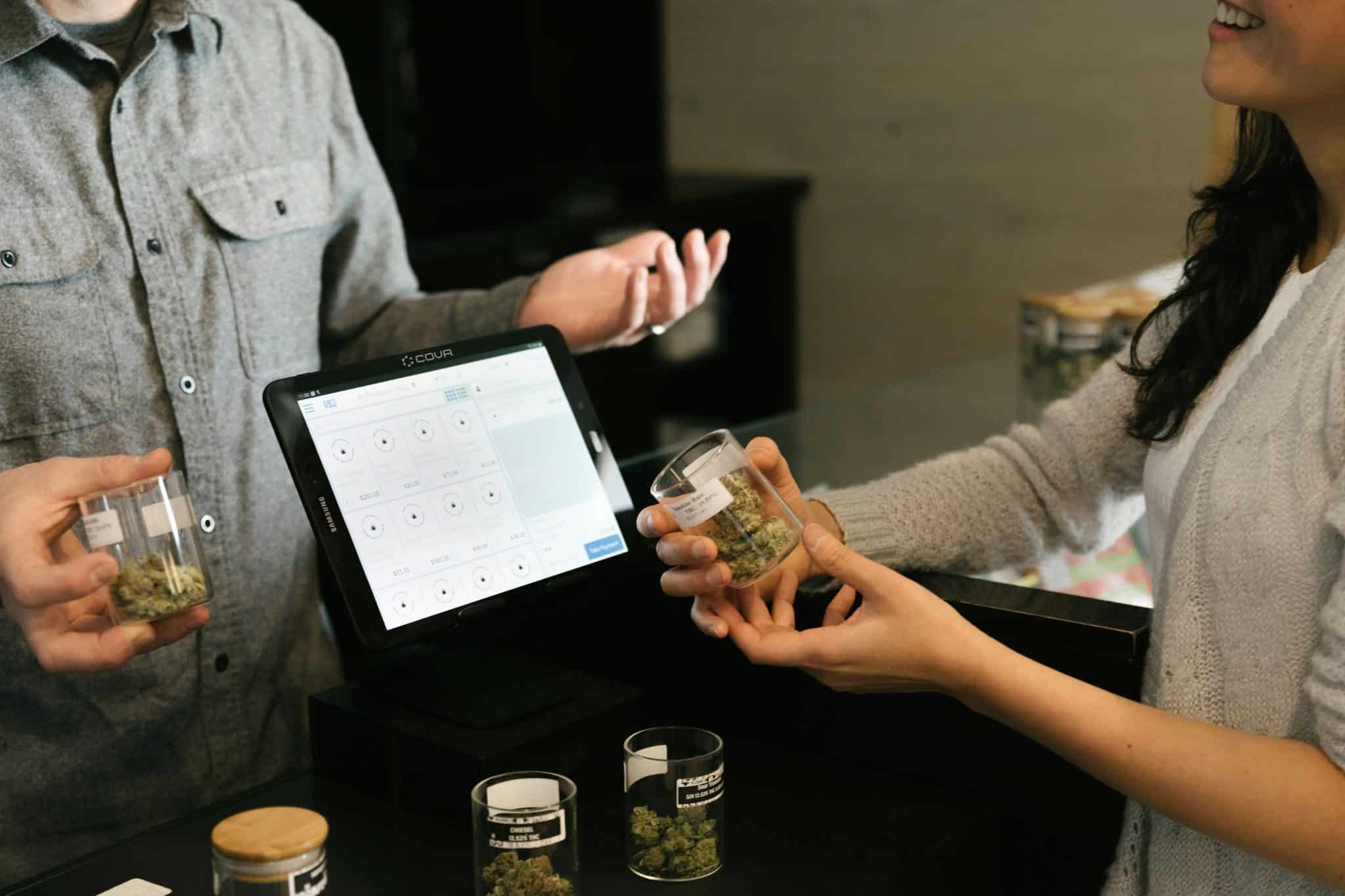
Virginia’s state-licensed dispensaries are operated by pharmaceutical processors that hold CCA dispensary permits. Each facility is licensed to sell medical cannabis products to registered patients, and the CCA maintains a dispensary locator on its website that shows licensed locations by region. Knowing what to expect before your first visit makes the process significantly smoother.
Virginia does not honor out-of-state medical cards. If you are a registered patient in another state, your card does not transfer when you cross into Virginia, which means you need a Virginia CCA registration to make a legal purchase at a dispensary here. For context on which states allow out-of-state patients to buy medical marijuana, Virginia is not currently among them.
What to bring to a Virginia dispensary visit:
- Your CCA registration documentation: Your registered patient status must be verifiable at point of sale.
- A valid government-issued photo ID: Confirming you are 21 or older and a Virginia resident.
- Your practitioner recommendation: Some facilities may request this, especially for first-time patients.
- Payment: Most dispensaries operate on a cash-preferred or debit-only basis due to federal banking restrictions on cannabis businesses.
Virginia dispensaries carry a range of product forms, including flower, cannabis oils, edibles, tinctures, and topicals. The specific inventory varies by processor, so checking a dispensary’s menu online before visiting saves time. Patient caregivers registered with the CCA can also purchase on behalf of qualifying patients, which is an option worth knowing if a patient cannot visit a dispensary in person.
What Does Medical Cannabis Cost in Virginia?
Medical cannabis is not covered by health insurance. Even after state-licensed medical marijuana’s April 2026 move from Schedule I to Schedule III under the Controlled Substances Act, it’s still not an FDA-approved prescription product, which is what insurers actually key off of, not the drug’s schedule. Patients should plan to pay out of pocket for all dispensary purchases.
Product prices at Virginia dispensaries vary by form and potency. Flower typically runs between $30 and $60 per eighth, oils and tinctures range from $30 to $80 depending on concentration, and edibles are generally in the $15 to $40 range. These are general ranges based on publicly available dispensary pricing and may vary by location and product.
For a full picture of what you’ll spend and how medical marijuana is covered by insurance affects your budget, that guide covers the insurance gap in detail.
Is There Financial Assistance for Virginia Medical Cannabis Patients?
Some Virginia dispensaries offer compassionate pricing programs for patients who qualify based on income or financial hardship. These programs are set by individual pharmaceutical processors rather than the CCA, so availability and eligibility criteria vary by location. Asking dispensary staff directly about patient assistance programs is the most reliable way to find out what is available at a specific facility.
There is no statewide patient assistance fund for medical cannabis in Virginia currently, but the dispensary-level programs that exist can reduce per-purchase costs meaningfully for eligible patients. It’s worth asking the question even if you’re unsure whether you qualify.
Ready to see if you qualify? Book your Virginia consultation with a licensed physician and find out what your medical cannabis options actually cost before you commit.
Note: The content on this page is for informational purposes only and is not intended to be professional medical advice. Do not attempt to self-diagnose or prescribe treatment based on the information provided. Always consult a physician before making any decision on the treatment of a medical condition.
Note: Veriheal does not support illegally consuming therapeutic substances such as cannabis but acknowledges that it transpires because of the current illicit status, which we strive to change by advocating for research, legal access, and responsible consumption. Always consult a physician before attempting alternative therapies.
Frequently Asked Questions
How do you get a medical marijuana card in Virginia?
To get a medical marijuana card in Virginia, you need a recommendation from a licensed Virginia practitioner who has an established patient-provider relationship with you, according to Virginia’s medical cannabis patient requirements. After receiving your recommendation, you register directly with the Virginia Cannabis Control Authority (CCA) at cca.virginia.gov.
What conditions qualify for medical marijuana in Virginia?
Virginia does not use a fixed list of qualifying medical conditions. Any condition a licensed practitioner believes may benefit from cannabis can qualify, making the program more accessible than states with enumerated condition lists.
Is recreational marijuana legal in Virginia?
Adult-use possession of up to 1 ounce in public and home cultivation of up to four plants are legal for adults 21 and older in Virginia. Cannabis retail sales to adult-use customers are not yet permitted, so the medical program remains the only legal pathway to purchase cannabis from a dispensary. The possession limit is set to rise to 2 ounces once retail sales launch on July 1, 2027.
Can you grow your own marijuana in Virginia?
Adults 21 and older in Virginia can legally cultivate up to four cannabis plants at home for personal use. This applies to both medical patients and adult-use individuals under current Virginia law.
How much marijuana can you legally possess in Virginia?
Adults 21 and older can currently possess up to 1 ounce of cannabis in public under Virginia law, rising to 2 ounces once adult-use retail sales launch on July 1, 2027. Registered medical patients can purchase up to 4 ounces per 30 days and possess a 90-day supply overall, higher than the recreational limit either way. Verify current figures at cca.virginia.gov, since these limits are subject to regulatory update.
Does Virginia accept out-of-state medical marijuana cards?
Virginia does not currently recognize out-of-state medical cards. Patients from other states must register with the Virginia CCA to legally purchase cannabis from a state-licensed dispensary in Virginia.
What forms of cannabis are available at Virginia dispensaries?
Virginia state-licensed dispensaries carry flower, cannabis oils, edibles, tinctures, and topicals.
Author, Share & Comments