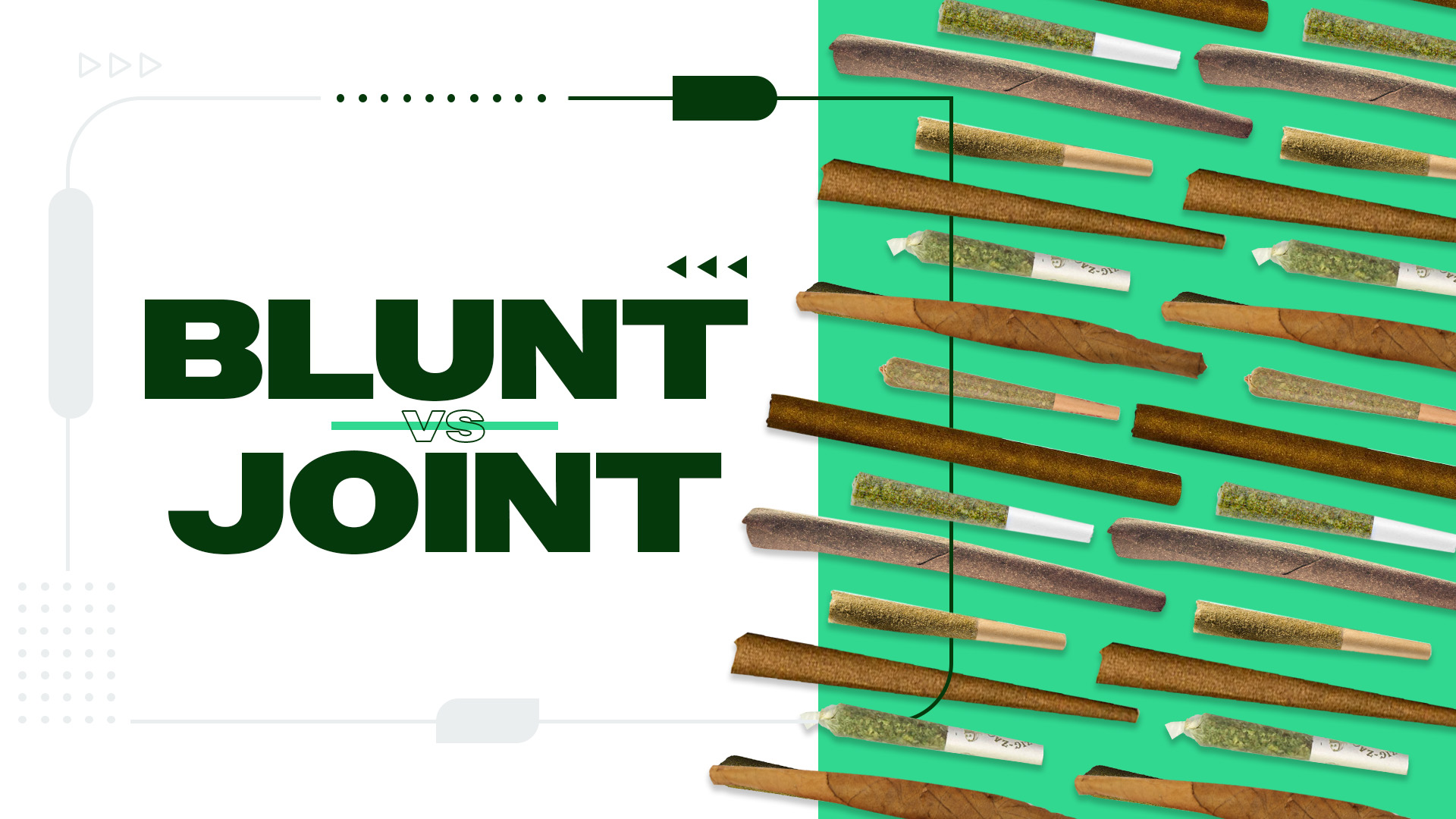
A blunt uses tobacco leaf or tobacco-based wraps to hold cannabis, while a joint uses thin rolling papers made from materials like hemp or rice. The tobacco in blunt wraps adds nicotine to your smoking experience, which joints don’t provide.
Both methods let you smoke cannabis flower, but they create different experiences in terms of flavor, burn time, and effects. Understanding these differences helps you choose the right option for your preferences and tolerance level.
TL;DR: What’s the Difference Between a Blunt and a Joint?
The difference between a blunt and a joint is that blunts are cannabis wrapped in tobacco blunt wraps, whereas joints are cannabis wrapped in rolling papers. Blunts typically hold more cannabis and burn slower because of their thicker tobacco wraps. Joints burn faster and provide a cleaner cannabis taste without nicotine.
Blunts deliver both tetrahydrocannabinol (THC) and nicotine effects, while joints only deliver THC and other cannabinoids from the cannabis itself. The choice between them often comes down to whether you want nicotine in your smoking experience.
What is a Blunt?
A blunt is cannabis rolled in a tobacco leaf wrap or cigar paper. The wrap comes from either a whole tobacco leaf or processed blunt wraps sold at convenience stores and smoke shops. This tobacco content distinguishes blunts from other cannabis smoking methods.
Traditional blunts use cigar papers that have been emptied of their original tobacco filling. Modern blunt wraps are specifically manufactured for cannabis use and come in various flavors like grape, vanilla, or natural tobacco. These wraps contain nicotine, which adds a stimulating effect to your cannabis experience.
Blunts typically hold between 1-2 grams of cannabis flower, making them larger than most joints. The thicker tobacco wrap burns more slowly than rolling papers, extending your smoking session.
Pros
Blunts offer several advantages for cannabis users who enjoy the tobacco-cannabis combination. The slow burn time means you get more sessions from a single roll, and the larger size accommodates group smoking situations.
The nicotine from tobacco wraps creates a unique effect profile that combines cannabis relaxation with nicotine stimulation. Many users report that this combination enhances their overall experience compared to cannabis alone.
Blunt wraps are widely available at gas stations and convenience stores, making them accessible when specialty cannabis accessories aren’t available. The variety of flavored wraps also lets you customize the taste profile of your smoking experience.
What is a Joint?
A joint is cannabis rolled in thin rolling papers made from materials like hemp, rice, or wood pulp. Unlike blunts, joints contain no tobacco or nicotine, providing a cleaner cannabis-only experience.
Rolling papers are much thinner than blunt wraps, typically measuring between 12-14 GSM (grams per square meter) in thickness. This thinness allows for even burning and minimal interference with your cannabis flavor. Hemp papers have become increasingly popular because they burn cleanly and complement cannabis naturally.
Joints usually contain 0.5 to 1 gram of cannabis flower, making them smaller than most blunts. The combination of less cannabis and thinner papers means joints burn faster than blunts, typically lasting 5-15 minutes depending on size.
Pros
Joints deliver pure cannabis effects without nicotine interference, letting you experience the full terpene profile and cannabinoid effects of your chosen strain. This makes them ideal for users who want to avoid tobacco products entirely.
The thin rolling papers produce less harsh smoke than tobacco wraps, which many users find easier on their throat and lungs. Rolling paper alternatives include hemp, rice, and other natural materials that burn cleanly without adding unwanted flavors.
Joints are more discreet than blunts because they’re smaller and produce less smoke. They’re also easier to portion control since they typically contain less cannabis than blunts.
Cons
The faster burn time means joints don’t last as long as blunts, which can be disappointing during group smoking sessions. You’ll need to roll multiple joints to match the duration of a single blunt.
Rolling papers can be trickier to work with than blunt wraps, especially for beginners. The thin material tears easily and requires more precise technique to avoid runs or holes that cause uneven burning.
Joints also hold less cannabis than blunts, so users with higher tolerances may need to smoke multiple joints to achieve their desired effects. This can make joints less cost-effective for heavy users.
Blunts vs Joints: Complete Comparison
The fundamental difference between blunts and joints extends beyond just their wrapping materials. These two smoking methods create distinctly different experiences that affect everything from flavor to duration to health impact.
Size represents one of the most obvious distinctions. Blunts typically accommodate 1-2 grams of cannabis flower, while joints usually contain 0.5-1 gram. This size difference directly impacts how long each one lasts and how many people can share it comfortably.
The wrapping material creates the most significant experiential difference. Tobacco wraps add nicotine to your cannabis experience, creating a stimulating effect that some users enjoy. Rolling papers provide a neutral base that lets your cannabis flavor shine through without additional psychoactive compounds.
Health Considerations
The tobacco content in blunts introduces additional health risks that joints avoid entirely. Tobacco wraps contain nicotine, tar, and other compounds that can contribute to respiratory irritation and addiction potential.
Nicotine content in blunt wraps can cause dependency even in users who don’t typically smoke cigarettes. Regular blunt smoking may lead to nicotine cravings and withdrawal symptoms when you try to stop. Joints eliminate this risk by containing only cannabis and rolling paper materials.
Both methods involve combustion, which produces harmful compounds regardless of the wrapping material. However, the additional tobacco compounds in blunts create a higher overall toxic load compared to joints using clean rolling papers.
Cost and Availability
Blunt wraps cost more per unit than rolling papers, typically ranging from $1-3 per wrap compared to $0.10-0.30 per rolling paper. However, blunts hold more cannabis, so the cost per gram of cannabis consumed may be similar between the two methods.
Rolling papers are available at most smoke shops and many convenience stores, but blunt wraps have even wider availability. You can find blunt wraps at gas stations, corner stores, and tobacco shops in addition to cannabis-specific retailers.
The larger size of blunts makes them more cost-effective for group smoking sessions, while joints work better for individual use or smaller groups. Your consumption patterns and social smoking habits should influence your choice between these options.
Smoking Experience
Burn time differs significantly between blunts and joints due to their construction differences. Blunts burn for 15-30 minutes on average, while joints typically last 5-15 minutes. This makes blunts better suited for extended smoking sessions or sharing among larger groups.
The thickness of tobacco wraps creates a slower, more even burn that’s less likely to canoe or run than thin rolling papers. However, this slower burn also means you’re exposed to smoke for a longer period, which may increase respiratory irritation.
Flavor profiles vary dramatically between the two methods. Joints preserve the natural terpene flavors of your cannabis strain, while blunts add tobacco and often artificial flavoring from the wrap. Some users prefer this flavor addition, while others find it masks the cannabis taste they want to experience.
How to Choose Between Blunts and Joints
Your choice between blunts and joints depends on several personal factors that affect your smoking experience and health goals. Consider your nicotine tolerance, consumption patterns, and social smoking preferences when making this decision.
Nicotine sensitivity, a key factor in substance use choices, plays a crucial role in your decision-making. If you’ve never used tobacco products or want to avoid nicotine entirely, joints provide cannabis effects without additional stimulants. Users who enjoy the nicotine-cannabis combination or already use tobacco products may prefer blunts for their dual effects.
Your cannabis tolerance and desired session length also influence the decision. Heavy users or those who want extended smoking sessions often prefer blunts because they hold more cannabis and burn longer. Light users or those seeking quick, controlled doses typically choose joints for their smaller size and faster consumption.
Social context matters significantly in your decision. Blunts work better for group smoking because they last longer and hold more cannabis to share. Joints suit individual use or smaller groups where everyone can have their own.
Consider these key decision factors:
- Nicotine preference: Choose blunts if you want nicotine effects, joints if you want cannabis-only experience
- Session length: Pick blunts for extended sessions, joints for quick consumption
- Group size: Blunts work better for 3+ people, joints for 1-2 people
- Cost sensitivity: Calculate cost per session based on your typical consumption amount
- Health priorities: Choose joints to avoid tobacco-related health risks
Beginners should typically start with joints because they’re easier to control dosage-wise and don’t include nicotine effects that might overwhelm new users. Experienced users can choose based on their established preferences and tolerance levels.
Rolling Techniques and Tips
Learning proper rolling techniques improves your smoking experience regardless of whether you choose blunts or joints. The fundamental principles remain similar, but each method requires specific approaches for optimal results.
Rolling a blunt starts with splitting your blunt wrap lengthwise and removing any existing tobacco. Moisten the wrap slightly to make it more pliable, then distribute your ground cannabis evenly along the length. Leave about half an inch on each end for sealing.
Joint rolling requires more delicate handling because rolling papers tear more easily than tobacco wraps. Create a small filter tip from cardstock or use a pre-made tip, then distribute your cannabis in a thin, even line. The key to tight joints is applying consistent pressure while rolling, not using excessive force that tears the paper.
Rolling technique varies between the two methods:
- Blunt rolling: Use the “tuck and roll” method by tucking the bottom edge under the cannabis, then rolling upward while applying gentle pressure. Seal with moisture along the gum line.
- Joint rolling: Start by pinching and rolling the paper between your thumbs and forefingers to shape the cannabis. Tuck the non-adhesive edge under the cannabis, then roll up to the gum strip and seal.
- Packing consistency: Both methods benefit from evenly ground cannabis that’s not too fine or too chunky. Consistency in your grind creates even burning.
- Sealing technique: Blunts need more moisture to seal properly than joints. Use saliva sparingly on joints to avoid over-wetting the thin paper.
Proper inhalation technique applies to both blunts and joints. Take slow, steady draws rather than sharp pulls that can cause harsh hits or uneven burning. Yes, you do inhale blunts the same way you would inhale any cannabis smoke, the tobacco wrap doesn’t change the inhalation process.
Practice improves your rolling skills significantly. Start with larger papers or wraps if you’re learning, then progress to smaller sizes as your technique develops. Keep your materials fresh and store them properly to maintain optimal rolling conditions.
Getting started with medical cannabis begins with consulting a qualified physician who understands cannabis medicine. Find a doctor today to explore whether cannabis might be right for your health needs and learn about legal access options in your state.
Note: The content on this page is for informational purposes only and is not intended to be professional medical advice. Do not attempt to self-diagnose or prescribe treatment based on the information provided. Always consult a physician before making any decision on the treatment of a medical condition.
Note: Veriheal does not support illegally consuming therapeutic substances such as cannabis but acknowledges that it transpires because of the current illicit status, which we strive to change by advocating for research, legal access, and responsible consumption. Always consult a physician before attempting alternative therapies.
Frequently Asked Questions
What is the difference between a joint, a blunt, and a spliff?
A joint contains only cannabis wrapped in rolling papers, a blunt contains cannabis wrapped in tobacco leaf or tobacco wraps, and a spliff mixes cannabis with tobacco inside rolling papers. Spliffs and joints differ mainly in tobacco content and mixing ratios.
Why do people call joints blunts?
People sometimes use these terms interchangeably due to regional slang differences and general unfamiliarity with the technical distinctions. The terms have different meanings based on their wrapping materials, joints use papers, blunts use tobacco wraps.
Are blunts better for you than joints?
Joints are generally considered less harmful than blunts because they don’t contain tobacco or nicotine. Blunts expose you to additional tar, nicotine, and tobacco-related compounds that increase health risks compared to cannabis-only joints.
Author, Share & Comments