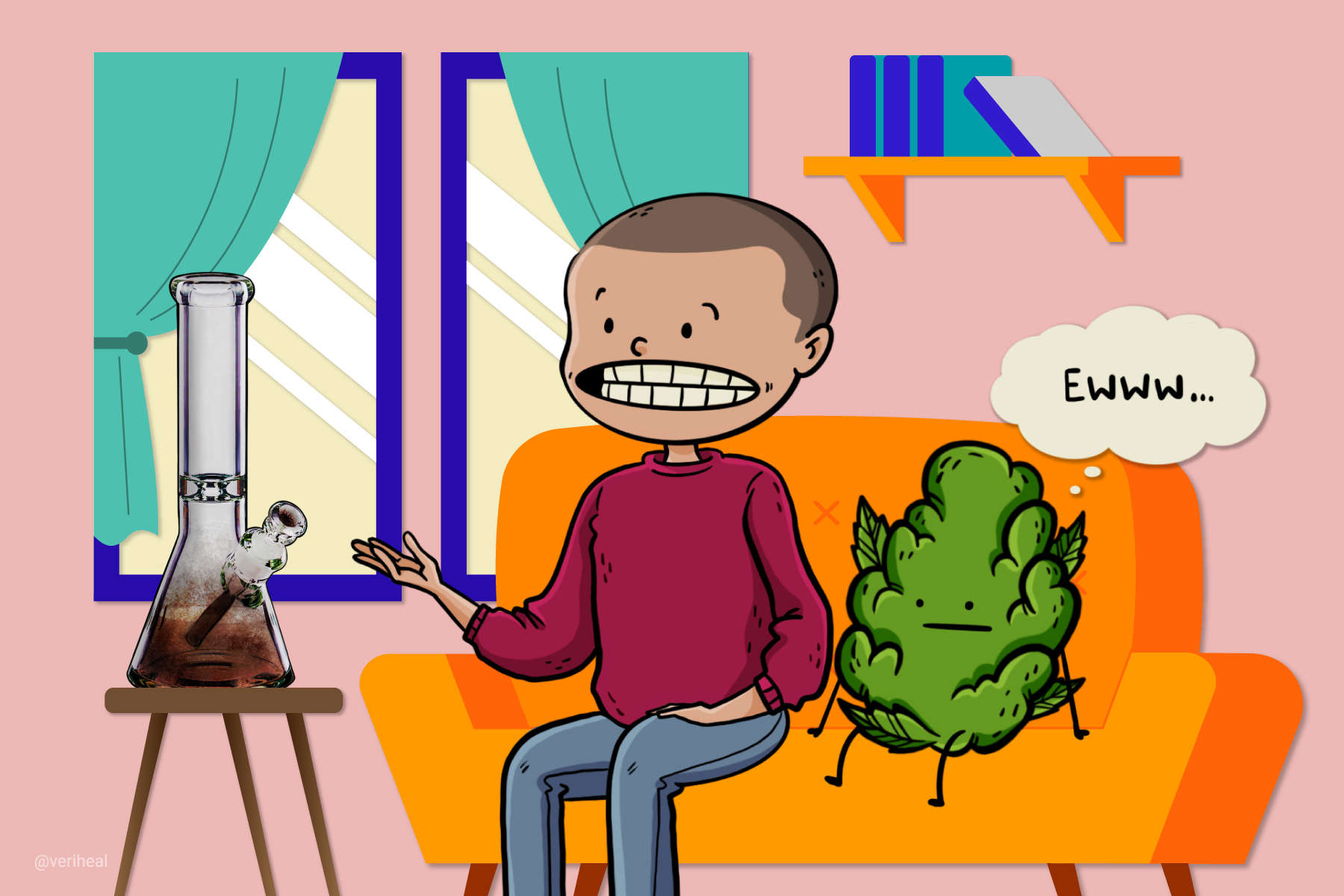
Yes, dirty bong water can make you sick. Stagnant water inside a bong becomes a breeding ground for bacteria, fungal spores, and biofilm, all of which you inhale directly into your lungs every time you take a hit.
Most people know to change their bong water eventually, but few understand what is actually growing in there or how quickly it gets dangerous. This article covers the specific organisms that colonize dirty bong water, the respiratory health risks they create, and how to keep your bong clean enough that it is not quietly working against you.
What Is a Bong and How Does the Water Work?
A bong is a water pipe designed to filter and cool cannabis smoke before it reaches your lungs. Smoke passes through a bowl, down a stem, and bubbles through the water chamber before you inhale it. The water catches some of the heavier particles and cools the smoke so it feels smoother on the way in.
That filtration function is the point, but it also creates a problem. Every time you smoke cannabis through a bong, organic matter from combustion collects in the water. Ash, resin, tar, and plant debris accumulate with each session, and the warm, dark, moist environment of the water chamber gives bacteria and fungus exactly the conditions they need to grow.
The water does not stay clean for long. Within 24 hours of use, a bong can harbor enough microbial growth to pose a real respiratory risk, especially for anyone using it regularly.
What Grows in Dirty Bong Water?
Stagnant bong water is not just unpleasant. It becomes a culture medium for pathogens that you would never knowingly inhale.
Bacteria and Fungi That Grow in Bong Water
Several dangerous microorganisms thrive in the warm, nutrient-rich conditions that used bong water provides. Pseudomonas aeruginosa, a bacterium found in soil and water, colonizes bong water readily and can cause serious lung infections in people with compromised immune systems. Streptococcus and E. coli have both been identified in contaminated bong water, and a PMC case report documenting Pseudomonas lung infection linked to bong use confirmed that bong-associated bacterial infection is not theoretical; it has been documented in clinical settings.
Fungal spores are also a concern. Mold species like Aspergillus and Fusarium can survive in stagnant water and travel directly into the respiratory tract on inhalation. For immunocompromised users, fungal lung infections can be severe and are much harder to treat than bacterial ones.
What Is Biofilm and Why Does It Matter?
Biofilm is the slick, often brownish layer that forms on the inner glass surface of a dirty bong. It is a structured community of bacteria that adheres to the glass and protects itself with a self-produced coating, making it significantly harder to remove than visible resin or ash. You can change the water and the biofilm stays behind, continuing to shed bacteria into fresh water with every refill.
This matters because a bong that looks clean after a water change may still be contaminated. The biofilm layer is invisible to most users until it has built up substantially, by which point it has been seeding every bowl with bacteria for days or weeks.
What Are the Health Risks of Smoking From a Dirty Bong?
Smoking from a dirty bong exposes your respiratory system to aerosolized contaminated water on every inhale. The bubbling action that makes bong hits feel smooth is the same mechanism that disperses bacteria and fungal spores into the vapor stream. Once inhaled, these pathogens reach the lungs directly.
Acute symptoms from a dirty bong typically include coughing, throat irritation, and increased phlegm production, which many regular users dismiss as normal smoker’s irritation. The 2018 NIH review on respiratory risks associated with cannabis smoking notes that regular cannabis smokers already carry elevated baseline respiratory irritation, which can make it harder to recognize when contamination is making things worse. Inhaling from a dirty bong on top of existing airway inflammation accelerates the problem.
More serious risks include lung infections. The health risks of smoking blunts and other combustion-based methods are well documented, but bong-specific bacterial infection carries an added layer of risk because the water itself becomes the vector. The documented case of Pseudomonas lung infection linked to bong use involved a patient who developed Pseudomonas aeruginosa pneumonia after regular bong use and required targeted antibiotic treatment. In that case, the bong was the source.
Heavy users who notice persistent coughing, shortness of breath, or recurring respiratory infections should consult a physician, rather than attributing symptoms to cannabis use alone, according to marijuana and lung health research. Those are signs that the airway is dealing with more than just smoke, and a telehealth appointment can help identify whether microbial exposure is involved.
How Often Should You Change Your Bong Water?
Under most conditions, you should change your bong water after every single session. That recommendation is not arbitrary. Bacterial populations in stagnant bong water can double within hours under warm conditions, and water left in a bong for 48 to 72 hours typically shows significant microbial growth even when it looks unchanged. Fresh water after each session interrupts the growth cycle before bacteria reach concentrations that pose a meaningful inhale risk.
If daily cleaning is not practical, change the water at an absolute minimum every 24 hours. Letting water sit longer than that, especially in a warm room or a sunny windowsill, accelerates every problem described in the sections above.
Signs Your Bong Water Needs Changing Now
You do not always need a timer to know the water has gone bad. Your bong will usually show visible or sensory signals before the contamination becomes serious. If you notice any of the following, change the water immediately and consider doing a full clean before your next session:
- Color change: Water that has turned yellow, brown, or murky is carrying dissolved resin, tar, and ash. Clear water is not always safe, but discolored water is never safe.
- Visible film or mold: A slick film on the inner glass or floating white or gray particulates signals active microbial growth. This is biofilm or fungal matter.
- Foul or sour smell: Clean bong water should have a faint cannabis scent. A sour, musty, or rotten smell means bacterial decomposition is underway.
- Harsher taste or throat irritation: If a bong hit feels rougher or tastes worse than usual, the water quality is likely the cause. Persistent throat irritation after a session is a reason to reduce a sore throat from smoking and also to examine whether your bong needs more frequent cleaning.
How to Clean Your Bong Properly
Changing the water handles daily contamination, but it does not remove biofilm or the resin buildup that accelerates bacterial growth. A full bong clean using isopropyl alcohol and coarse salt is the standard method and works well for glass pieces. The same principles that apply when you clean your glass pipe apply here, with the bong’s larger chamber requiring more solution and longer soaking time.
How to clean a bong with isopropyl alcohol and salt:
- Empty all water and rinse the bong with warm water to loosen loose ash and resin.
- Pour coarse salt into the chamber, enough to coat the inner surfaces when agitated.
- Add isopropyl alcohol (90% or higher) until the chamber is roughly one-third full.
- Cover all openings and shake firmly for 60 to 90 seconds. The salt acts as an abrasive while the alcohol dissolves resin.
- Pour out the mixture, rinse thoroughly with warm water, and allow to dry completely before refilling.
A full clean like this should happen at least once a week for regular users. Commercial bong cleaner products work on the same principle as isopropyl alcohol and can be a convenient alternative, though they rarely outperform the alcohol and salt method on heavy resin buildup. The goal is to eliminate biofilm from the glass surface, not just to make the bong look clean.
Note: The content on this page is for informational purposes only and is not intended to be professional medical advice. Do not attempt to self-diagnose or prescribe treatment based on the information provided. Always consult a physician before making any decision on the treatment of a medical condition.
Note: Veriheal does not support illegally consuming therapeutic substances such as cannabis but acknowledges that it transpires because of the current illicit status, which we strive to change by advocating for research, legal access, and responsible consumption. Always consult a physician before attempting alternative therapies.
If you use cannabis regularly and want guidance on consumption methods and health risks, consider speaking with a qualified cannabis physician through booking a medical cannabis appointment with Veriheal.
Frequently Asked Questions
Can dirty bong water make you sick?
Yes, dirty bong water can make you sick. Stagnant bong water harbors bacteria such as Pseudomonas aeruginosa and Streptococcus, as well as fungal spores, all of which can be inhaled directly into the lungs during a session. The health risk increases the longer water sits without being changed.
How often should you change your bong water?
Bong water should be changed after every session under most conditions. Water left in a bong for more than 24 hours creates conditions for rapid bacterial growth, and water left for 48 to 72 hours typically shows significant contamination even when it appears clear.
What are the signs of bong sickness?
Bong sickness typically presents as persistent coughing, increased phlegm, throat irritation, or worsening respiratory symptoms that do not resolve with rest. These symptoms can result from inhaling bacteria or fungal spores from contaminated bong water, and anyone experiencing them regularly should consult a physician rather than attributing the symptoms to cannabis use alone.
Is it bad to smoke cannabis out of a dirty bong?
Yes, smoking cannabis through a dirty bong is bad for your respiratory health. The water inside a used bong can contain bacteria, fungal spores, and biofilm, all of which become aerosolized when you inhale. The health risks of smoking blunts and other combustion methods are often discussed, but smoking out of plastic and dirty glass each carry their own specific contamination risks that go beyond smoke itself.
What is biofilm in a bong?
Biofilm in a bong is a thin, structured layer of bacteria that adheres to the inner glass surface and persists even after a water change. It forms from the organic matter in cannabis smoke and protects itself with a self-produced coating that standard rinsing cannot remove. Eliminating biofilm requires a full alcohol and salt clean, not just a water refresh.
Author, Share & Comments