An eighth is one of the most common cannabis purchase sizes you’ll see at a dispensary. It gives you enough flowers for multiple sessions without committing to a larger quantity.
This guide breaks it down in clear terms. You’ll see how much an eighth weighs, what it costs across different states, how long it lasts, and what you can expect from it in real use.
What Is an Eighth of Weed?
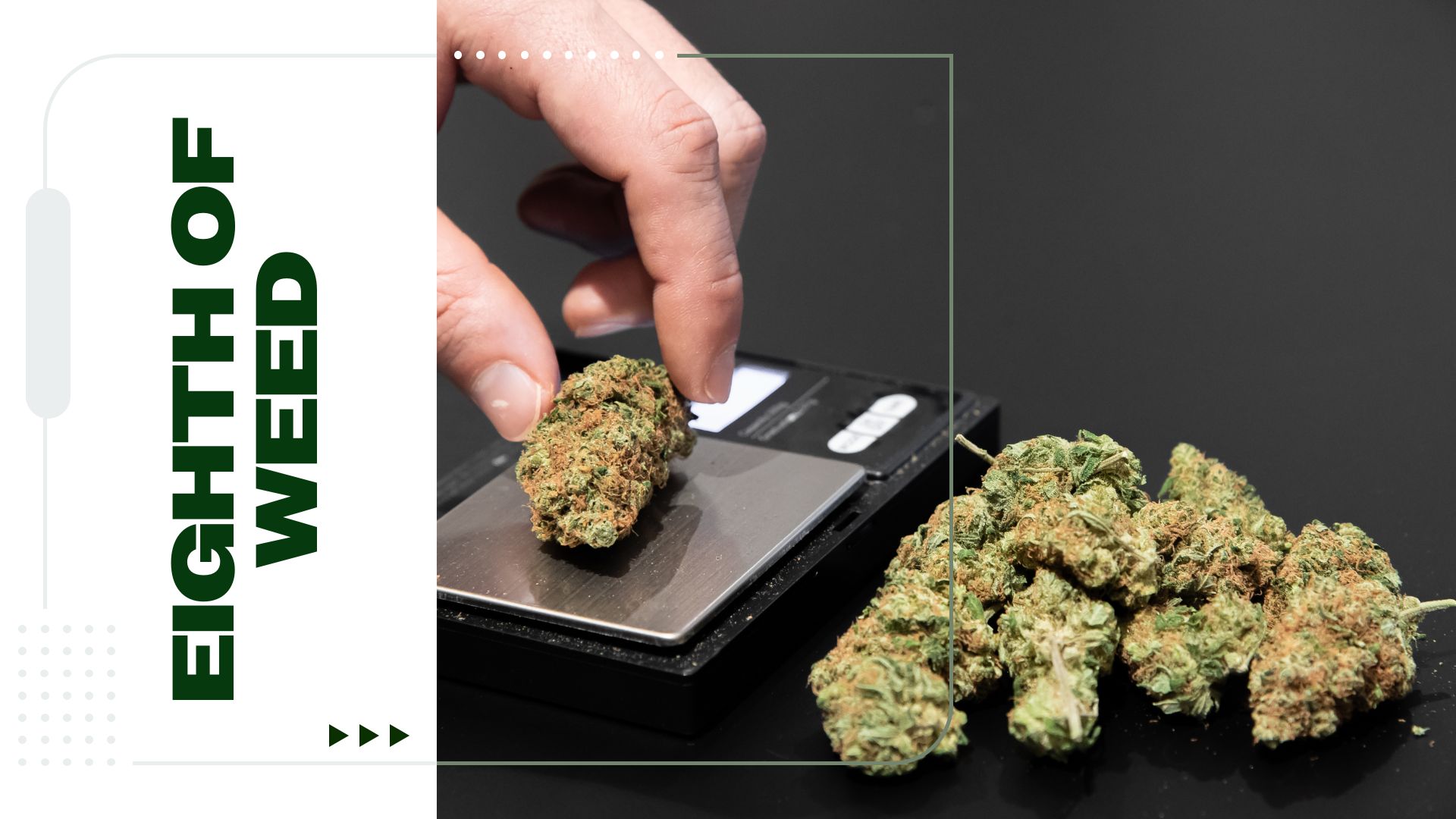
An eighth of weed is a standard cannabis measurement that equals 3.5 grams of dried flower. It represents one-eighth of an ounce in the imperial system used by dispensaries across the United States.
You will see this amount listed as “eighth” or “3.5g” on most menus. It sits between smaller purchases, such as a single gram, and larger quantities, like a quarter or an ounce.
This size works well for short-term personal use. Small format purchases under 5 grams account for a large share of dispensary transactions, which makes the eighth the most commonly purchased quantity.
For a full breakdown of cannabis quantities from a gram to a pound, see the cannabis measurements and weights guide.
What Does an Eighth of Weed Look Like?
An eighth of weed usually appears as two to four medium or large buds, with a total weight of 3.5 grams. The size often matches that of a small fruit, such as a kiwi, giving you a clear sense of volume in your hand.
The look can shift based on strain density. Indica buds grow compact and dense, so they appear smaller, while sativa buds grow lighter and take up more space at the same weight.
An eighth weighs about the same as three US pennies. A digital scale is the only reliable way to verify weight as visual estimation varies too much across strains.
How Much Does an Eighth of Weed Cost in 2026?
An eighth of cannabis costs between $25 and $55 across most legal markets in 2026. Your final price depends on where you buy, the quality of the flower, and whether you purchase through a medical or recreational program.
You will see lower prices in states with mature markets and strong supply. Here is how prices compare across key states:
| State |
Average Price per Eighth |
| Oregon |
$20 to $30 |
| Michigan |
$25 to $35 |
| Colorado |
$25 to $40 |
| California |
$35 to $50 |
| New York |
$45 to $55 |
| Hawaii |
$50 to $60 |
| Washington D.C. |
$55 to $65 |
A per-gram breakdown gives you a clearer view of value. A $40 eighth works out to about $11.43 per gram, which helps you compare prices across different quantities. To reduce that cost further, get your medical marijuana card. Medical patients typically pay 15–30% less than recreational buyers due to lower excise tax rates.
Is $30 for an Eighth Good? What to Expect at Different Price Points
A $30 eighth sits within the standard range in many legal markets, though value depends on where you buy. In established states like Oregon and Michigan, prices between $25 and $35 reflect strong supply and steady competition.
In newer or higher tax markets such as New York and Washington, D.C., the same product often costs between $45 and $60 due to limited supply and higher fees. A lower price does not always signal better value across different regions.
Prices under $25 can signal older inventory or lower-quality flowers, which affects freshness and potency. Medical card holders typically pay 15–30% less than recreational buyers. The benefits of a medical marijuana card extend beyond price; lower taxes and higher possession limits apply in most states.
How Much THC Is in an Eighth of Weed?
The THC content of an eighth of cannabis depends on the strain and its potency. Most cannabis flower sold in dispensaries fall between 15 percent and 25 percent THC.
You can estimate total THC by applying that percentage to 3.5 grams of flower. At 15 percent THC, an eighth contains about 525 milligrams of THC. At 25 percent THC, that rises to about 875 milligrams.
This range shows how much strength can vary across different products. Higher potency flower delivers more THC in the same amount, which affects how long your supply lasts and how strong each session feels.
How Many Joints Can You Roll with an Eighth?
The number of joints you can roll from an eighth depends on how much flower you use per session. An eighth contains 3.5 grams, which sets the total amount you can work with.
If you use about 0.5 grams per joint, you can roll around seven joints. If you use closer to 1 gram per joint, the total drops to about three or four joints.
Smaller rolls stretch your supply and increase the total count. Larger joints use more flower per session, which reduces how long an eighth lasts.
Bowls and vaporizers use less flower per session, which can extend the same 3.5 grams across more uses.
How Long Does an Eighth of Weed Last?
How long an eighth lasts depends on how often you consume and how much you use per session. An eighth contains 3.5 grams, so your usage pattern sets the timeline.
If you use about 0.5 grams per session each day, an eighth lasts around one week. If you consume a few times per week, the same amount can last for 2 to 3 weeks.
Your method also affects how long it stretches. Vaporizers, edibles, and small bowls use less flower per session, which extends your supply compared to joints.
Storage conditions influence how long your cannabis stays usable. Airtight containers and stable conditions help with properly storing cannabis flower over time.
Is It Legal to Buy an Eighth of Weed?
You can buy an eighth of cannabis in many states where recreational use is legal. Most of these states allow adults to possess up to one ounce, so an eighth at 3.5 grams falls within that limit.
Recreational cannabis is legal in states such as:
- California
- Colorado
- Oregon
- Washington
- New York
- Massachusetts
- Michigan
- Illinois
- Arizona
- Nevada
Laws still vary across the country. States like Texas and Wisconsin do not allow recreational cannabis, which makes any purchase illegal outside approved medical programs.
Medical cannabis programs follow different rules. You can access cannabis with a valid medical card, and these programs often allow higher possession limits along with lower taxes.
You can connect with a licensed physician through Veriheal to learn about your eligibility and available options. Find a doctor today.
Author, Share & Comments