Getting a Florida medical marijuana card comes with real legal protections, but it also triggers consequences under federal law that the state cannot override. Before you apply, you need to understand exactly what changes across employment, firearms ownership, housing, professional licenses, and several other areas where federal and state law point in opposite directions.
Florida’s medical marijuana program is one of the largest in the country, and the OMMU registry that backs it is more tightly controlled than most people realize. The consequences covered in this guide are not hypothetical edge cases. They affect cardholders in documented, specific ways, and the right time to understand them is before you apply, not after.
How Florida’s Medical Marijuana Program Works: The Legal Foundation
Florida’s medical marijuana program is governed by Florida Statute §381.986 and administered by the Office of Medical Marijuana Use (OMMU). The OMMU maintains the Florida Medical Marijuana Use Registry, which tracks qualified patients, their certifying physicians, and their purchase history across licensed treatment centers. Every cardholder’s information lives in that registry, and understanding who can access it matters before you decide to enroll.
Under current Florida law, a registered cardholder may possess up to:
- 2.5 ounces of smokable cannabis purchased within any 35-day period, with a hard possession cap of 4 ounces of smokable cannabis on hand at any one time
- A 70-day supply of non-smokable cannabis products (oils, capsules, edibles, tinctures), capped at 24,500 mg of THC
- Products purchased only from state-licensed treatment centers
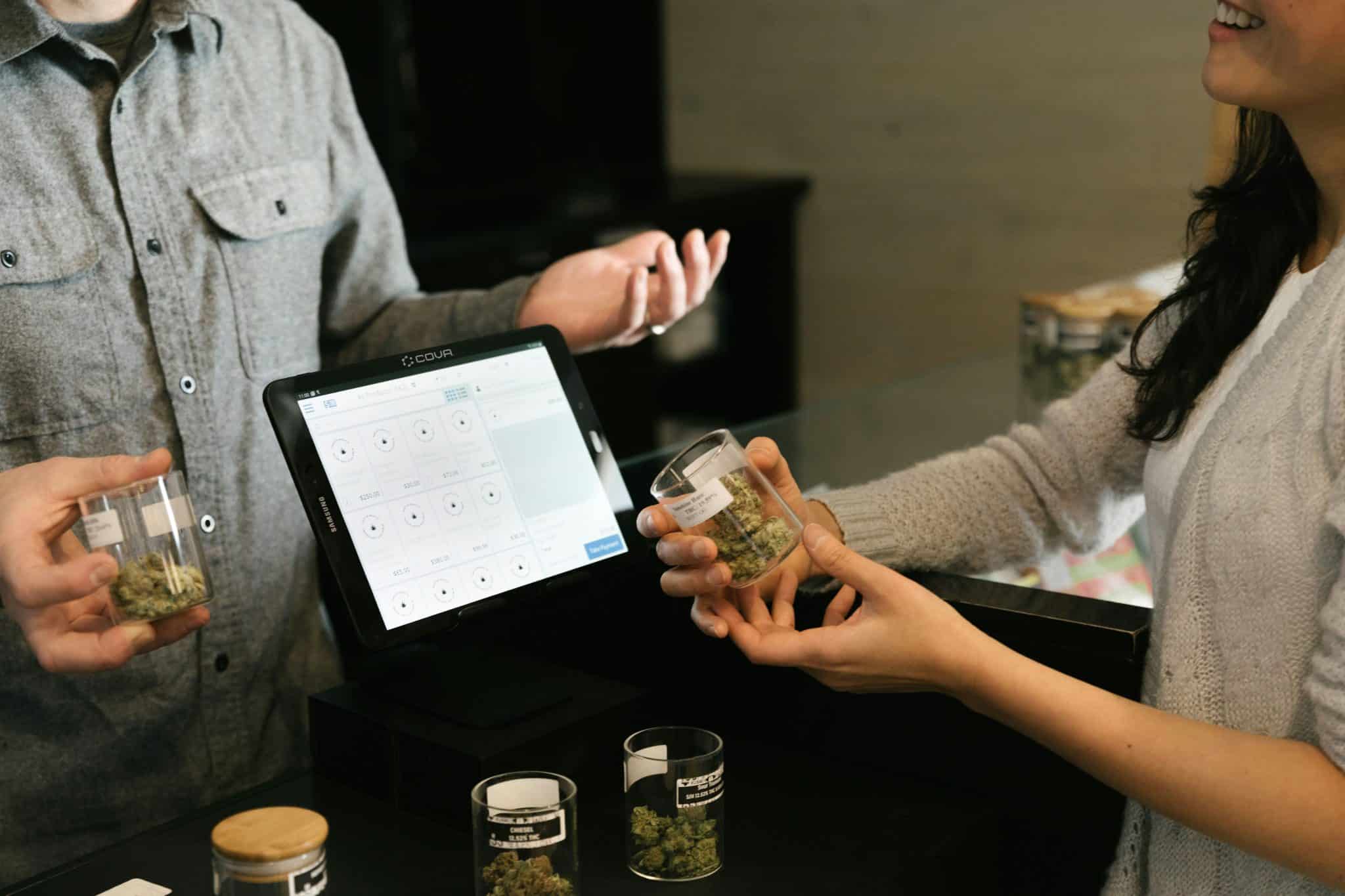
Florida law also requires you to carry your registry identification card whenever you are in possession of medical marijuana. If you are curious about what a medical marijuana card looks like, Florida issues a physical registry ID that includes your photo and cardholder information. Home cultivation remains illegal in Florida regardless of card status, which distinguishes Florida from states like Michigan or Colorado that permit personal grows.
The state’s law creates a legal framework for medical marijuana use, but federal law only partially recognizes that framework. As of April 28, 2026, a DEA/DOJ final order moved cannabis used under a qualifying state medical marijuana license from Schedule I to Schedule III of the Controlled Substances Act. That change is real, but it is narrower than it sounds: recreational cannabis remains Schedule I, and most federal employment rules, housing programs, licensing standards, and firearms law have not yet been formally updated to reflect the new schedule.
That gap between the schedule change and how individual federal agencies apply it is the source of almost every serious consequence a Florida cardholder still faces.
Employment: What Florida Law Does and Does Not Protect
Employment is the consequence most Florida applicants ask about first, and the honest answer is that Florida’s protections are limited. Whether you are protected depends almost entirely on who your employer is and what kind of work you do. Before you apply, it is worth reviewing your employer’s drug policy, and if your role involves federal contracts or safety-sensitive functions, should you tell your employer about your medical card is a question worth thinking through carefully.
Private Employers in Florida
Florida does not require private employers to accommodate medical marijuana use, according to Florida drug testing law. If your employer maintains a drug-free workplace policy, they may test, discipline, or terminate employees who test positive for cannabis, and your medical marijuana card provides no legal defense in that context.
The Florida Civil Rights Act does not currently list medical marijuana status as a protected characteristic, which puts Florida in a different category from states like New Jersey, where the CREAMMA statute prohibits adverse employment action based solely on off-duty cannabis use, or Pennsylvania, where Section 2103(b)(1) of the Medical Marijuana Act restricts employer discipline for lawful off-duty use.
State and Local Government Employment
Some Florida state agencies and municipalities have adopted policies that distinguish between on-duty impairment and off-duty cardholder status, but this is not uniform across the state. Safety-sensitive roles, including law enforcement and firefighting, face strict drug-free policies regardless of cardholder status, and no Florida statute compels government employers to exempt medical marijuana users from those standards. If you work in a state or local government role, the governing policy is your specific agency’s drug testing and discipline rules, not a statewide protection statute.
Federally Regulated Workplaces
Employees of federal contractors, workers subject to Department of Transportation (DOT) drug testing, and anyone in a federally defined safety-sensitive transportation role face a hard limit: federal drug testing rules treat cannabis use as disqualifying regardless of state law or card status.
There is no accommodation available, no exemption process, and no mechanism for a Florida medical marijuana card to override federal testing requirements. If your role falls under federal contractor rules or DOT authority, a positive cannabis test ends federal clearance or safety-sensitive eligibility, full stop.
Firearm Ownership: The Federal Prohibition That Overrides State Law
The firearms consequence of a Florida medical marijuana card is the one most cardholders underestimate, and it’s also the area where federal policy is actively changing:
- The Gun Control Act prohibits any unlawful user of a controlled substance from possessing firearms or ammunition
- Until recently, cannabis use under any circumstances, including with a state medical marijuana card, fell squarely within that prohibition because cannabis was a Schedule I substance federally
- The specific mechanism is ATF Form 4473, required for every firearm purchase from a licensed dealer, which asks the buyer to certify they are not an unlawful user of marijuana or other controlled substances
- Following the April 28, 2026 reclassification of state-licensed medical marijuana to Schedule III, the ATF has posted a draft revision of Form 4473 that would remove this warning specifically for state-authorized medical cannabis patients
- That revised form is still in public comment and not yet legally in effect
- Until it’s finalized, checking “no” on the current form while holding an active card still carries real federal risk under 18 U.S.C. §922(g)(3)
- Recreational cannabis use remains Schedule I and falls outside this change entirely
This prohibition has already been tested in court. In the 2016 Ninth Circuit case Wilson v. Lynch, the court upheld the ATF’s policy of instructing dealers to refuse firearm sales to medical marijuana cardholders, finding no Second Amendment violation. That precedent predates the 2026 rescheduling, and it’s not yet clear how it applies once the revised form takes effect. Florida has no state-level workaround.
For more depth, see Veriheal’s coverage of medical cannabis patients and gun ownership and federal law and medical marijuana users’ gun rights.
If you already own firearms and are considering a card, consult a firearms attorney about your specific situation first. The interaction between an existing legal firearm collection and new registry enrollment is fact-specific and worth individual legal advice.
Driving: What Florida Statute §316.193 Actually Says
Florida Statute §316.193 prohibits driving under the influence of cannabis when the person is “affected to the extent that the person’s normal faculties are impaired.” A few things worth knowing about how that standard actually works:
- There’s no per se THC blood level equivalent to the 0.08 BAC standard for alcohol
- Impairment is determined by officer observation and field sobriety testing, not a fixed chemical threshold
- This creates a different kind of legal exposure than most drivers expect
This matters for cardholders specifically because:
- Cannabis can remain detectable in blood for hours after consumption
- The absence of a numeric threshold means impairment assessment is inherently subjective
- A medical marijuana card provides no immunity from a DUI charge if an officer observes signs of impairment
- The card tells the officer you’re a registered patient, it doesn’t tell them you were unimpaired at the time of the stop
The practical guidance here is straightforward: don’t drive within several hours of consuming cannabis. Even lawful medical use doesn’t insulate you from impaired-driving enforcement under Florida law, the impairment standard that applies to you as a cardholder is identical to the standard applied to any other driver suspected of being under the influence of a controlled substance.
Privacy and the Florida Medical Marijuana Use Registry
The OMMU registry is a state-maintained database, and Florida Statute §381.986(8)(e) defines precisely who can query it and under what circumstances. Cardholder status is not part of a standard background check for private employment, and the registry is not publicly searchable.
For a full picture of what a background check does and does not reveal, Veriheal’s guide on whether a medical marijuana card shows up on a background check covers the mechanics in detail.
Authorized access under §381.986(8)(e) is limited to specific parties:
- Qualified ordering physicians, to verify patient status and purchase history
- State-licensed medical marijuana treatment centers (dispensaries)
- Authorized caregivers registered with the OMMU
- Law enforcement officers under defined circumstances, including when investigating a violation of the medical marijuana statute
HIPAA applies to the physician-patient relationship in the context of a patient’s medical records, but the registry itself is governed by Florida’s own access rules rather than HIPAA directly. This is a distinction that matters: your physician’s records about your qualifying condition are HIPAA-protected, but the registry data held by the OMMU operates under Florida’s statutory access framework. For a broader look at how HIPAA and medical cannabis privacy interact, Veriheal’s dedicated guide addresses that question specifically.
The law enforcement access provision under §381.986(8)(e) means cardholder status is not fully private from government inquiry in all circumstances. While that access is defined and limited, it is worth understanding before you enroll. Similarly, your purchase history at state-licensed dispensaries is logged in the registry, and protecting your PII at dispensaries explains what dispensaries collect and how they handle it.
Federal Housing and Student Financial Aid Risks
Two federal consequences fall outside the employment and firearms categories but carry significant stakes for specific groups of readers: those living in federally assisted housing and those receiving federal student financial aid. Neither is covered by Florida’s medical marijuana statute, because both are governed entirely by federal law.
Federally Assisted Housing
The U.S. Department of Housing and Urban Development’s January 2011 memorandum on medical marijuana in federally assisted housing confirmed that housing authorities administering HUD-funded programs are not required to grant exceptions for medical marijuana use under state law.
Tenants in Section 8 and other federally subsidized housing who use medical marijuana, even in full compliance with Florida law, can face eviction under HUD’s screening and eviction regulations for controlled substance use. A Florida medical marijuana card does not change that outcome, because the federal housing program’s terms are controlled by federal law, not Florida statute.
Private landlords not receiving federal funding are not subject to PIH 2011-33, but they retain broad discretion in Florida to prohibit cannabis use on their property. If you rent from a private landlord, your lease terms and your landlord’s policy govern what is permitted. The question of smoking in your apartment with a med card is one Veriheal has addressed in a dedicated guide covering both public and private housing contexts.
Federal Student Financial Aid
Obtaining a Florida medical marijuana card does not constitute a drug conviction and does not by itself trigger suspension of federal student aid eligibility under the Higher Education Act (20 U.S.C. §1091(r)). The card is a state registration, not a criminal record. However, cardholders who are subsequently arrested and convicted of a cannabis-related offense under federal or state law may face suspension of aid eligibility under that provision.
The card provides no immunity from federal prosecution for cannabis-related conduct, and a federal conviction would carry the same aid consequences as any other drug conviction regardless of the cardholder’s state-legal status.
Life Insurance and Long-Term Disability Insurance: What Underwriters See
Life insurance and long-term disability insurance are two areas where a Florida medical marijuana card can create financial consequences that most applicants don’t consider. The governing framework here isn’t Florida statute but individual insurer underwriting practices, which vary by company but follow recognizable patterns:
- Cannabis use may get you rated as a tobacco user. Insurers who ask about cannabis use on an application, and most do, may classify cardholders under tobacco-user rates for underwriting purposes. This can mean significantly higher premiums, since tobacco-user rates reflect elevated mortality risk assumptions.
- Non-disclosure can void a claim later. Applicants who don’t disclose cannabis use, and later file a claim, risk having that claim voided for material misrepresentation. An insurer that discovers undisclosed cannabis use after a claim is submitted generally has grounds to rescind the policy, including in Florida.
Florida Statute §626.9541, the state’s Unfair Insurance Trade Practices Act, prohibits certain discriminatory insurance practices, but it doesn’t compel insurers to ignore cannabis use in underwriting decisions. Long-term disability policies carry similar disclosure and underwriting considerations.
For a fuller breakdown of what medical marijuana covered by insurance actually means in practice, Veriheal’s guide covers both health insurance and the underwriting questions that come up for life and disability coverage.
If you’re in the process of applying for life or disability insurance and considering a medical marijuana card, consult an insurance broker or attorney before you apply. Timing your card enrollment relative to an insurance application is a fact-specific decision that can have real financial implications.
Professional Licenses and Regulated Occupations
Several licensed professions carry additional risk for Florida medical marijuana cardholders because they are subject to regulatory frameworks, federal or state, that treat cannabis use as disqualifying or disciplinable regardless of card status. The three categories below each involve a distinct mechanism, and collapsing them would give any one group inaccurate information.
Healthcare Practitioners: Nurses, Pharmacists, and Physicians
Florida Statute §456.072 governs disciplinary action for licensed healthcare professionals across the boards regulated by the Florida Department of Health. A positive cannabis drug test or documented medical marijuana card status can trigger a disciplinary review by the relevant licensing board, particularly in roles where impairment is a direct patient safety concern.
The degree of risk varies by profession, by employer policy, and by the specific circumstances of the test or disclosure. Veriheal’s dedicated guide on whether nurses can have medical marijuana cards addresses the nursing-specific regulatory landscape in detail, including how individual board responses have varied.
Commercial Drivers: CDL Holders
Federal Motor Carrier Safety Administration (FMCSA) regulations at 49 CFR §382 require commercial driver’s license (CDL) holders operating commercial motor vehicles to submit to federally mandated drug testing. Cannabis use violates federal CDL drug testing standards regardless of Florida law or card status.
A positive test results in mandatory removal from safety-sensitive functions and entry into the FMCSA Drug and Alcohol Clearinghouse, which restricts return-to-duty until a federal return-to-duty process is completed. Florida’s medical marijuana card provides no exception to this framework. Veriheal’s guide on whether truck drivers can use medical cannabis covers the Clearinghouse process and the practical consequences for commercial drivers in detail.
Pilots and Aviation Workers
FAA regulations at 14 CFR §61.15 and the associated medical certificate standards treat cannabis use as disqualifying for airmen medical certificates. The FAA has not updated these standards to reflect the April 2026 reclassification of state-licensed medical marijuana to Schedule III, so pilots who hold or apply for a medical marijuana card still risk their medical certificate eligibility because the FAA’s drug and alcohol standards have historically aligned with federal controlled substance law, not state authorization frameworks.
Pilots and aviation workers considering a Florida medical marijuana card should consult an aviation attorney before enrolling, as the interaction between certificate status and registry enrollment is a high-stakes, fact-specific question.
Child Custody and Family Court: What Florida Courts Have Considered
Florida family courts apply a best-interests-of-the-child standard in all custody and parenting time decisions. Medical marijuana card status alone is not grounds for modification of an existing custody arrangement and does not create a presumption of parental unfitness. The card establishes that you are a state-registered patient, not that you are impaired during parenting time.
The more precise risk is evidentiary. In a contested custody proceeding, the opposing party may introduce evidence of cannabis use as a factor for the court to weigh, particularly if there is an allegation of impairment during parenting time or cannabis use in the presence of children. Florida courts have discretion to consider such evidence under the best-interests standard, and whether it affects the outcome depends on the full evidentiary record of that specific case, not on the card alone.
If you are involved in an active custody dispute, consulting a family law attorney before applying for a card is worth doing. The card does not create a presumption of unfitness, but it may introduce a line of inquiry in contested hearings that you should be prepared to address with legal guidance specific to your situation.
Card Suspension and Florida’s 2023 Drug Charge Law
In 2025, Florida enacted a provision under which a medical marijuana cardholder’s registry status can be affected by a pending or resolved drug charge. This consequence is Florida-specific, applies only to cardholders, and is largely absent from other guides covering the Florida program.
Under Senate Bill 2514 (Chapter 2025-204, Laws of Florida, effective July 1, 2025):
- A cardholder’s registration is immediately suspended upon being charged with a qualifying offense under Chapter 893, Florida Statutes, before any conviction.
- The suspension remains in place until the case reaches final disposition.
- If the cardholder is convicted of, or pleads guilty or no contest to, trafficking, sale, manufacture, delivery, or possession with intent to sell, manufacture, or deliver a controlled substance, the OMMU must revoke the registration entirely, not merely suspend it.
- During any suspension or after revocation, the cardholder loses access to state-licensed treatment centers.
- Reinstatement after revocation requires a new application and is not automatic.
The practical implication is that an arrest alone, before any conviction and even for an offense you believe falls within your cardholder protections, can immediately cut off your legal access to medical marijuana. Cardholders facing a drug-related arrest should consult an attorney promptly, since the suspension takes effect right away.
Benefits Florida Law Does Provide: What the Card Actually Protects
A fair account of the consequences of a Florida medical marijuana card has to include what the card actually provides, not only the risks it creates. The legal protections available to registered Florida patients are real and meaningful within the state enforcement framework, even if they do not extend to federal law.
Florida cardholders in good standing receive the following protections under state law:
- Protection from arrest and prosecution for possessing up to 2.5 ounces of smokable cannabis within a 35-day period
- Protection from arrest and prosecution for possessing a 70-day supply of non-smokable forms
- Access to state-licensed treatment centers whose products are independently tested, labeled, and tracked through the OMMU registry
- Registry access protections under §381.986(8)(e) that limit who can view your cardholder status to defined authorized parties
- The legal right to designate a caregiver who can purchase and transport medical marijuana on your behalf
These are not minor conveniences. For patients managing qualifying conditions, the protection from state criminal exposure and the access to tested, labeled products represent a substantial improvement over illicit market alternatives. The full list of what cardholders gain is covered in Veriheal’s guide on the benefits of a medical marijuana card.
If you have read through the consequences covered in this article and want to understand the application process before deciding, Veriheal’s guide on how to get your medical marijuana card online walks through each step.
When you are ready to move forward, connect with a Florida-licensed physician through Veriheal.
Note: The content on this page is for informational purposes only and is not intended to be professional medical advice. Do not attempt to self-diagnose or prescribe treatment based on the information provided. Always consult a physician before making any decision on the treatment of a medical condition.
Note: Veriheal does not support illegally consuming therapeutic substances such as cannabis but acknowledges that it transpires because of the current illicit status, which we strive to change by advocating for research, legal access, and responsible consumption. Always consult a physician before attempting alternative therapies.
Frequently Asked Questions
Does getting a Florida medical marijuana card show up on a background check?
A Florida medical marijuana card does not appear on standard private employment background checks. The OMMU registry is a state database with defined access rules under Florida Statute §381.986(8)(e), not a public record or a criminal database. Law enforcement can access the registry under certain defined circumstances, but a routine employer background check does not include registry data.
Can I own a gun if I have a medical marijuana card in Florida?
Under current federal law, this is still a real risk. The ATF has proposed a revised Form 4473 that would drop the disqualification for people who use only state-authorized medical cannabis, following the April 2026 reclassification of state-licensed medical marijuana to Schedule III, but that revised form has not been finalized. Until it is, ATF Form 4473 still requires buyers to certify they are not an unlawful user of a controlled substance, and checking “no” while holding an active card is a federal felony.
Can my employer fire me for having a medical marijuana card in Florida?
Florida does not require private employers to accommodate medical marijuana use. If your employer has a drug-free workplace policy, a positive cannabis test or card disclosure can result in termination, and the card provides no legal protection in that context. Florida’s employment law does not list medical marijuana status as a protected characteristic.
Will a Florida medical marijuana card affect my federal housing assistance?
Medical marijuana use, including lawful use under Florida law, can result in eviction from federally subsidized housing. HUD’s PIH 2011-33 guidance confirms that housing authorities administering federal programs are not required to grant exceptions for state-authorized medical marijuana use. Private housing not funded by federal programs is governed by individual lease terms and landlord policy.
Does a medical marijuana card affect child custody in Florida?
A medical marijuana card alone is not grounds for modifying custody in Florida. Florida family courts apply a best-interests-of-the-child standard, and card status does not create a presumption of unfitness. Evidence of impairment during parenting time or cannabis use around children can be introduced in contested proceedings and weighed at the court’s discretion.
How much does a Florida medical marijuana card cost per year?
The Florida Medical Marijuana Use Registry ID card costs $77.75 per year when paid online ($77.755 base fee plus a $2.75 processing fee), paid to the OMMU. You also pay a physician certification fee separately, which varies by provider. Total annual costs depend on your chosen provider and whether you use a telehealth platform or an in-person clinic. Patients wondering how long it takes to get a medical card should know that timelines vary based on OMMU processing times and physician availability.
How many grams of marijuana are a felony in Florida?
Possession of more than 20 grams of cannabis is a felony under Florida law for individuals without a valid medical marijuana card. Registered cardholders are protected from state prosecution for possessing within their legal limits, which are 2.5 ounces (approximately 70 grams) of smokable cannabis within a 35-day period and a 70-day supply of non-smokable forms.
Can I drive with a Florida medical marijuana card?
You can drive as a Florida medical marijuana cardholder, but not while impaired. Florida Statute §316.193 prohibits driving when cannabis has affected your normal faculties, regardless of card status. There is no per se THC blood-level threshold like the 0.08 BAC standard for alcohol. Impairment is assessed by officer observation, and a medical marijuana card provides no immunity from a DUI charge. Florida cardholders traveling to other states should also review which states allow out-of-state patients to buy medical marijuana before transporting or purchasing cannabis across state lines.
Author, Share & Comments